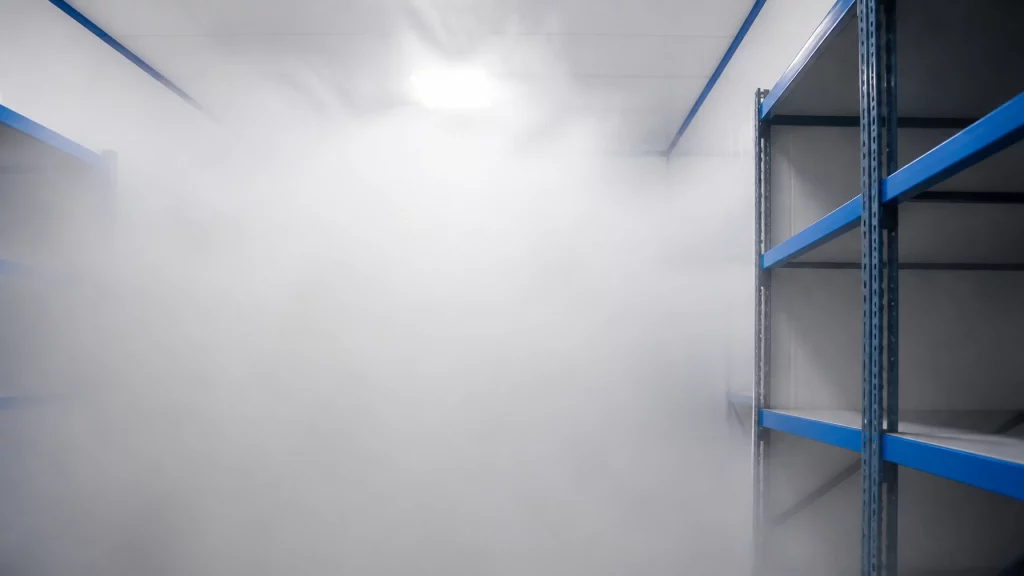
Protect the medicines your patients depend on. Combine secure storage, controlled access, stock checks and a monitored alarm with an active response inside your dispensary. Density security fog takes away the clear view an intruder needs to locate medicines and continue a break-in.
A pharmacy burglary can mean more than replacing stock. It can leave your team checking medicines, securing damaged premises and dealing with disruption when patients need you open. Give your alarm a response that acts inside the building.
How can pharmacies protect controlled drugs from theft?
Protect controlled drugs through secure storage, restricted access, accurate records and checks that identify discrepancies. Secure the routes into the dispensary, maintain alarms and CCTV, and plan what happens if someone gets inside. Security fog adds active protection around the indoor areas holding valuable medicines.
Build your plan around two different risks: stock disappearing during authorised activity, and someone forcing entry when the pharmacy is closed. Each needs its own controls.
| Risk | What to check | Protection to prioritise |
|---|---|---|
| Unauthorised dispensary access | Who can cross the counter or enter from the rear? | Restricted access, secure doors and individual access permissions |
| Missing stock during trading | Where are receipts, supplies, returns and discrepancies recorded? | Reconciliation, key control and prompt investigation |
| Out-of-hours intrusion | What happens between an alarm trigger and someone arriving? | Strong entry barriers, monitored detection and active fog protection |
| Disruption after an incident | Who assesses the premises, stock and readiness to reopen? | A documented incident and recovery procedure |
Secure the route to the medicines
Start at the public counter, rear entrance and delivery door. Check how visitors, contractors and delivery staff are supervised. Keep restricted areas separated from customer access and make sure doors stay secured when not in use.
Review access to controlled-drug storage with the person responsible for pharmacy security. Know who holds keys or credentials, how temporary access is authorised and how access is removed when responsibilities change.
Keep stock controls working during the day
An overnight alarm cannot identify a shortage hidden in routine stock movements. Record receipts, supplies, returns and discrepancies through the pharmacy’s agreed procedures. Investigate unexplained differences promptly and review who could access the affected stock.
Make handovers clear. Staff should know who deals with an unsecured door, missing key, unexplained shortage or suspicious visit. Good records help the team act on a concern while the details are still available.
What stops an intruder once the alarm sounds?
Your cabinet provides secure storage. Your alarm detects intrusion. CCTV helps verify events and preserve evidence. Density adds an active response in the protected indoor zone: dense fog that rapidly restricts visibility and makes it harder to find medicines or continue an attack on storage.
Keep the secure storage. Keep the alarm. Add the layer that interrupts the raid.
Density starts discharging in under one second after a trigger. The time to obscure the dispensary depends on the equipment, room volume, layout and airflow. The survey establishes the zones, generator positions and activation sequence for your pharmacy.
Protection built around your dispensary
A public counter, consultation room and secure store have different access patterns. Map the routes to valuable stock and identify where fog protection would interrupt an intrusion without compromising the operating plan for staff and patients.
- One enclosed stockroom: assess a defined zone around concentrated medicine stock.
- A larger dispensary: account for shelving, ceiling height and the routes between rooms.
- Several protected areas: assess separate zones and linked generators where appropriate.
Size the design by volume in cubic metres and the way the rooms connect. Compare the Density generator range with your installer rather than choosing equipment from floor area alone.
Work with the alarm you already have
Density can connect to existing alarm panels. The survey confirms your panel, monitoring arrangements, trigger logic and authorised access controls. Your proposal should explain the connection and how the system will be tested and handed over.
Include staff training, maintenance, isolation for authorised work and the procedure after an activation. Coordinate the design with fire detection, evacuation and safe re-entry.
Medicine protection needs the right evidence
Share the medicines, packaging, equipment and storage conditions in the proposed zone. Density provides fluid safety and product documentation for the pharmacy team to review against the intended use. Food-contact testing is not a substitute for assessing suitability around your medicines and pharmacy processes.
Your pharmacy’s storage, governance and reporting obligations remain part of the wider security plan. The GPhC standards overview explains the responsibilities of registered pharmacies in Great Britain. Agree the requirements relevant to your premises with your pharmacy lead and confirm insurance conditions with your broker or insurer.
What does pharmacy security fog cost?
The price depends on the protected volume, number of zones, equipment and alarm integration. A single enclosed room needs a different design from a pharmacy with several medicine stores.
Get an indicative price estimate, then book a survey for a site-specific proposal. Ask for the equipment, installation, commissioning and ongoing maintenance costs to be clear. Our security fog cost guide explains what affects the price.
Pharmacy security questions
Do we need fog if our controlled drugs are already locked away?
Secure storage and fog serve different purposes. Storage restricts access; fog reduces visibility around the protected zone during an intrusion. A survey assesses whether that active layer addresses a gap in your existing protection.
Can security fog prevent stock losses during dispensing?
Fog is intended to interrupt an intrusion. Use stock records, reconciliation and controlled access to address discrepancies during normal authorised activity.
Can it work while the pharmacy is closed?
Yes. Out-of-hours intrusion protection can be part of the design. Your installer agrees the detection, confirmation and activation sequence with the pharmacy team.
Is fog suitable around medicines?
The pharmacy team should assess the proposed installation using the relevant product and fluid documents, stock types, packaging and storage conditions. The survey checks your medicines, packaging and storage process against the relevant fluid documents.
What if staff or patients are inside?
Fog sharply reduces visibility. The design must account for occupancy, authorised access, evacuation and safe re-entry. Agree those procedures before commissioning.
Will installing fog guarantee compliance or lower insurance costs?
Compliance depends on the pharmacy’s full arrangements. Your insurer decides policy requirements and terms. Share the proposed design with the appropriate pharmacy and insurance contacts.
See Density pharmacy security fog systems or learn how security fog works with your alarm.