Managing pharmaceutical freight demands absolute zero margin for error, particularly when handling short-dwell inventory in fast-moving cross-dock environments. In this post, I examine how rigorous cross dock pharma security safeguards vulnerable temperature-controlled shipments against sophisticated, organised crime syndicates operating across UK transport hubs.
TL;DR
- Short-Dwell Vulnerability: Pharma consignments moving through cross-dock bays present high-value targets for thieves during brief staging windows.
- Active Deterrence: Replacing passive CCTV with instant security fog neutralises intruder visibility in under 30 seconds before cargo can be compromised.
- System Integration: Deploying targeted solutions: from dedicated cages to full bay coverage: ensures complete compliance and asset protection.
The Vulnerability of Short-Dwell Stock in Cross-Dock Operations
In modern logistics, speed is both our greatest operational asset and our primary security liability. When high-value medicines, oncology treatments, and active pharmaceutical ingredients arrive at a cross-dock facility, dwell times are intentionally kept minimal. Pallets are unloaded from inbound trailers, sorted rapidly, and staged briefly before reloading onto outbound distribution fleets. However, organised crime networks monitor these exact transition points.
According to annual freight crime reporting from NaVCIS UK, pharmaceutical and high-tech consignments remain prime targets due to their high resale value and immediate black-market liquidity. When stock sits in transitional staging lanes, traditional physical barriers like perimeter fences and roller shutter doors are often bypassed or forced during shift changes. Because these goods are destined for rapid dispatch, any disruption or theft not only incurs severe financial loss but triggers critical GDP (Good Distribution Practice) compliance failures and patient safety risks. Protecting these high-risk transfer zones requires moving beyond static monitoring toward active physical denial.

Why Passive CCTV and Alarms Fail High-Value Pharma
For years, facilities managers relied on standard CCTV cameras and audible intruder alarms to secure distribution centers. In practice, passive monitoring only records a crime in progress or alerts security teams after thieves have already breached the perimeter. By the time police or private response units arrive: often 15 to 30 minutes later in remote industrial estates: the targeted pallets are already loaded into getaway vehicles.
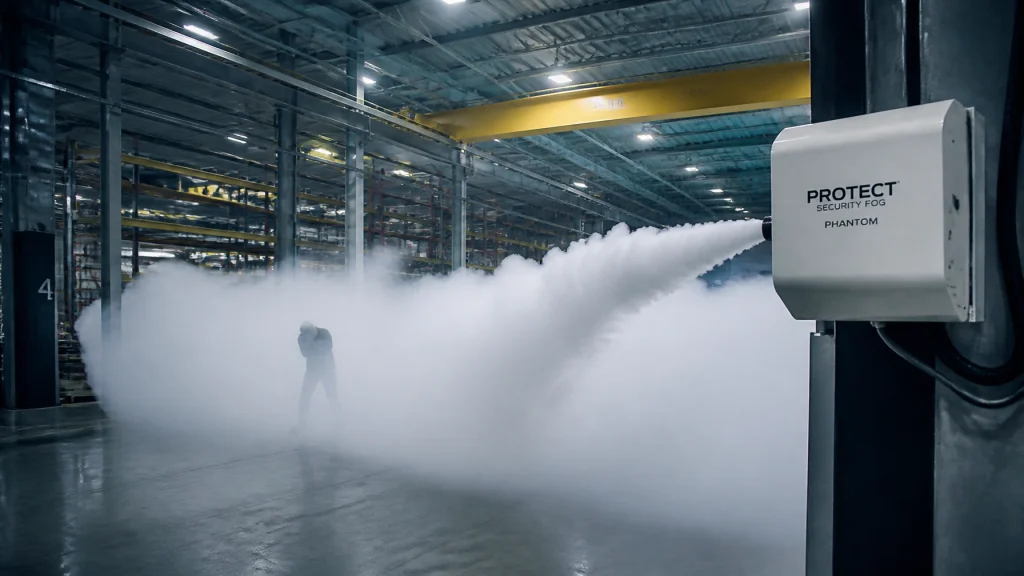
Active defense changes this equation entirely. Our operational data and industry benchmarks prove a stark contrast: 97% of thefts avoided with security fog vs 17% with alarm/CCTV alone. When intruders enter a protected pharma lane, our systems deploy a dense, non-toxic security fog that fills the space in under 30 seconds, completely eliminating visibility. Deprived of sight, criminals cannot identify, select, or steal high-value pharmaceutical cartons, effectively stopping the theft before it starts. Furthermore, these systems are fully Approved for use with NSI and SSAIB security systems, satisfying the stringent requirements demanded by major cargo insurers.
Securing Bonded Cages and High-Value Lanes with Compact Units
Within a bustling cross-dock facility, certain zones require hyper-targeted defense. High-value prescription medicines, controlled substances, and bonded goods are frequently segregated within internal security cages or temperature-controlled pharma quarantine enclosures. For these confined yet high-risk areas, deploying a discrete, battery-operated or compact unit delivers immediate protection without interfering with daily airflow or temperature validation protocols.
We regularly specify the unik-fog-system for these exact applications. The UNIK unit is engineered specifically for smaller enclosures, cash offices, and pharmaceutical staging cages where mains power may be restricted or where discrete, rapid-fire deployment is essential. By placing active fog generation directly inside the high-value cage, any unauthorised breach triggers an instantaneous barrier that traps intruders in total whiteout conditions until response teams arrive.

Scaling Up Across Bays with Lite and Basic Units
While internal cages require targeted solutions, wider cross-dock transfer bays and loading dock floors demand scalable coverage capable of handling vast cubic capacities. When securing open loading zones where dozens of pallets are staged simultaneously, facility operators need robust infrastructure that integrates seamlessly with existing building management systems.
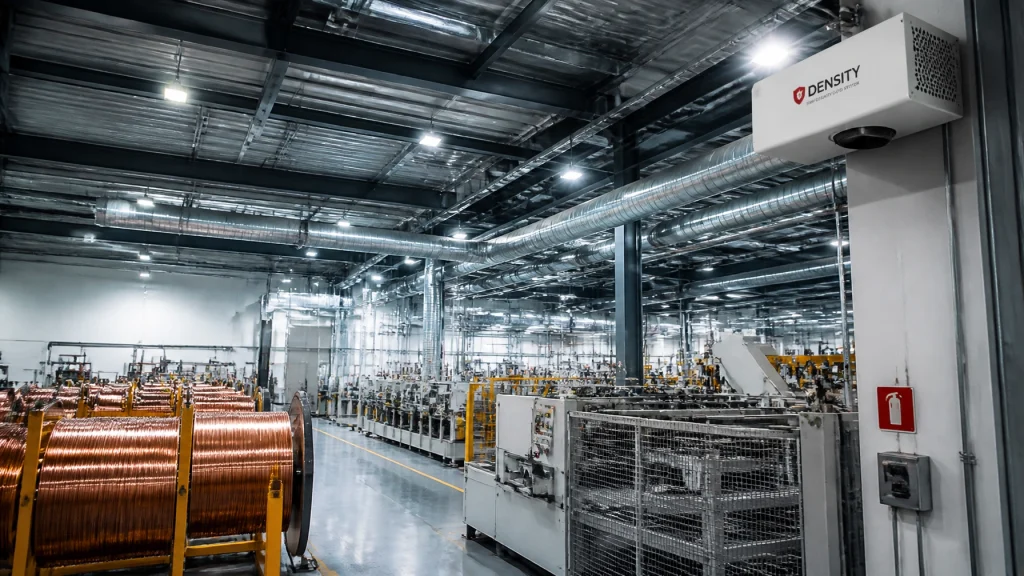
For mid-sized cross-dock zones, our basic-fog-system provides reliable, entry-level mains-powered protection. For larger depot floors, multi-zone environments, and sprawling distribution facilities, the lite-fog-systems range delivers scalable coverage protecting spaces from 5 to 270 m² per unit. Paired with high-performance industrial units like the Density 2400 shown above, these systems ensure that entire loading aprons can be obscured in seconds, neutralising coordinated smash-and-grab attempts across multiple dock doors simultaneously.

Remote ARC Deployment and Insurance Compliance
Integrating active security fog into existing transport and warehouse operations involves strict adherence to insurance mandates and monitoring protocols. Modern freight operators cannot rely solely on local keyholders to verify alarms in the dead of night.
Our security fog generators feature remote Alarm Receiving Centre (ARC) deployment capability. When an intrusion is verified via perimeter analytics or motion detectors, remote monitoring operators can trigger the security fog instantly from an off-site station: even if on-site personnel are detained or coerced. This remote activation capability is fully compatible with professional alarm monitoring standards and satisfies the rigorous risk-mitigation criteria set out by commercial underwriters such as TT Club and Allianz Commercial. Crucially, the fog is entirely non-corrosive and leaves zero residue on packaging, ensuring that even if deployed false-alarm style, temperature-sealed pharma packaging and sensitive electronics remain completely undamaged.

Protecting the Entire Supply Chain Network
Securing pharma lanes within a single cross-dock is a vital first step, but enterprise-level resilience requires a unified approach across your entire property portfolio. Whether you manage standalone freight depots or massive multi-tenant logistics parks, standardising your active defense architecture prevents criminals from exploiting weaker regional sites.
To explore how these technologies integrate into broader freight facilities, review our comprehensive freight depot security fog systems hub. Additionally, operators managing multi-story distribution centers or bulk storage warehouses can examine our dedicated sectors/warehousing/ resource to align security protocols across both cross-dock transit and long-term storage environments.
Key Takeaways
- Instant Neutralisation: Security fog fills protected spaces in under 30 seconds, defeating criminals before they can locate high-value stock.
- Proven Efficacy: 97% of thefts avoided with security fog vs 17% with alarm/CCTV alone.
- Insurance Approved: Fully Approved for use with NSI and SSAIB security systems, satisfying underwriters and GDP standards.
- Asset Safe: Non-toxic, non-corrosive fog ensures pharmaceutical packaging and temperature-sensitive goods remain completely undamaged.
Secure Your Pharma Lanes Today
If your operation handles short-dwell, high-value freight and you want to eliminate overnight cargo theft risks, we are here to help. Explore our freight depot security fog systems or use our interactive Sector Quote Tool to configure a bespoke active defense layout for your facility today.