CCTV records the loss. It does not stop it.
NHS pharmacies and medical stores operate under a clear duty of care. Medicines, controlled drugs, clinical supplies and prescription materials must remain secure, accessible only to authorised personnel and protected throughout the medicines trail. NHS Estates guidance also states that security arrangements should reflect local risk, staffing levels and the need to protect staff working where medicines are stored and used. Read the NHS Estates guidance on medicines storage.
CCTV is an important part of that framework. It can monitor entrances, record activity and preserve evidence for an investigation. It can also support internal reviews following suspected theft, tampering or unauthorised access. However, CCTV remains a passive control. It records what has happened. It does not prevent an intruder from reaching a controlled-drug cabinet during the response window.
Intruder alarms have a similar limitation. They detect a breach and send an alert to a monitoring centre or responsible contact. That notification is essential, but it does not create a physical barrier between an intruder and the medicines. A determined offender may only need a short period inside an unmanned pharmacy to locate high-value stock and leave.
Find out about public-sector security fog systems UK

The practical security question for an NHS trust is therefore not whether CCTV or an alarm should be installed. It is what happens after detection and before help arrives.
Add active deterrence to NHS facility security systems
Alarms detect. CCTV records. Density prevents. Passive security fails.
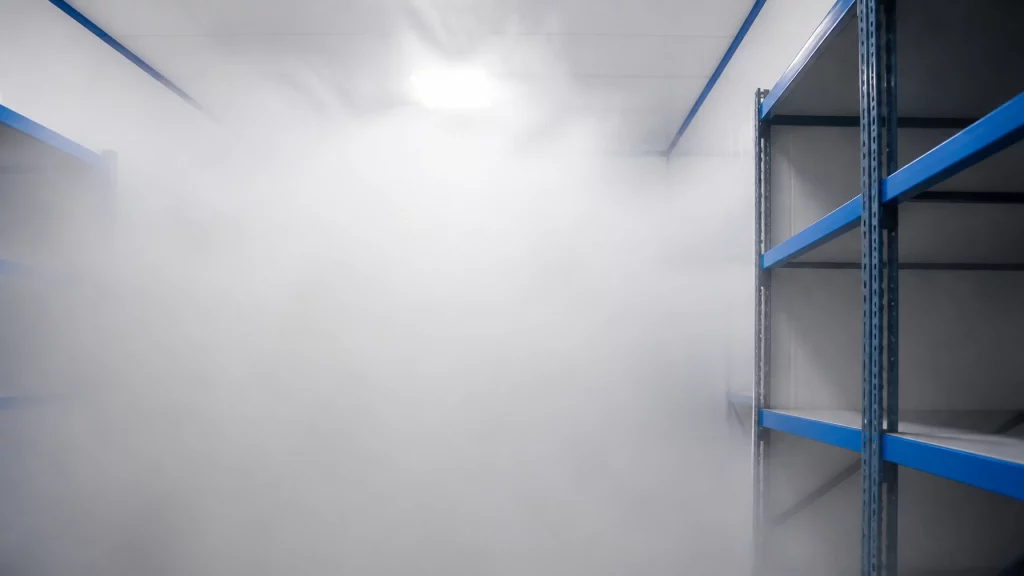
Security fog adds an active layer to an existing NHS facility security system. When connected to an existing alarm panel or suitable detection arrangement, Density security fog deploys in well under a single second and rapidly fills the protected room, creating zero visibility. The objective is to prevent an intruder from navigating to controlled medicines, medical supplies or other protected assets.
The fog is non-toxic, non-corrosive and leaves no residue. That makes it suitable for consideration in environments containing medicines, medical equipment and records, subject to a site-specific assessment by the relevant estates, pharmacy and security teams. Density systems are also approved for use with NSI and SSAIB security systems, allowing the active layer to connect with existing alarm infrastructure rather than requiring a completely new security platform. See the Density public-sector security overview.
97% of thefts avoided with security fog vs 17% with an alarm/CCTV alone.
The comparison is important because an NHS pharmacy cannot treat a burglary as only an asset-loss event. A controlled-medicine incident can require stock reconciliation, register checks, investigation, escalation through local governance arrangements and engagement with the police. It can also interrupt dispensing, restrict access to parts of a facility and place additional pressure on pharmacy, security and estates teams.
The aim is not to replace physical security, access control, key management, stock reconciliation or CCTV. It is to make those controls work as a layered system. Secure doors and controlled access help keep intruders out. Alarms identify a breach. CCTV supports evidence and review. Security fog is designed to disrupt the theft in progress.
For a larger pharmacy, medical store or secure NHS facility area, the correct system should be selected by protected volume in cubic metres. Density Basic provides coverage of up to 390 m³ per shot. Density 600 Lite and Density 900 Lite can suit smaller and medium-sized secure areas, while Density 2400 Lite covers up to 2,400 m³ per shot. A site survey should confirm the volume, room configuration, detection method, ventilation arrangements and the appropriate deployment zone.
The Density Basic system can be considered for a smaller secure room. The Density Lite fog systems provide options for larger pharmacy, stockroom and NHS facility areas. Density product information gives estates and procurement teams a wider view of the available range.

A Density UNIK system has a narrower role. It is a battery-powered option for a single high-value point, such as one controlled-medicine cabinet or a small secure store where mains power or conventional installation presents a challenge. It should not be treated as the default solution for an entire pharmacy or large medical store. Learn more about the Density UNIK system.
Deployment planning should also consider staff safety. Security fog is intended to activate following a confirmed security event, not during normal pharmacy operations. Local procedures should define alarm verification, access after activation, ventilation, incident reporting, maintenance and the responsibilities of pharmacy, estates, security and facilities teams.
Procurement should follow the trust’s own governance and risk-management process. NHS organisations in England may use established routes such as the Crown Commercial Service, where appropriate. Scotland, Wales and Northern Ireland have different procurement frameworks, so local estates and procurement teams should confirm the relevant route before specifying or purchasing equipment.
FAQ Box
Is CCTV still needed if an NHS pharmacy installs security fog?
Yes. CCTV remains valuable for monitoring, investigation, evidence preservation and post-incident review. Security fog is an additional active deterrent, not a replacement for cameras, alarms, access control or secure storage.Can security fog protect controlled medicines?
It can be designed to protect a controlled-medicine store, dispensary or other secure pharmacy zone. The protected volume, room layout and alarm configuration must be assessed before installation. Local controlled-drug procedures and NHS governance requirements remain in force.How quickly does Density security fog deploy?
Density security fog deploys in well under a single second following the relevant trigger and rapidly fills the protected area to create zero visibility.Is the fog suitable around medicines and medical equipment?
Density fog is non-toxic, non-corrosive and leaves no residue. Estates, pharmacy and security teams should still review the proposed installation, ventilation and recovery procedures for the specific environment.Can Density connect to our existing alarm system?
Yes. Density works with existing alarm infrastructure and is approved for use with NSI and SSAIB security systems. The installer should confirm compatibility, triggering arrangements and maintenance requirements.Which Density system is suitable for a pharmacy?
Selection depends on the protected volume in m³ and the number of zones. Density Basic covers up to 390 m³ per shot, while Density Lite options provide larger coverage. Density UNIK is a niche, battery-powered choice for one single high-value point only.What should happen after a fog activation?
The local procedure should cover confirmation that the area is safe to enter, ventilation, stock checks, preservation of relevant CCTV, incident reporting and notification to the appropriate pharmacy, security and governance leads. Any controlled-drug discrepancy should be managed under the trust’s current procedures.
For NHS facility managers, pharmacy leads and security officers, the central issue is the gap between detection and response. CCTV can show where an intruder went. An alarm can report that a door or sensor has been triggered. Neither one changes what the intruder can see once inside. Security fog is designed to remove visibility at the point when it matters most.
What you can't see you can't steal.
The strongest approach to pharmacy security UK is therefore layered and proportionate. Start with secure storage, restricted access, key control, stock accountability and appropriate physical protection. Maintain CCTV and alarm coverage. Then assess whether active deterrence is needed for controlled medicines, medical supplies, out-of-hours access points or unmanned NHS facilities.
For examples of how Density systems are applied in real security environments, visit the Density case studies.
Discuss a site-specific solution for your NHS pharmacy or medical store