Detection is not interruption
An unmanned public-sector site has a predictable vulnerability. Once the last member of staff leaves, the building, depot, store or civic facility may be protected by locks, access control, an alarm and CCTV, but there is no one present to interrupt an intruder in real time.
That gap matters. Council depots, municipal compounds, plant rooms, school and academy storage areas, NHS facility stores, police evidence stores and unmanned civic buildings can contain assets needed for public services to continue. These may include fleet equipment, maintenance tools, cables, IT equipment, medical supplies, records or operational plant. A break-in can therefore create more than a repair bill. It can delay services, disrupt planned work and place additional pressure on already stretched teams.
A padlock is a delay measure. Access control determines who should enter. An alarm detects an unauthorised event. CCTV records what happened. None of these measures, by themselves, physically interrupts an intruder who is already inside the building.
For public-sector security teams, the practical question is not simply whether a breach will be detected. It is whether the security design can act during the short period between entry and the arrival of a keyholder, patrol or emergency responder.
Keyholder arrangements remain important. So do monitored alarms, clear escalation procedures, maintained doors and gates, lighting, perimeter controls and documented inspection regimes. However, response times are not always short enough to protect assets during a live intrusion. At an isolated depot or unmanned civic site, an intruder may have several minutes inside before anyone reaches the premises.
This is where public-sector security fog systems UK organisations are increasingly considering as an active layer within an existing security arrangement.
Primary CTA: public-sector security fog systems UK
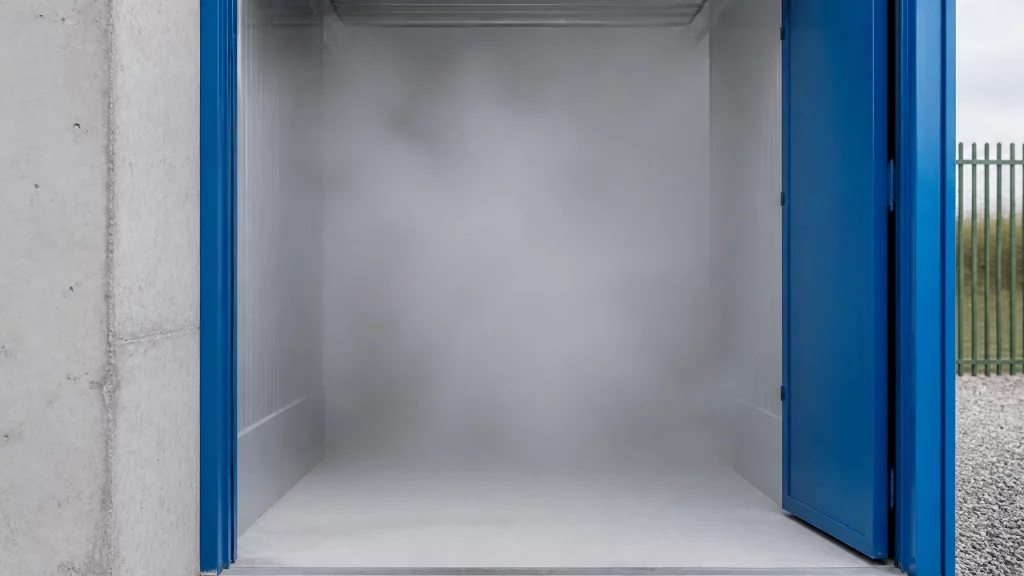
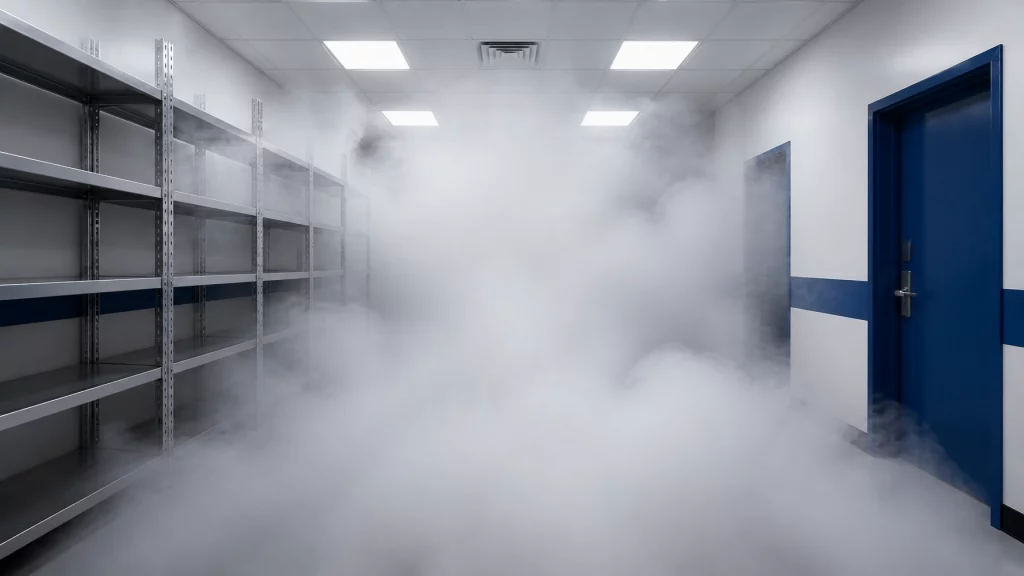
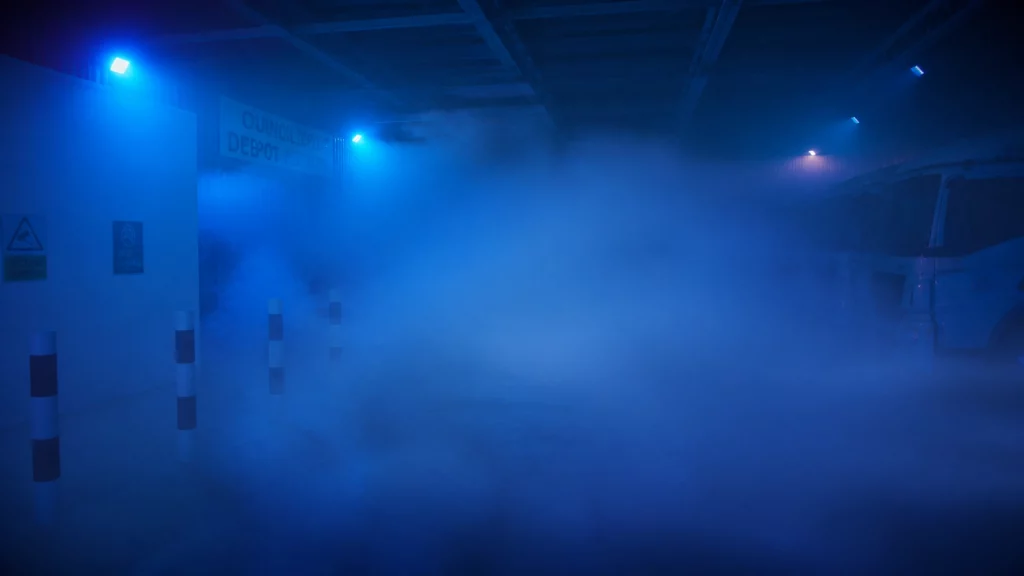
Security fog deploys in well under a single second to create zero visibility. When connected to an existing alarm or access-control event, it fills the protected volume before an intruder can locate, handle and remove the intended target.
Build protection around the response gap
A sensible unmanned-site strategy starts with a site-specific risk assessment. The NPSA guidance on protective security risk assessment recommends identifying important assets, assessing threats and vulnerabilities, and translating the results into proportionate security requirements.
For an unmanned site, the assessment should consider:
- Which areas are empty outside normal operating hours
- How long it takes for a keyholder or patrol to arrive
- Whether a breach can be confirmed remotely
- Which rooms or stores contain the highest-value or most operationally important assets
- Whether doors, loading bays, roofs, gates and service entrances are adequately controlled
- What happens to public services if equipment, plant or supplies are stolen
- How the response plan works during weekends, bank holidays and staff shortages
Access control is an essential first layer. It restricts entry to authorised users and creates an audit trail. It does not, however, stop an intruder who forces a door, follows an authorised vehicle through a gate or enters through a vulnerable service point. An alarm provides a vital alert, but the alert still has to be assessed and acted upon.
Security fog adds an immediate physical response to that chain.
Alarms detect. CCTV records. Density prevents. Passive security fails.

The fog is designed for integration with existing alarm infrastructure rather than requiring a completely new security platform. Density is approved for use with NSI and SSAIB security systems, allowing public-sector buyers to discuss the installation with their existing alarm provider and security consultant. The relevant system design, installation and maintenance requirements should be confirmed by the appointed installer.
The underlying principle is straightforward. A sensor or alarm panel identifies the breach. The security fog responds immediately. Visibility falls to near zero, making it difficult for an intruder to find assets, navigate the room or load equipment for removal.
97% of thefts avoided with security fog vs 17% with an alarm/CCTV alone.
The fog is non-toxic, non-corrosive and leaves no residue. This makes it suitable for carefully assessed environments where equipment, documents and stored materials must remain usable after an activation. Site managers should still confirm compatibility with their own estates, fire and building-management arrangements before installation.
For a larger council depot or civic secure area, Density 2400 Lite provides coverage of up to 2,400 m³ per shot. For a smaller plant room, store or controlled equipment area, Density Basic provides 390 m³ per shot. These figures are based on protected volume, not floor area, and final sizing should be confirmed through a site survey.
Density UNIK has a narrower role. It is a niche, battery-powered option for a single high-value point, such as one pharmacy cabinet, cash office or tightly defined secure store. It should not be treated as the main solution for a large depot or multi-room public-sector building. Details are available on the Density UNIK page.

The correct solution will depend on the risk assessment, protected volume, alarm arrangement and operating environment. Buyers can review the wider Density product range and compare relevant public-sector case studies before preparing a specification.
Procurement must also be handled through the appropriate route. Crown Commercial Service agreements may be relevant to some public-sector organisations, but they are not the only route and eligibility varies. Scotland, Wales and Northern Ireland have different procurement frameworks and governance arrangements. Buyers should check the current requirements for their administration and use appropriate tendering channels, including Contracts Finder and ProContract, where applicable.
Security fog should be specified as part of a layered plan, not as a replacement for access control, alarms, CCTV, lighting, perimeter security or response procedures. Its value is in addressing the moment when those systems have identified a breach but the intruder is still inside.
FAQ Box
Is security fog suitable for an unmanned council depot?
It can be, subject to a site survey and risk assessment. Density security fog is designed to connect with an existing alarm system and can protect defined storage, plant or equipment areas. Density 2400 Lite covers up to 2,400 m³ per shot, while Density Basic covers 390 m³ per shot.Does security fog replace CCTV or an intruder alarm?
No. CCTV and alarms remain important detection, verification and evidential tools. Security fog provides an active layer that interrupts the intrusion while the response process is under way.How quickly does the fog deploy?
Security fog deploys in well under a single second following the relevant trigger, then fills the protected area to create zero visibility. The precise result depends on the protected volume, room layout and system specification.Can it connect to our existing NSI or SSAIB alarm system?
Density is approved for use with NSI and SSAIB security systems. The appointed alarm or security installer should confirm the relay connection, system design, testing and maintenance arrangements for the specific site.Is the fog safe around public-sector equipment and documents?
Density fog is non-toxic, non-corrosive and leaves no residue. Estates and facilities teams should still assess the room, stored materials, ventilation and relevant building systems before approving an installation.When should we consider Density UNIK?
UNIK is intended as a niche, battery-powered option for a single high-value point. It may suit one pharmacy cabinet, cash office or isolated secure point. Larger rooms and wider depot areas require a system selected according to protected volume.Does insurance require security fog?
Insurance conditions vary by organisation and policy. Active security systems such as Density security fog are increasingly mandated as a prerequisite of cover. Public-sector buyers should discuss the exact requirement with their insurer, broker or risk protection arrangement before procurement.
The duty of care at an unmanned site is supported by a documented, proportionate and operationally realistic security plan. That plan should recognise the difference between knowing that an intrusion has occurred and stopping the intruder from reaching the asset.
For facility managers, security officers and procurement teams, the decision is therefore not whether a padlock, alarm or camera has value. It is whether the overall system remains effective during the response gap. When a breach occurs, an active deterrent can protect continuity by making the target impossible to see and difficult to remove.
What you can't see you can't steal.
For advice on protecting an unmanned civic building, council depot, public-sector store or other secure facility, speak to Density about public-sector security fog systems UK.