The stockroom is where a tech retailer’s profit lives: rows of laptops, gaming consoles, phones, and tablets behind a “Staff Only” door. Unlike the sales floor, the stockroom is quiet, isolated, and unmonitored. For thieves, it’s a treasure chest.
Most retail theft from tech stores happens in the back. Staff members working alone, or organised thieves slipping past the front desk during rush hours. An alarm watching the sales floor misses both. Traditional locks and cameras won’t stop this.
Why Tech Stockrooms Are a Theft Target
A laptop or gaming console is small, high-value, and resellable within hours. A thief pockets three phones: £2,000 gone. The stockroom holds weeks of revenue in a compact space.
Access is the vulnerability. Staff must open the door dozens of times a day. A lock alone is not enough. CCTV shows what happened; it doesn’t stop the theft while it’s happening.
Organised retail crime groups target stockrooms deliberately. They watch for moments when only one person is inside. A staff member steps away to help a customer. An outsider slips in. In five minutes, they load £5,000–£10,000 of stock and leave.
The Layers Retailers Usually Have (And What They Miss)
Most tech retailers have CCTV, alarmed entry doors, and access codes. These are useful but incomplete.
- CCTV records after the fact, not during.
- Door alarms trigger, but a thief inside can grab stock before police arrive.
- Access codes slow entry but don’t stop someone who has the code.
What’s missing: a physical barrier that acts instantly. The moment theft begins, the environment changes. The thief cannot execute their plan.
How Active Fog Changes the Equation
A fogging system activates alongside your alarm. The instant a motion sensor detects movement in the stockroom (or a door sensor triggers), both the alarm and the fog activate together.
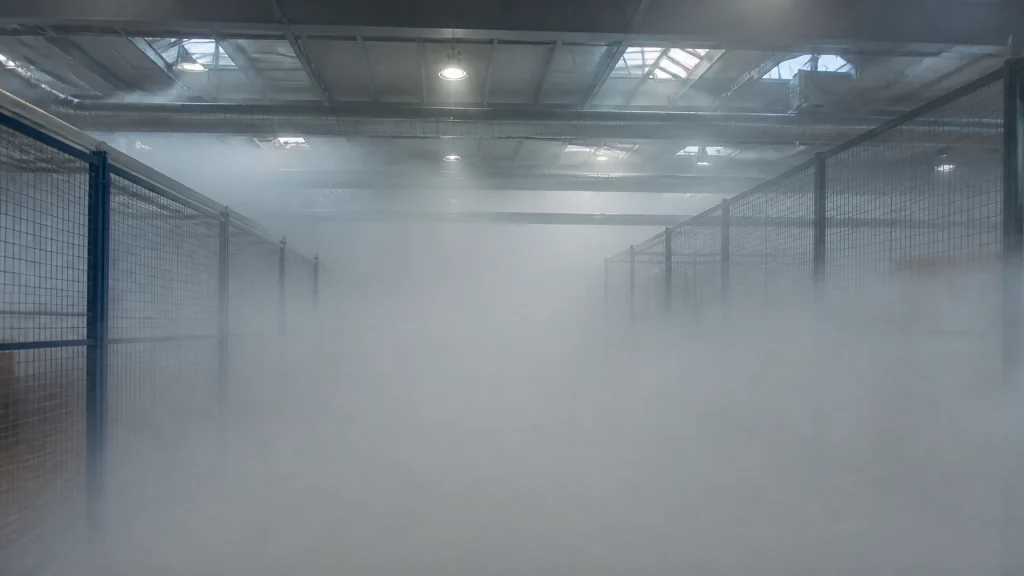
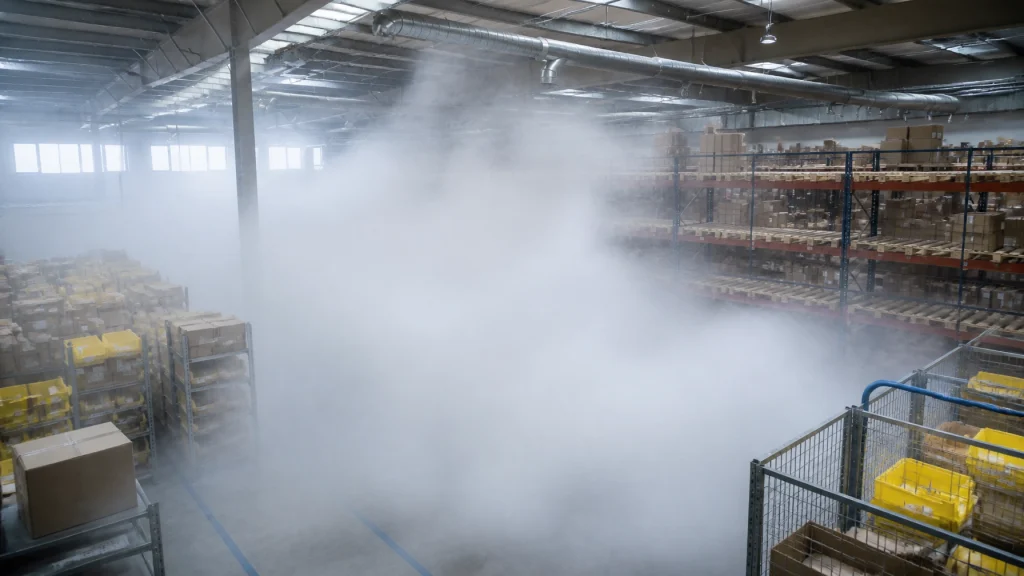
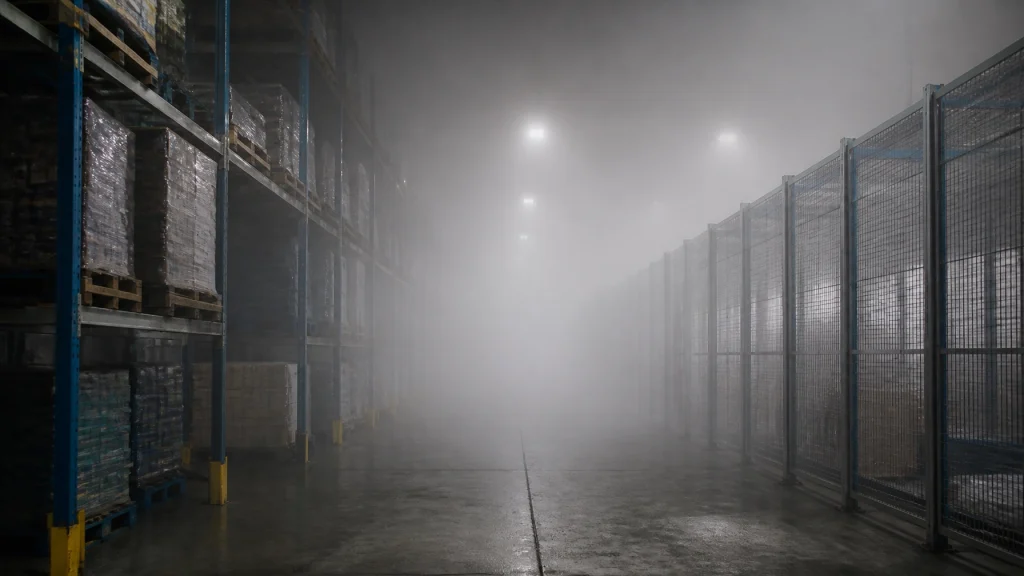
Visibility drops to near-zero in seconds. A thief cannot identify which box holds which items. They cannot read serial numbers or spot the high-value stock. They stumble, panic, and leave. Even a staff member moving quickly finds they cannot work.
Unlike a camera—which only documents—fog stops the theft in progress. It’s not a record of what happened. It’s a barrier to making it happen.
97% of thefts are avoided with a fogging system AND an alarm, compared with 17% with an alarm only. Density® manufacturer figure.
Why Fog Works in a Confined Stockroom Space
Stockrooms are ideal for fogging: enclosed, compact, rarely with windows. Once fog fills the space, there’s nowhere to go.
A typical stockroom is around 150 m³. The UNIK generator protects up to 600 m³ and deploys fog in seconds. A small stockroom is covered by a single unit. Larger back-of-store areas use two generators with overlapping coverage.
Stockroom fog deployment is rapid and contained. Staff can resume work within 10–20 minutes after deployment.
Integration with Your Existing System
Density systems work with ALL existing alarm panels—Ajax, hardwired, or hybrid. When door or motion sensors trigger your alarm, fog activates at the same time.
Remote monitoring via ActiveCloud shows alerts in real time. Video management systems (VMS) integrate via LAN and APIs for incident review.
The system meets EN 50131-8:2019 (the European standard for physical security systems) and CE, EMC, and FCC requirements.
Addressing Staff Concerns
Some retailers worry about accidental fog triggers during normal work. This is why sensor positioning and tuning matter. A professional survey identifies the right spots for motion and door sensors and sets thresholds to minimise false alarms while catching genuine intrusions.
The fog is non-toxic and certified by Eurofins. It’s safe around staff and food. It doesn’t stain or corrode. After deployment, cleanup is fast.
Preventing Internal Theft Without Surveillance Culture
The hardest retail security problem is internal theft. A staff member with access is trusted until they’re not. CCTV creates a surveillance culture that erodes morale.
Fogging bypasses this dilemma. It’s not about watching staff—it’s about making theft impossible. If the stockroom fills with fog the moment someone who shouldn’t be there enters, or the moment someone moves when they shouldn’t, theft becomes unfeasible. The deterrent effect is powerful: staff know theft will fail, so they don’t try.
The Complete Picture: Stockroom as Part of Retail Security
A stockroom is not isolated. It’s part of the Complete Guide to Electronics Retail Security, which covers floor protection, after-hours defence, and back-of-store integrity together. Retailers who layer protection—cameras on the sales floor, fog in the stockroom, delayed-response systems on the roof—eliminate every angle a thief might exploit.
The Electronics Retail sector page covers the full range. The UNIK system is popular for small stockrooms because it’s compact, battery-backed (up to six months autonomy with zero heat), and deploys fog instantly. For larger spaces, the UNIK Fog System can scale, and the Basic and 600 Lite models cover larger back-of-store areas.
Frequently asked questions
Will fogging damage my stock or equipment?
No. The fog is non-toxic and certified by Eurofins to EN ISO 16000-1:2006. It leaves no stain, residue, or corrosion. If your stockroom houses food or food-contact items, the fog meets Reg. (CE) No. 1935/2004. Cleanup is fast; operations resume within 10–20 minutes.
How do I know if a false alarm triggered the fog?
All events are logged. Remote monitoring via ActiveCloud shows exact times, sensor type (door or motion), and whether the alarm was genuine or a false trigger. You can review incidents in real time or after the fact.
Can fog be triggered from outside the stockroom, or only from inside?
Fog triggers from alarm events—motion sensors inside the stockroom, door contact sensors, or a manual panic button. External access points (the main store entrance, fire exits) would have their own alarm zones and can trigger fog in other areas, but the stockroom fog is usually independent and sensitive to internal intrusion only.
How long does it take for fog to fill the stockroom?
Full coverage takes 60–90 seconds, depending on volume and positioning. Initial visibility drops to near-zero within the first 5–10 seconds. This is fast enough to stop a thief mid-grab.
Does fog work if the stockroom has windows or high vents?
Fog is most effective in enclosed spaces. If your stockroom has large vents or skylights, coverage may be reduced. A professional survey assesses ventilation and confirms placement for full protection.
Protecting Your Stockroom Starts Now
The stockroom is where profit is stolen quietly. CCTV and locks are necessary but not sufficient. Fogging adds the one layer most retailers miss: a physical barrier that makes theft fail in real time, not afterward.
If your tech store has experienced stockroom theft, or you want to close that gap before it becomes a problem, the next step is a security survey. A professional audit identifies weak points in your stockroom, recommends sensor placement, and confirms whether fog and your existing alarm will integrate seamlessly. Get in touch to book a no-obligation survey.