What wholesale buyers need to know before specifying security fog
High-value wholesale stock is exposed whenever a depot is closed, a trade counter is unattended or a stock cage is breached. Alarms can identify an intrusion, but detection alone does not physically stop an offender from reaching goods.
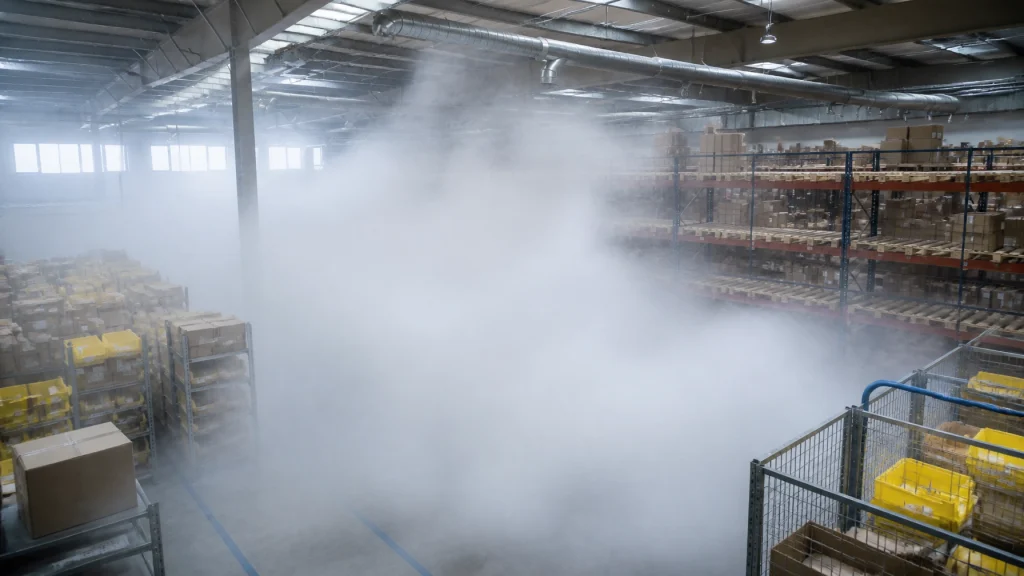
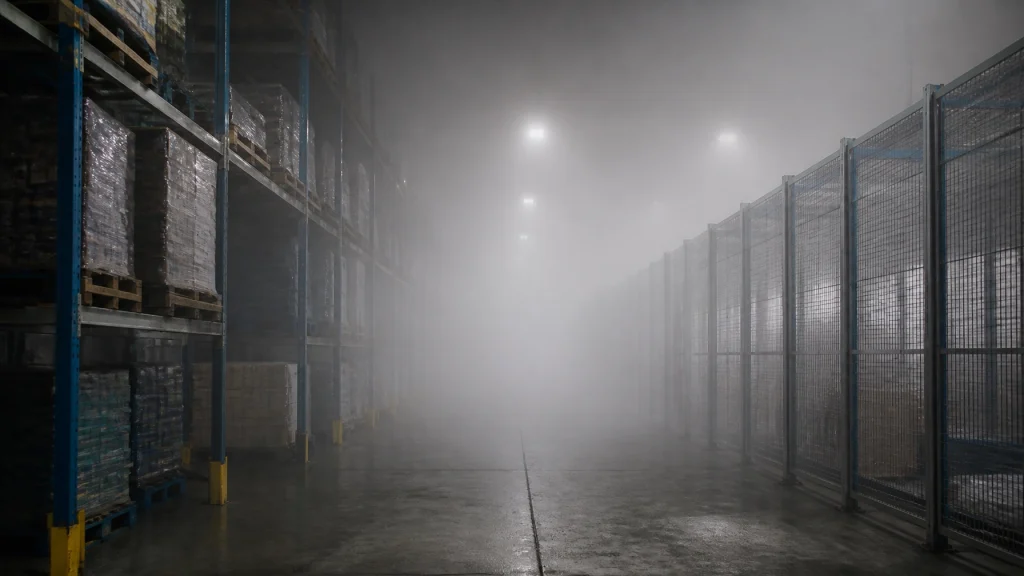
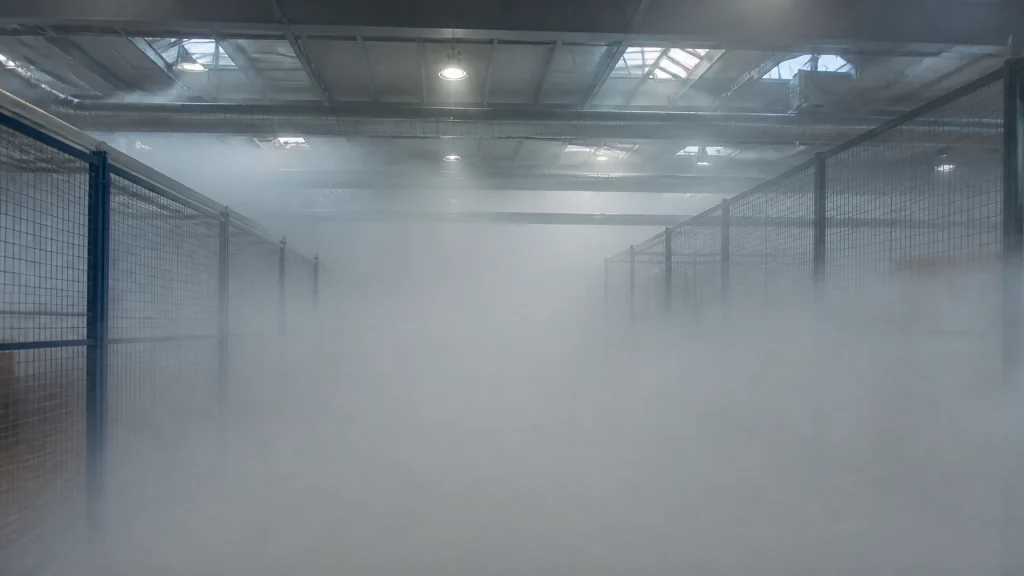
An anti-theft fog machine adds an active response to your existing security layers. When the intruder alarm triggers, the system deploys dense, non-toxic fog in around three seconds, reducing visibility to near-zero and creating the time needed for intruders to retreat. Alarms detect. CCTV records. Density prevents. Passive security fails.
Whether you need tobacco & spirits wholesale security, pharmaceutical wholesale security, builders merchant security fog or a cash & carry depot theft deterrent, the specification must match the risk, layout and volume of the protected area.
Explore wholesale depot security fog systems

- Start with the protected volume, not the floor area
Security fog systems are specified in cubic metres (m³), not simply by the size of the floor. Ceiling height, racking, partitions, cages and connected spaces all affect the volume that must be protected.
A small high-value cage may require a different approach from an open warehouse with tall racking. Density systems cover spaces from smaller commercial zones through to large distribution environments. The 2400 Lite is suitable for larger shops and smaller warehouses, while the 2400 C-Line can support wider, multi-zone protection through chainable units. For larger wholesale warehouses, the HP 6000 provides high-power protection for areas up to 6,000 m³.
A site survey should confirm the actual protected volume and identify whether separate zones need separate coverage.
- The system must activate quickly
An intruder may have only seconds between forcing a door and reaching high-value stock. A siren can alert people, but it does not obstruct movement. CCTV can provide useful evidence, but it records the event after it has started.
An intruder alarm fog system is designed to act during the break-in. Density units begin deployment within approximately three seconds of the alarm trigger, giving the fog a chance to establish a dense visual barrier before goods can be removed.
This is central to out-of-hours break-in prevention wholesale. The objective is not merely to report a crime. It is to disrupt the attempt while it is in progress.
- Integration with your existing alarm matters
A new security measure should not require a completely new security infrastructure. Professional security fog is normally integrated with the alarm panel already protecting the premises, using a trigger from the existing system.
This makes the solution relevant for NSI compatible wholesale security systems and SSAIB-aligned installations. It also helps simplify commissioning, testing and future maintenance.
Ask your installer to confirm how the fog system will connect to the existing panel, which alarm zones will activate it and how the system will be reset after an event. The installation should be designed and commissioned by a competent security company familiar with commercial alarm systems.
The NSI guidance for workplace intruder alarm systems and SSAIB guidance for business alarm systems provide useful context when reviewing alarm installation and certification requirements.
- Choose coverage for the risk zone
You do not always need to protect every cubic metre of a depot in the same way. A trade counter, secure stock cage, bonded area, tobacco store or pharmaceutical cage may contain the highest-value goods and represent the most attractive target.
Protecting the route to the stock can be as important as protecting the stock itself. A well-designed layout may use one unit for a trade counter and a chainable configuration for connected or separate zones.
This is particularly relevant to trade counter security, where an offender may enter through a front or side door and move quickly towards tills, tools, tobacco, spirits or other high-value goods. The protected zone should be positioned to obstruct access to the target area, subject to a proper survey.

- Check the relevant standard
Buyers should ask which standard applies to the proposed device and installation. BS EN 50131-8:2019 covers security fog devices used with intrusion and hold-up alarm systems.
The standard addresses the application, performance and testing of security fog devices. The NSI security fog systems guidance also explains how fog systems relate to intruder alarm installations.
Be precise when reviewing claims about approval. NSI and SSAIB certify companies and services, rather than providing a blanket approval for every standalone device. Ask for clear documentation covering the fog device, alarm integration, installer certification and maintenance arrangements.
The BSIA’s Security Fog Systems Code of Practice is also relevant to the design, installation, commissioning and maintenance of a professional system.
- Non-toxic fog must be suitable for your stock
Wholesale depots can contain food, pharmaceuticals, electronics, packaging, tools, clothing and alcohol. The fog used must be non-toxic, residue-free and suitable for the products held on site.
This is especially important for pharmaceutical wholesale security and tobacco & spirits wholesale security, where contamination, clean-up and stock disposal could create significant operational problems.
Density uses water-based, non-toxic fog designed to be safe around stock and electronics. However, every business should still ask for product safety information and confirm suitability with its own insurer, risk assessor and stock-handling procedures.
- Do not ignore loading bays, roof access and secondary zones
The main entrance is only one possible route into a wholesale depot. Loading doors, service entrances, roof access, adjoining units and poorly observed side doors may all require attention.
Police.uk recommends a layered approach to business security, including robust doors, monitored alarms, CCTV and suitable lighting around vulnerable areas. Fog should complement these measures rather than replace them.
Consider how an intruder would move from the perimeter to the stock. If the alarm only detects the external door but the fog is positioned too far away, the response may not protect the highest-risk area quickly enough. If a roof breach bypasses the normal entry zone, the alarm design may need reviewing.
- CCTV and fog have different jobs
Security fog is not a replacement for CCTV. The two technologies serve different purposes.
CCTV helps verify events, identify routes and support investigation. Fog acts as an active visual barrier that makes it difficult for intruders to navigate, select goods or carry stock out. Together with an intruder alarm, they create a more complete response.
The message spine is simple: Alarms detect. CCTV records. Density prevents. Passive security fails.
For a wholesale warehouse theft prevention strategy, CCTV should cover entrances, loading areas, internal routes and high-value zones. Fog should be designed to activate where visibility needs to be removed fastest.

- Plan for maintenance and reset procedures
A security system is only useful if it is operational when the depot is closed. Include routine testing, fluid or cartridge checks, battery checks where applicable, alarm communication checks and post-activation procedures in the maintenance plan.
Staff should know what happens after an activation. Access restrictions, ventilation, re-entry, incident reporting and replacement requirements should be documented. The system should also be handed over with clear instructions for authorised users.
For multi-site wholesale security UK programmes, standardising equipment, documentation and maintenance can make governance simpler across depots, trade counters and distribution centres.
- Insurance requirements should be reviewed before installation
Insurers and brokers increasingly assess whether a business has active protection appropriate to its stock, premises and exposure. Active security systems are increasingly mandated as a prerequisite of cover.
That does not mean a fog system guarantees acceptance, changes your premium or replaces your insurer’s conditions. It means buyers should involve their broker or insurer before specifying an insurance-approved security fog wholesale solution.
Request the exact wording required for the alarm, monitoring, installer, maintenance and fog device. Then ensure the completed installation is documented against those requirements.
For high-value wholesale stock, the right question is not simply “How much does an anti-theft fog machine cost?” It is “What response does the site need, and how quickly must it act?”
FAQ box: Anti-theft fog for wholesale depots
What is an anti-theft fog machine?
An anti-theft fog machine is a security fog device linked to an intruder or hold-up alarm. When the alarm activates, it rapidly deploys dense, non-toxic fog to reduce visibility and disrupt an intrusion.How quickly does an intruder alarm fog system activate?
Density systems begin deployment in approximately three seconds after the alarm trigger. The time required to reach effective coverage depends on the system, protected volume and site design.How is security fog sized for a wholesale depot?
It is sized by protected volume in cubic metres (m³). Ceiling height, racking, partitions and the number of connected zones all affect the final specification.Which Density system is suitable for a warehouse?
The 2400 Lite can suit larger shops and smaller warehouses. The 2400 C-Line is designed for chainable, multi-zone commercial protection. The HP 6000 is intended for larger warehouse areas up to 6,000 m³. A survey should confirm the final choice.Can fog integrate with our existing alarm?
Yes. Density systems connect to the alarm panel already installed, using a trigger from the existing system. Your installer should confirm compatibility, alarm zoning and commissioning requirements.Is security fog safe around food and medicines?
Density fog is water-based, non-toxic and designed to be residue-free. Businesses should still review safety information and confirm suitability with their insurer, risk assessor and stock procedures.Does security fog replace CCTV or physical security?
No. It is an active layer within a wider security plan. CCTV records and supports investigation; physical security delays access; alarms detect; security fog disrupts the intrusion.Is security fog a guarantee against theft?
No security measure can guarantee that every incident will be stopped. A correctly designed system can, however, reduce visibility and make it significantly harder for intruders to reach and remove stock.
A professional anti-theft fog machine should be specified as part of a complete loss-prevention plan. Start with the stock, map the likely intrusion routes, calculate the protected volume, confirm alarm compatibility and review insurer requirements before installation.
The most effective system is the one that activates quickly, covers the right zone and is maintained correctly. What you can't see you can't steal.
See how Density protects real commercial premises in our case studies.