Why warehouse security needs to stop more than it records
Warehouse security systems UK businesses rely on often perform well at detection but poorly at interruption. An alarm identifies a breach. CCTV may capture useful evidence. Neither necessarily stops an intruder from reaching high-value stock during the few minutes before help arrives.
For wholesale depots, that gap matters. Tobacco, spirits, pharmaceuticals, tools, cable and other portable goods can be targeted quickly by organised gangs. Loading bays, trade counters, stock cages and rear access routes are common priorities.
The message is straightforward: Alarms detect. CCTV records. Density prevents. Passive security fails.
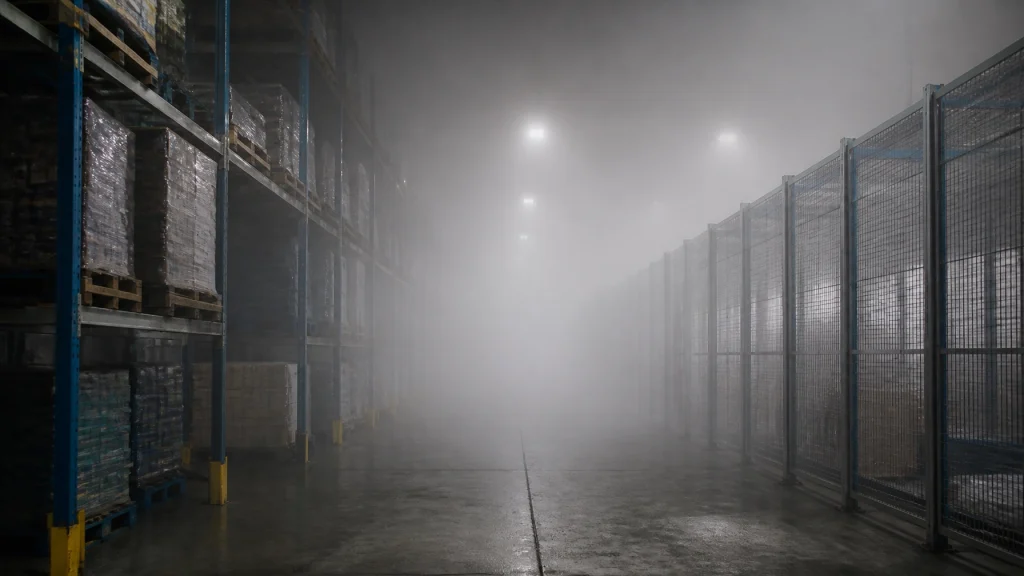
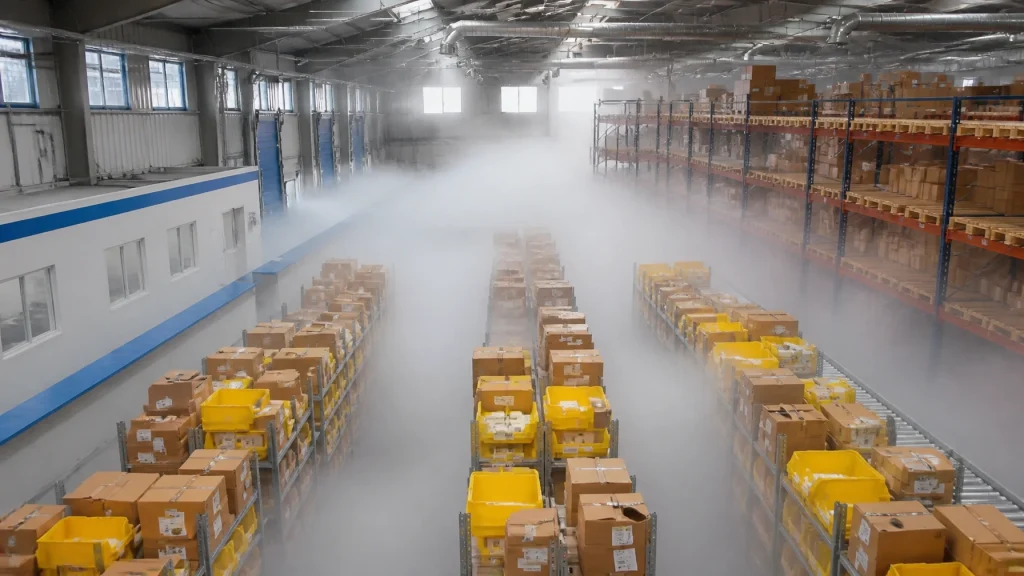
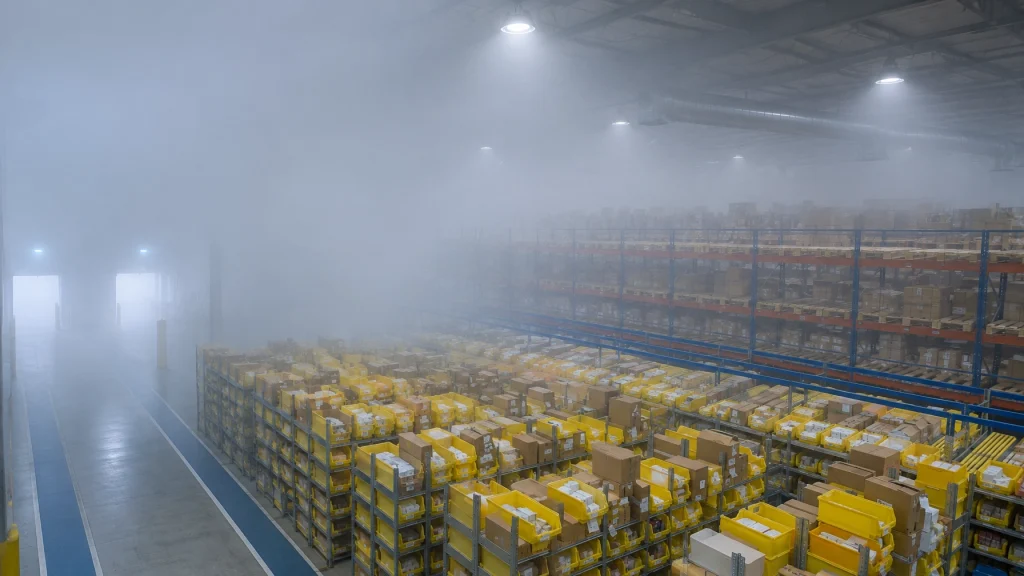
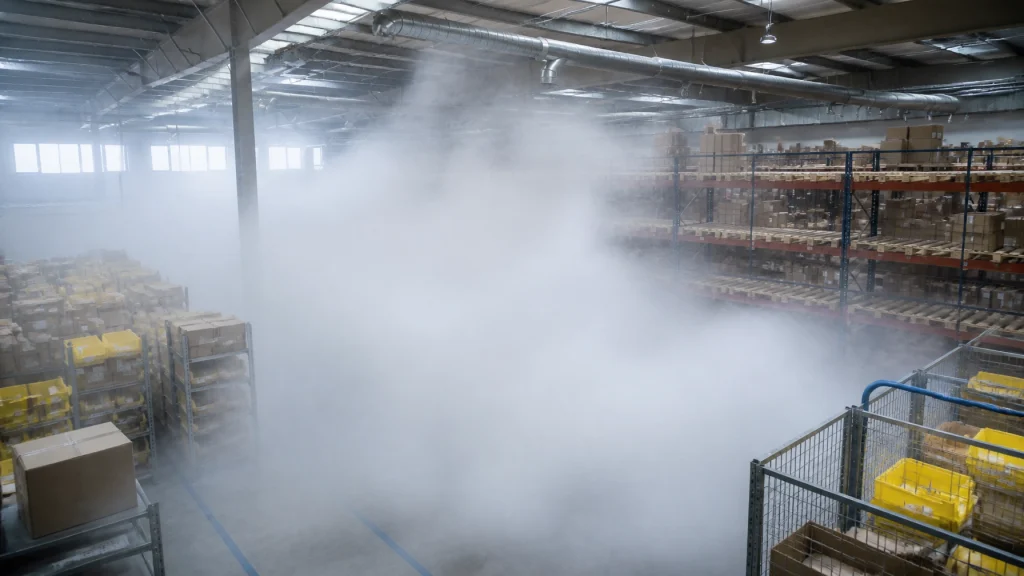
Active security fog is designed to deploy dense, non-toxic fog in around three seconds when the alarm triggers. Visibility falls rapidly, making it difficult for intruders to navigate, identify stock or carry goods out. What you can't see you can't steal.
Review wholesale depot security fog systems
Security fog is not a replacement for strong doors, controlled access, monitored alarms, CCTV, lighting or staff procedures. It is the active layer that helps those systems do more when a break-in is already in progress. The following seven mistakes are common across wholesale warehouse security and show where active fog can strengthen your plan.

Mistake 1: Relying on CCTV to prevent theft
CCTV is valuable for monitoring, investigation and evidence. However, a camera cannot physically prevent an intruder from entering a warehouse, opening a cage or removing stock.
Police crime-prevention guidance recommends a layered approach that combines physical security, access control, alarms, lighting and surveillance. CCTV should support a response, not be treated as the response itself.
Security fog adds an active intervention. Once triggered by the existing alarm, it removes the intruder’s ability to see the route ahead. This can interrupt a raid before stock leaves the building, while your alarm and CCTV continue to provide alerts and evidence.
This principle applies beyond large warehouses. It is also relevant to burglary prevention for retail shops, particularly where a trade counter, back room or stock area connects to a wider depot.
Mistake 2: Protecting the building but not the loading bay
Loading bays combine vehicle access, large doors and fast routes from stock to the outside. They can be difficult to secure during operating hours and attractive to intruders after closing.
A warehouse security review should examine shutters, dock doors, pedestrian access, yard gates, lighting and the route from the loading area to high-value stock. Staff should also control driver access and ensure that delivery personnel do not move freely through the warehouse.
A targeted trade counter security fog installation can help protect the area where goods are handed over or removed. Security fog can be designed around the volume of the zone in cubic metres (m³), rather than relying on a generic device selected by floor area.

Mistake 3: Treating every part of the warehouse as the same risk
A high-value cage containing spirits or tobacco does not present the same risk as a low-value packaging area. A pharmaceutical store, cable cage or tools section may require additional controls because the goods are portable, valuable and easy to resell.
Divide the site into security zones. Review which areas need access control, separate alarm settings, additional CCTV and active protection. Restrict access to high-value areas by role, record entry and exit, and keep stock away from the easiest external routes where practical.
For tobacco & spirits wholesale security, fog can protect cages and routes used to remove stock. For pharmaceutical wholesale security, non-toxic, residue-free fog is designed to be safe around products when the system is correctly specified and installed. The final design should always be confirmed through a site survey and with the relevant insurer and alarm provider.
Mistake 4: Choosing equipment by floor area alone
Warehouse volume varies significantly. A compact stockroom with a high ceiling may require a different solution from a broad, low-ceiling trade warehouse. Selecting protection by square metres alone can result in an unsuitable design.
Specify coverage in m³ and account for ceiling height, racking, partitions, doors and the direction an intruder is likely to take. Density’s product range includes options for different commercial zones, including the compact 2400 Lite, chainable 2400 C-Line and high-power HP6000.
The wholesale depot security fog systems range is designed to connect to an existing alarm panel. A survey confirms the required coverage and whether one or more units are appropriate for the protected volume.
Mistake 5: Assuming an alarm response is enough
An alarm is essential, but an alert does not create an immediate physical barrier. Out-of-hours response times vary, and an intruder may only need a short window to take high-value goods.
This is the central weakness in many plans for out-of-hours break-in prevention wholesale. The site may have an alarm, CCTV and a keyholder process, yet still be vulnerable during the interval between detection and intervention.
Active fog changes the sequence. The alarm detects the intrusion and triggers the fog system. The dense fog is deployed rapidly, disrupting visibility while the agreed response procedure begins. It does not guarantee that every incident will end without loss, but it can significantly reduce the opportunity to locate and remove stock.
Mistake 6: Ignoring insurer and standards requirements
Security decisions should be checked against your policy conditions, alarm specification and installer accreditation. For many high-value operations, active security systems are increasingly mandated as a prerequisite of cover.
Do not assume that any fog system, alarm connection or installer will satisfy those requirements. Ask for documented approvals, installation details, maintenance arrangements and confirmation that the system can work with your existing setup.
For NSI compatible wholesale security systems, work with an appropriately approved installer and ensure the alarm and monitoring arrangements are documented. SSAIB approval may also be relevant, depending on your provider and policy. NSI guidance for workplace intruder alarm systems explains why approved installation and maintenance matter for commercial premises.
Security fog devices should also be specified with reference to the relevant requirements of BS EN 50131-8, alongside the requirements of the alarm system and site risk assessment.
Mistake 7: Failing to review security after the operation changes
A warehouse is rarely static. Racking moves, product lines change, new delivery routes are introduced and operating hours vary. A system that suited the site two years ago may not cover the current risk.
Review security after layout changes, acquisitions, new contracts, incidents and changes in stock value. Test alarm signalling, access permissions, CCTV coverage and response procedures. Include staff, contractors, drivers and temporary workers in the review.
This is particularly important for multi-site wholesale security UK businesses. A consistent policy is useful, but each depot still needs a site-specific assessment. A regional distribution centre, builders’ merchant and cash-and-carry depot may require different zoning, coverage and response arrangements.
The Density case studies show how active fog has been used alongside existing security measures in real commercial environments. Use them as a starting point, then assess your own building, stock and likely attack routes.
FAQ: Warehouse security fog systems
How quickly does security fog deploy?
Density systems are designed to deploy in approximately three seconds after the alarm triggers. The time required to achieve effective visibility reduction depends on the protected volume, layout and system specification.Is security fog safe around wholesale stock?
Density fog is water-based, non-toxic and residue-free when correctly installed and used. It is designed for commercial environments, including areas containing food, pharmaceuticals, electronics and packaged goods. Confirm suitability for specific products with your security provider and insurer.Can security fog connect to an existing alarm?
Yes. Density systems are designed to integrate with existing alarm panels, including NSI and SSAIB-aligned installations, without requiring a new monitoring contract or separate infrastructure. Your installer should confirm compatibility.How much warehouse coverage is required?
Coverage should be calculated in cubic metres (m³), taking account of ceiling height, racking, partitions and the areas that need protection. A free site survey should confirm whether one unit or multiple chainable units are appropriate.Can fog protect a trade counter or builders’ merchant?
Yes. A compact unit may suit a secondary zone, while a 2400 C-Line or HP6000 may be considered for larger or connected areas. The correct choice depends on the volume and risk profile of each zone.Does security fog replace CCTV or an alarm?
No. It strengthens a layered security plan. Alarms detect, CCTV records and security fog actively disrupts the intrusion. Physical security, access control, lighting, monitoring and clear procedures remain important.
Warehouse theft prevention is strongest when each layer has a defined role. Doors and cages delay access. Access control limits who can enter. CCTV records activity. Alarms detect a breach. Security fog acts quickly at the point when passive measures have been overcome.
For wholesalers handling valuable or easily moved stock, that active layer can help protect the short window in which a burglary becomes a completed theft. It can support commercial security fog systems wholesalers need across depots, stock cages, trade counters and distribution zones.
Alarms detect. CCTV records. Density prevents. Passive security fails.
What you can't see you can't steal.
Request a wholesale depot security assessment
This article is for general guidance and does not replace a site-specific risk assessment, insurer requirements or advice from an NSI- or SSAIB-approved security provider. Please ensure this article is reviewed and approved by Matt before publishing.