When plant managers and business owners evaluate physical security upgrades, the conversation almost always turns to the balance between initial outlay and long-term protection. For UK manufacturing facilities storing high-value raw materials, precision tools, and mission-critical inventory, traditional security measures like CCTV and perimeter alarms often fall short. They record crimes, but they do not stop them.
Active security fog systems have emerged as the definitive solution for production downtime prevention, filling a space with dense, non-toxic fog in fractions of a second to disarm intruders before they can steal. But for decision-makers looking at budgets in 2026, the central question remains: What does a professional installation actually cost, and what is the return on investment (ROI)?
In this comprehensive pricing and ROI breakdown, we examine the true financial picture of deploying manufacturing site security fog systems UK, how they compare to traditional security expenditure, and why the investment often pays for itself within months.
The True Cost Equation: CAPEX vs. Operational Savings
When assessing security investments for industrial sites, looking solely at upfront equipment purchase costs can be misleading. To understand the true value of manufacturing security solutions, you must weigh the initial capital expenditure (CAPEX) against ongoing operational expenses and: most importantly: the catastrophic cost of production downtime.

1. Hardware and Installation Pricing Bands
For a typical mid-sized manufacturing plant or industrial warehouse in the UK, a professionally specified and installed security fog system generally falls into the £10,000 to £25,000+ one-time CAPEX range for comprehensive coverage.
Pricing typically accounts for several factors:
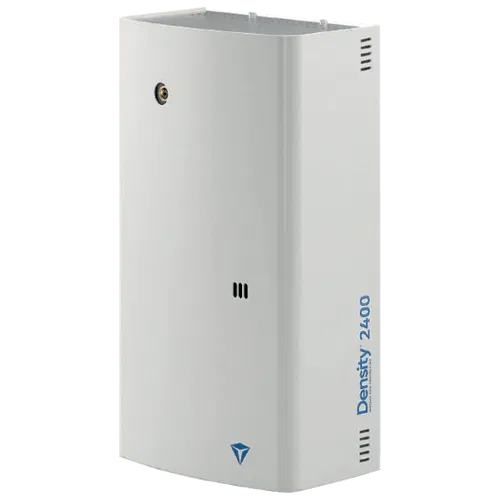
- Per-Unit Hardware: Commercial and enterprise-grade fog generators (such as the Density 2400 and HP6000 series) are engineered for robust, high-frequency industrial environments. Units range in price based on room volume and discharge speed.
- Installation and Integration: Professional installation: including secure mounting, electrical integration, and seamless connection with existing NSI and SSAIB-approved alarm and CCTV systems: ensures faultless activation.
- Consumables and Maintenance: Unlike complex mechanical security assets, ongoing maintenance is minimal. Annual service checks combined with periodic fog fluid cartridge replacements generally incur modest annual costs in the low hundreds of pounds.
2. The Context of Overall Security Budgets
Manufacturing facilities routinely invest heavily in security infrastructure. Mid-range security projects (access control, CCTV grids, perimeter fencing) for facilities between 50,000 and 250,000 square feet frequently run into tens or hundreds of thousands of pounds.
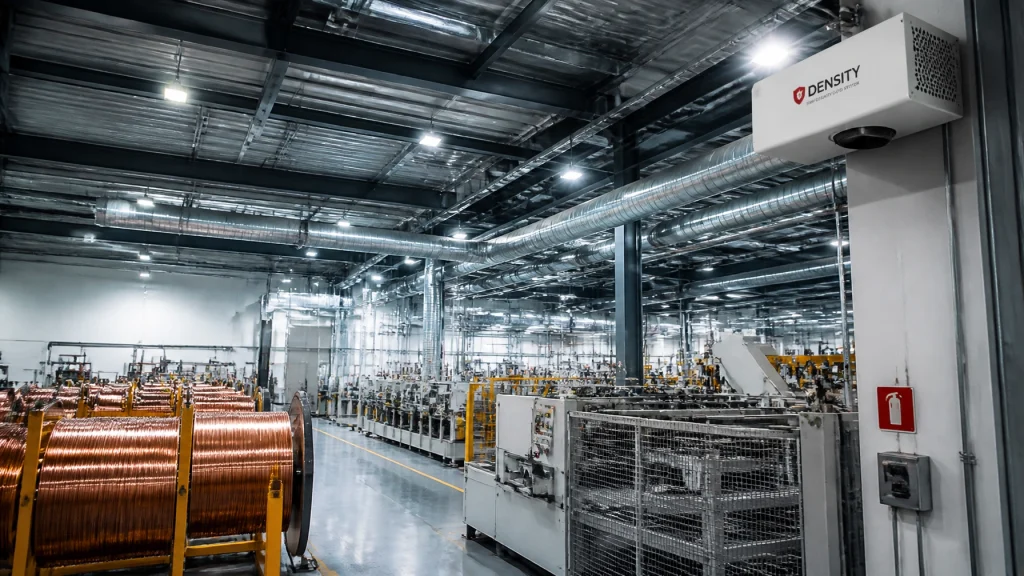
Within that broader security ecosystem, a security fog deployment represents a highly focused, cost-effective layer. Rather than blanketing an entire sprawling campus with expensive reactive cameras, fog systems protect critical high-risk zones: such as tool cribs, copper storage, and component assembly lines: where theft causes the most severe operational bottlenecks.
Unmatched Speed and Performance Specs
Why do industrial facilities choose active security fog over passive alternatives? It comes down to reaction speed and volumetric output.
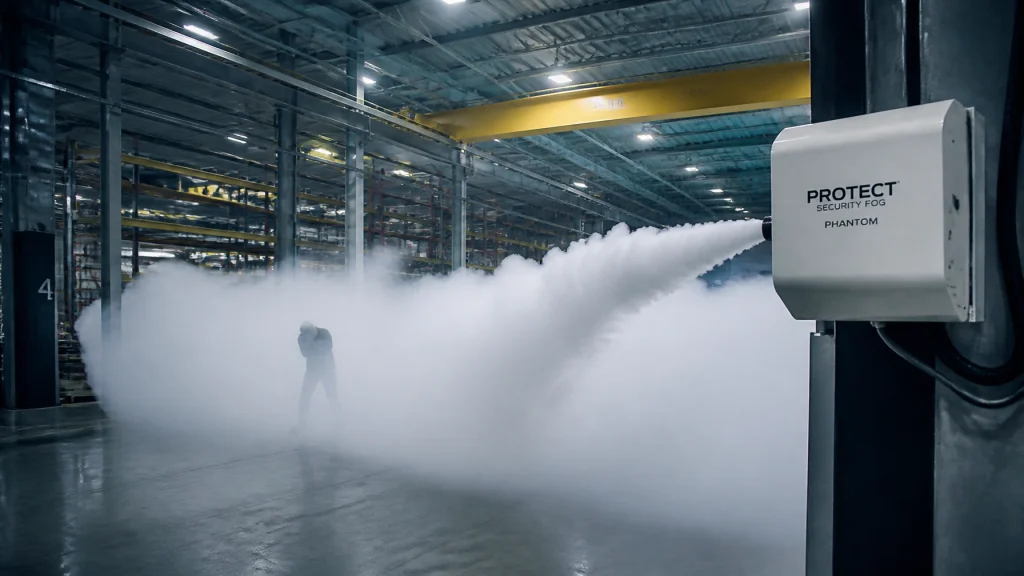
When an intruder trips a validated perimeter or internal sensor, modern high-performance fog generators do not wait for security guards to respond. Systems deploy in less than a single second and can create over 70 cubic metres of fog per second, instantly reducing visibility to near-zero.

By disorienting intruders instantly, the system neutralizes the threat while the thieves are still on the premises. They cannot see high-value raw materials like copper wire, semiconductor chips, or specialized machinery parts, forcing them to flee empty-handed long before police or response teams arrive.
ROI Breakdown: How Security Fog Pays for Itself
For facility managers presenting business cases to executive boards, demonstrating a clear financial return is essential. Security fog delivers ROI through three primary mechanisms:
Reducing or Eliminating 24/7 Guard Post Costs
Many large manufacturing and industrial sites rely on round-the-clock physical security guards to deter intruders. A single 24/7 guard post can easily cost between £150,000 and £300,000+ per year in labor, training, and overhead.
By integrating automated security fog systems across key zones, facilities can often optimize their guarding strategies: transitioning from costly 24/7 static guard posts to more efficient patrol-based or remote-monitored oversight. When a £15,000 to £25,000 fog investment replaces or significantly reduces a continuous guard staffing expense, the payback period is achieved in under 6 months.
Preventing the True Cost of Production Downtime
The physical value of stolen copper or microchips is rarely the most expensive part of a factory break-in. The true financial devastation comes from production downtime.
- If a midnight break-in destroys specialized tooling, halts a core assembly line, or damages vital machinery wiring, production can grind to a halt for days or weeks.
- Lost output, delayed client deliveries, contractual penalties, and emergency equipment replacement can quickly scale losses into hundreds of thousands of pounds.
Stopping a single major theft event before the production line stops entirely covers the initial cost of a comprehensive fog installation many times over. Learn more about safeguarding critical infrastructure on our manufacturing sector page.
Commercial Insurance Premiums and Compliance
Commercial insurers insuring high-risk industrial plants increasingly favor active security measures over passive ones. Because NSI and SSAIB-approved security fog systems provide active deterrence that drastically lowers insurer risk profiles, many businesses qualify for reduced insurance premiums. Over a few years, these cumulative premium savings contribute directly back to the bottom line.
Modelling Your Facility’s ROI
When building your security budget for 2026, evaluating your site requires a straightforward calculation:

- Map Your High-Risk Zones: Identify vulnerable areas where high-value assets are concentrated (tool cribs, raw material stores, finished goods warehouses).
- Review Past Loss & Guard Expenses: Calculate your annual spending on guarding services alongside historical losses from theft or forced entry.
- Calculate Payback: Divide your estimated total system CAPEX by your projected annual savings (reduced guarding hours + avoided downtime costs + insurance discounts).
For the vast majority of industrial operators, the math is decisive: active security fog is not an expense; it is insurance against enterprise-level disruption.
Secure Your Production Line Today
Protecting your manufacturing facility against escalating theft and costly downtime requires more than a camera that records a crime after it happens. It requires active, instant deterrence.
Ready to discover the exact investment required for your facility? Contact Density today to speak with our security specialists and arrange a tailored site survey.