For UK manufacturers, the phrase "metal theft" often conjures images of remote railway lines or isolated solar farms targeted by opportunistic thieves. However, recent data highlights a starkly different reality. While overall metal theft incidents across the UK have trended downward over the past few years, copper theft has experienced a persistent, aggressive surge.
Accounting for one in every five metal theft cases, copper has become a primary target for organised crime syndicates. With commodity prices hovering near record highs: reaching approximately £10,269 per tonne: the temptation for criminals has never been greater. For UK manufacturing plants, storage depots, and industrial sites, the cost is no longer measured solely in the price of the stolen raw material. The real devastation lies in production line downtime, halted operations, and catastrophic collateral damage.
In this deep dive, we examine the true scale of the crisis in 2026, the financial and operational impact on UK manufacturing, and why traditional security measures are falling short in effective copper theft prevention UK.
The 2026 Landscape: Why Copper Theft Is Bucking the Trend
Recent analysis of UK police and industry crime data reveals a fascinating and troubling divergence. Overall metal theft incidents have fallen by roughly 32% since 2023. Yet, copper theft incidents have risen in absolute terms, growing from 13% of all metal theft to a staggering 20% by 2025: with early 2026 indicators pointing to further increases.

Why is copper bucking the general trend? The answer is simple economics. Copper is essential to modern manufacturing, renewable energy infrastructure, electronics, and electrical wiring. As global demand outstrips supply, market values have climbed dramatically. Driven by these soaring commodity prices, regional hotspots have seen dramatic spikes: such as the North East of England recording triple-digit percentage surges in cable-related thefts over short observation windows.
Organised criminal gangs are sophisticated. They target industrial units, maintenance stores, and component warehouses where large volumes of copper busbars, wiring looms, transformer windings, and raw stock are stored.
The Real Cost: Beyond the Price of Metal
When a facility manager calculates the impact of a break-in, they often look at replacement costs. If £15,000 worth of copper wire or busbars is stolen, surely that is the total loss?
Unfortunately, in manufacturing, the financial mathematics are far more punishing. The UK economy loses an estimated £480 to £500 million annually to cable and metal theft, but the ripples hit individual factories much harder:
- Production Line Halts: If thieves rip out critical power feeds or machine control cabling during a night raid, the morning shift cannot start. A single day of unplanned downtime in a medium-sized manufacturing facility can cost tens or even hundreds of thousands of pounds in lost output.
- Collateral Damage: Intenders rarely extract copper neatly. Ripping heavy-gauge cabling out of conduit trays damages walls, control panels, sensitive machinery, and structural housings, adding thousands in repair bills.
- Supply Chain Delays: If your factory cannot fulfil orders on time due to a security breach, downstream clients take their business elsewhere.
- Insurance Premiums and Excess: Repeated claims for metal theft lead commercial insurers to hike premiums or impose strict security conditions before renewing coverage.
Why Passive Security Fails at Stopping Metal Thieves
For decades, facility managers relied on perimeter fences, roller shutters, and closed-circuit television (CCTV) cameras to secure their sites. While these measures remain foundational, they suffer from a fatal flaw: they are entirely passive.

When an intruder breaches a perimeter fence or forces a roller shutter at 2:00 AM, standard CCTV simply records the crime. Even monitored CCTV relies on an Alarm Receiving Centre (ARC) verifying the footage, alerting keyholders, and dispatching police response units.
In industrial areas, police response times can range from 15 minutes to over an hour. By the time authorities arrive, professional thieves have already stripped thousands of pounds of copper cabling and vanished into the night. Passive security documents the crime; it does not stop it.
The Solution: Active Deterrence and High-Speed Security Fog
To achieve effective metal theft prevention, modern UK manufacturers are shifting away from purely reactive measures toward active deterrence. Active deterrence is designed to neutralise a break-in the moment it occurs: before intruders can locate, dismantle, and steal high-value assets.
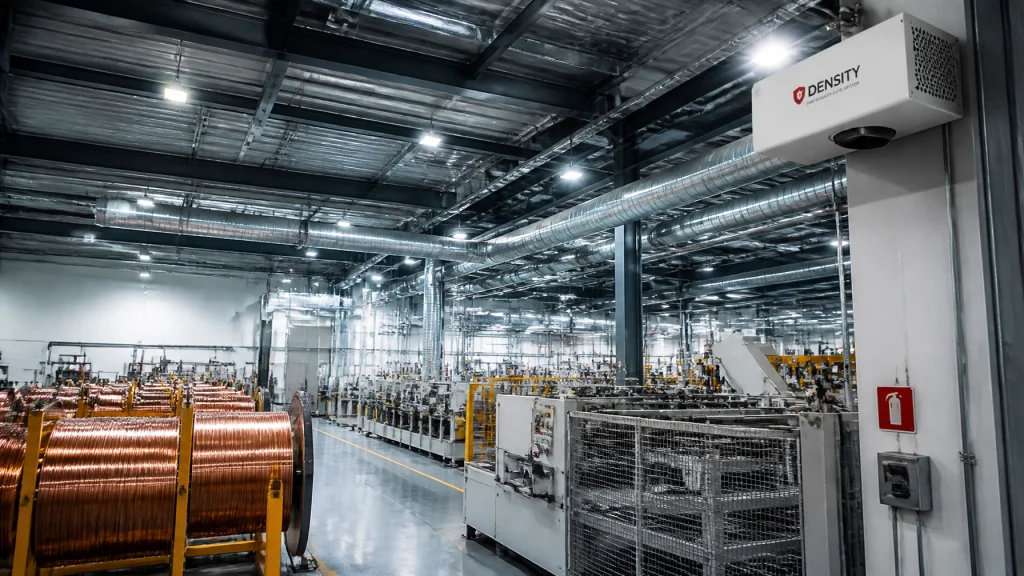
This is where high-speed security fogging systems: such as the Density HP6000 and Density 2400 series: transform industrial security.

How Security Fog Neutralises Copper Theft in Seconds
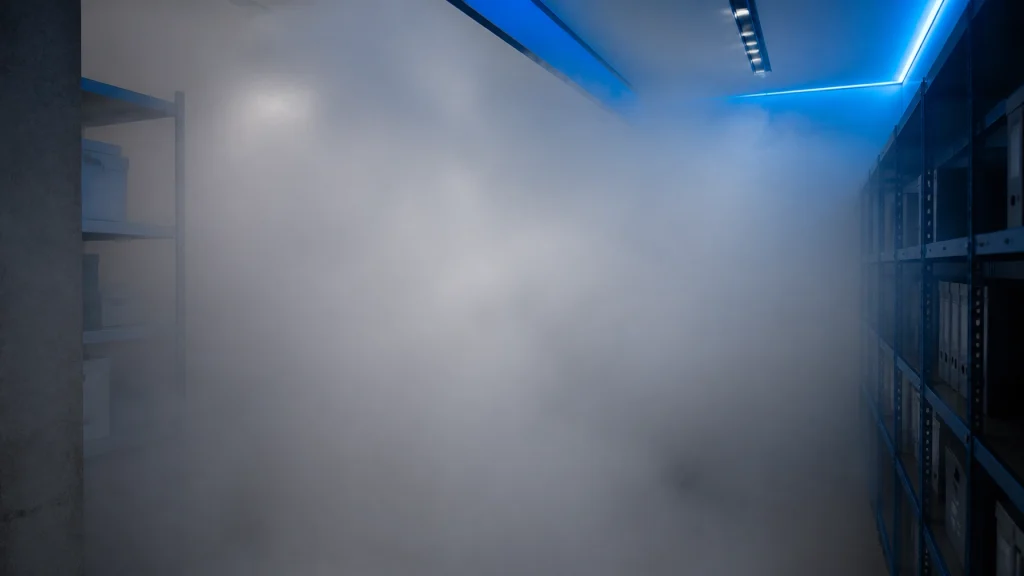
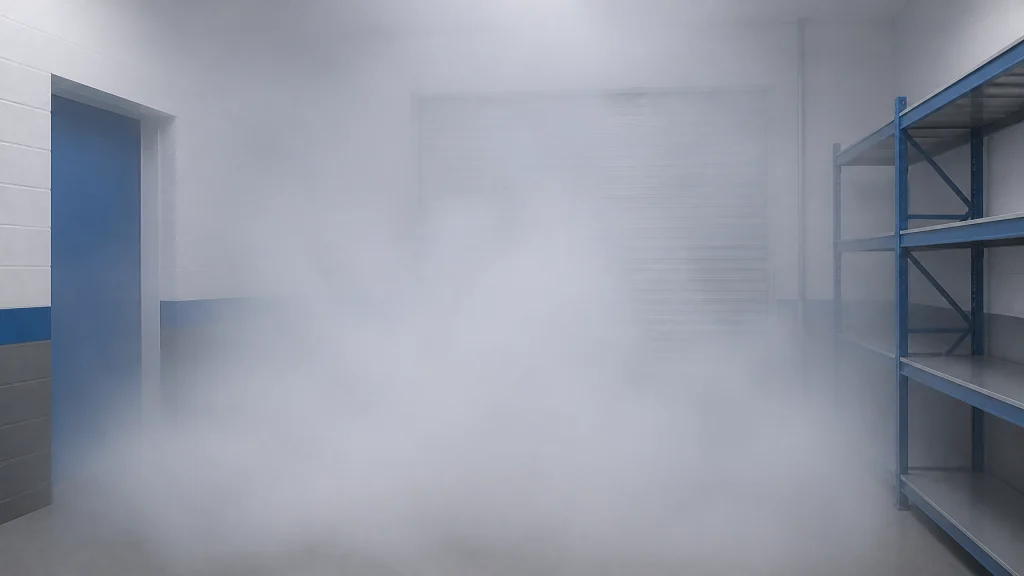
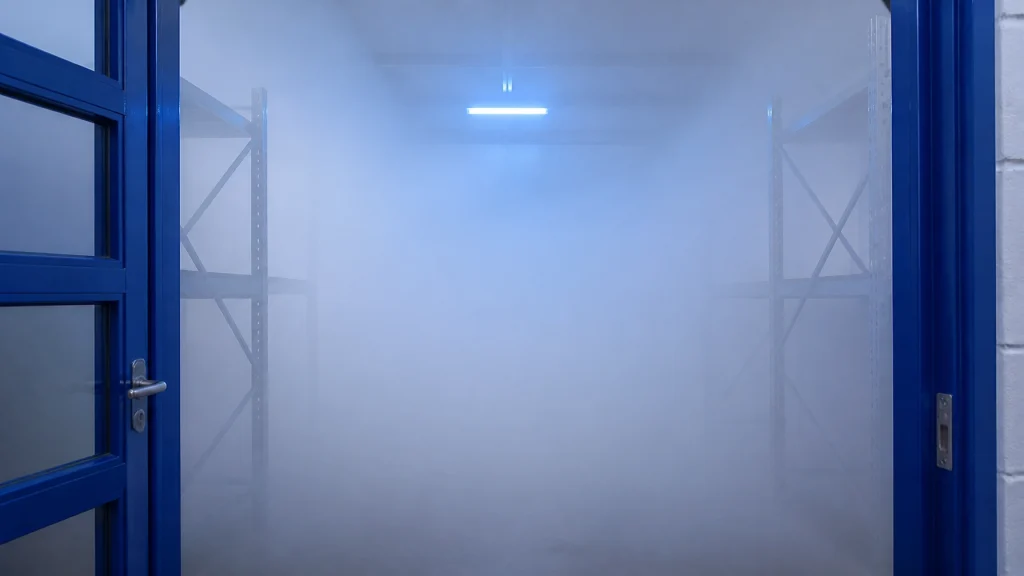
When an intruder triggers an intrusion sensor, a professional fogging system instantly fills the protected space with a dense, completely harmless, and dry fog.
- Lightning-Fast Deployment: High-performance systems like Density units deploy in less than a single second, ensuring there is no delay between detection and response.
- Overwhelming Volume: These systems can create over 70 cubic metres of fog per second, instantly reducing visibility to near zero.
- Complete Disorientation: Intruders cannot steal what they cannot see. Robbed of their sight and orientation, thieves are forced to flee empty-handed rather than linger to harvest valuable copper wiring.
Crucially, Density fog is certified non-toxic and leaves zero residue, meaning it is 100% safe for sensitive manufacturing environments: including food processing, cleanrooms, and precision electronics assembly lines.
Integration, Compliance, and Insurer Approval
Investing in advanced security requires confidence in reliability and compliance. Security fogging systems do not operate in a vacuum; they integrate seamlessly with existing alarm systems, intrusion detectors, and access control infrastructure.
Furthermore, our systems are fully approved for use with NSI (National Security Inspectorate) and SSAIB (Security Systems and Alarms Inspection Board) accredited security setups. Because commercial insurers actively reward robust, certified loss-prevention strategies, installing active fogging can often help businesses secure better terms and lower premiums.
Securing Your Factory for the Future
As copper prices remain high and organised theft syndicates continue to target industrial facilities, waiting until your plant is hit is a risk no business owner can afford. Protecting your raw materials, copper stock, and production line uptime requires moving beyond passive cameras to instant, active intervention.
To learn more about safeguarding your premises, explore our dedicated solutions for Density Security Fog Manufacturing Sectors or speak with our security specialists today.