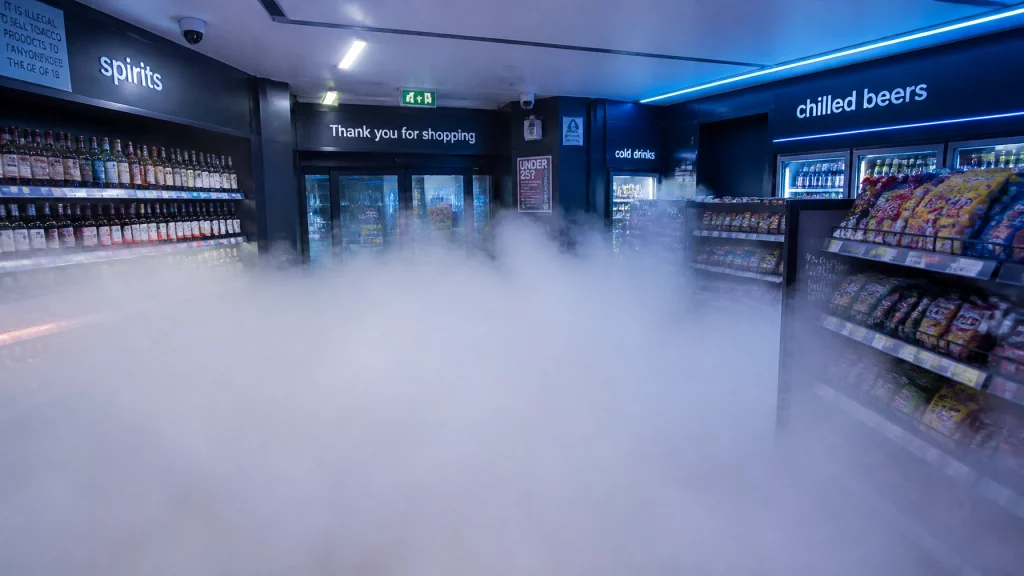
Insurers often reward active security with lower premiums. A security fog system is one of the most active measures you can add. It stops a theft while it’s happening, not just after the fact. Whether that means a discount on your own policy is down to your insurer. Treat this as a case to bring to your broker, not a promised number.
Why insurers favour active security
Businesses that add proven security measures often see lower premiums. Common ranges for monitored alarms and CCTV sit between 5% and 20%. The exact figure depends on your insurer and your wider risk profile. The logic is simple. An insurer’s real cost is the claim, not the premium. Anything that clearly cuts the chance or size of a claim is worth rewarding.
Most of that evidence is built around alarms and CCTV, not fog systems. The same logic should apply to fog. If anything, it applies more, since fog acts during the event, not just before or after it.
What makes a fog system a strong case
A monitored alarm tells someone a break-in is happening. CCTV records it. Neither one stops the theft itself. A fog system does. It fills the room with dense fog within seconds of the alarm going off. That takes away the sight an intruder needs to find or take anything.
That gap matters when you’re making a case to your insurer. You’re not just pointing to a deterrent. You’re pointing to a device that steps in during the loss itself, not after it. The manufacturer’s own figure is useful here: 97% of thefts avoided where fog and an alarm are combined, against 17% with an alarm alone. Use that figure for what it is — a manufacturer stat, not an independent industry one.
What insurers typically want to see
- Proof of professional installation. Most discount schemes need proof the system was properly fitted, not put in by hand.
- Proof it’s wired into your alarm. A fog system linked to an existing, monitored panel makes a stronger case than one running on its own.
- The right paperwork at renewal. Raise it with your broker before or at renewal. Don’t assume it’s already factored in.
Where this fits in a wider risk review
Most insurers don’t look at one device in isolation. They look at the whole site: locks, alarm, CCTV, lighting, staff procedures, and now, increasingly, active deterrents like fog. A fog system is rarely the only reason a premium moves. It’s one more strong item on that list, and often the newest one an insurer hasn’t seen quoted before.
That’s actually a reason to raise it directly rather than wait for it to show up on a renewal form by itself. Brokers price what they can see and document. If a fog system isn’t in your file, it isn’t part of that picture yet.
What we won’t promise
No security vendor, Density included, can promise a set percentage off your premium. That number sits with your insurer, your claims history, and the rest of your risk profile — not with the maker of your equipment. What we can say is that a fog system gives you a genuinely strong case to bring to that talk. The paperwork you need to make that case comes as standard with a proper install.
Frequently asked questions
Does having a security fog system reduce my insurance premium?
It can help build a case for one, but no set discount is promised. Insurers often reward active security, and a fog system is a strong example of it. The final figure is set by your own insurer and policy, not by the maker of the equipment.
What do insurers look for when deciding on a security discount?
Usually a certificate of proper install, proof the system links to a monitored alarm, and a clear note of what’s been fitted. Raise this at renewal, with the right paperwork, rather than asking on the phone.
Will my insurer definitely give me a discount for installing one?
Not for sure, and no vendor can promise that on an insurer’s behalf. It comes down to your insurer’s own rules, your claims history and your wider risk. It’s worth asking outright rather than guessing either way.
What evidence should I give my insurer or broker?
Your install certificate, a note of the system fitted, proof it links to your alarm, and — as useful context — the maker’s fog-plus-alarm figure. Label it clearly as a manufacturer stat, not an independent one.
Does a fog system count as “active” security in the way insurers mean it?
Yes. It steps in during the event, not just before or after it. That’s a different class from passive steps like signage or an unmonitored camera. Point that difference out clearly when you raise it with your insurer.
Thinking about the business case for your own premises? Get a quote and we’ll give you the paperwork your insurer will actually want to see.
This is one of four questions covered in the full security fog standards & safety guide.