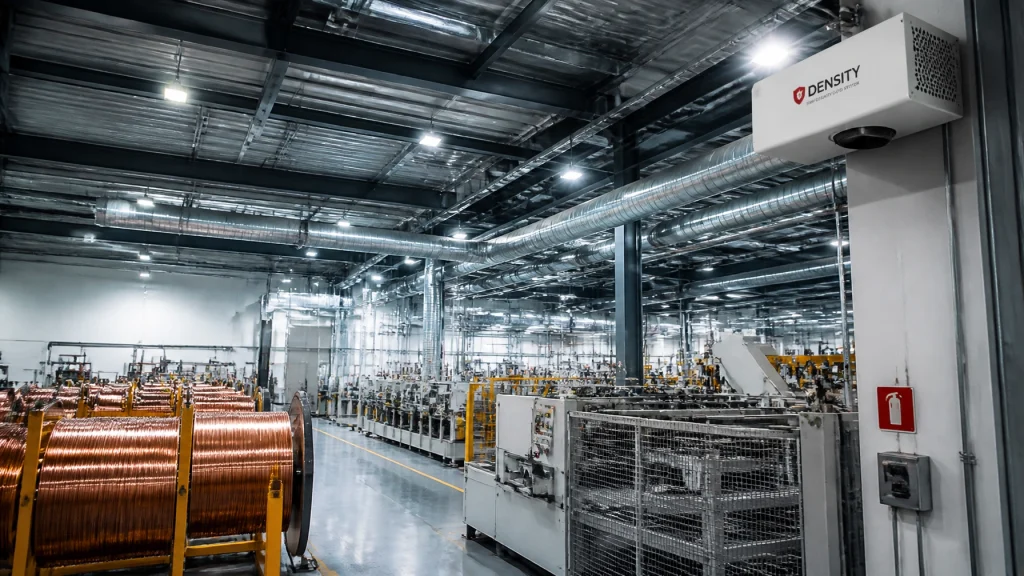
For UK manufacturing business owners and facility managers, commercial insurance renewals have become an increasingly rigorous ordeal. Gone are the days when ticking a box for a basic bell-only alarm or a standard off-the-shelf CCTV kit was enough to secure comprehensive theft cover. Today, commercial insurers scrutinise factory security with microscopic precision. If your plant stores high-value raw materials: such as copper cabling, rare earth metals, or semiconductor components: your policy wording likely contains explicit clauses regarding NSI compatible manufacturing security, alarm grading, and certified installation.
Failing to meet these conditions isn't just a technicality; it can lead to delayed payouts, disputed claims, or outright policy nullification in the event of a devastating break-in.
In this guide, we explore why commercial insurers demand National Security Inspectorate (NSI) and Security Systems and Alarms Inspection Board (SSAIB) approvals, how these standards impact your operations, and how integrating industrial security fog and commercial fogging security ensures you stay fully compliant while achieving active, instant deterrence.
1. Decoding NSI and SSAIB: What Do They Mean for Manufacturers?
When you review your commercial property or theft insurance schedule, you will almost certainly encounter references to UKAS-accredited inspectorates. Specifically, insurers require that intruder alarms, CCTV, and physical or electronic security hardware be installed, commissioned, and maintained by companies certified by either the NSI (National Security Inspectorate) or the SSAIB (Security Systems and Alarms Inspection Board).

What Are NSI and SSAIB?
- NSI (National Security Inspectorate): Widely regarded as the gold standard in the UK security sector. It audits security providers against stringent British and European Standards (BS EN), testing everything from technical engineering competence to staff vetting and business stability.
- SSAIB (Security Systems and Alarms Inspection Board): Another premier UKAS-accredited certification body that inspects security systems companies to ensure they meet rigorous industry codes of practice and regulatory standards.
Why Do Insurers Insist on Them?
Insurers underwrite risk based on predictability. An unverified security system installed by an unaccredited contractor carries unknown failure rates, vulnerable wiring, and improper positioning. An NSI or SSAIB-approved installation provides independent, third-party verification that:
- The equipment meets the correct Alarm Grade (typically Grade 2 or Grade 3 for commercial manufacturing and warehouses).
- The installation complies fully with relevant standards (such as BS EN 50131 for intruder alarms and BS 8243 for police response).
- The system is backed by ongoing maintenance contracts: a standard insurance prerequisite to prevent sensor drift or battery failure.
Without an NSI or SSAIB certificate, your insurer may argue that the premises failed to maintain the "minimum security standard" stipulated in your policy wording, putting your business continuity at extreme risk.
2. The Real Cost of Non-Compliance: When Insurance Claims Fail
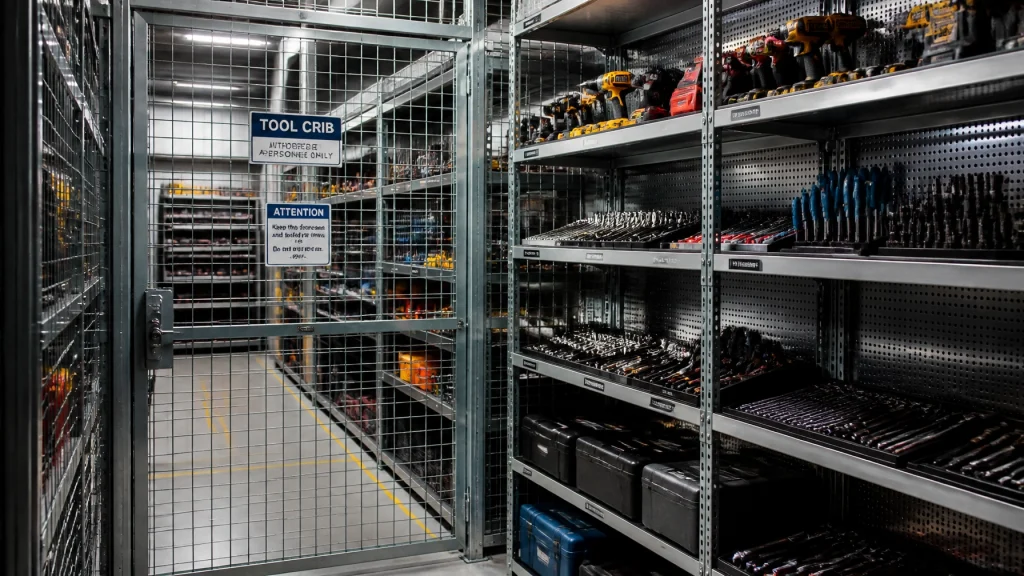
Manufacturing sites are high-stakes environments. A typical night-time raid on a tool crib or a warehouse holding £100,000 worth of raw copper or precision electronics does not just result in material loss: it causes catastrophic production downtime.
When a factory suffers a major theft, the immediate reflex is to notify the insurance broker. However, loss adjusters investigate commercial claims meticulously. If the policy wording mandates an NSI/SSAIB-approved intrusion or security system and you cannot produce the commissioning certificate or service records, the consequences can be severe:
- Repudiated Claims: The insurer denies the payout entirely because a security condition precedent was breached.
- Withheld Police Response: Unapproved systems often fail to meet the criteria for a police Unique Reference Number (URN), meaning emergency response times are downgraded or ignored by local forces.
- Escalating Premiums: Even if a claim is partially paid, your future premiums will skyrocket, or insurers may refuse cover altogether.
This is why forward-thinking operations directors are moving beyond passive compliance. They are pairing traditional certified alarms with active deterrents like industrial security fog systems that not only satisfy risk engineers but physically stop thieves before they can reach high-value stock.
3. Integrating Advanced Protection: The Role of Industrial Security Fog
Traditional intruder alarms and CCTV share one fatal flaw: they are passive.
An alarm sounds, and CCTV records the burglary in high definition, but both actions happen after the intruder has already breached the perimeter. In the 10 to 15 minutes it takes for police or keyholders to arrive, thieves can strip a production line, empty a tool crib, or walk away with tons of valuable raw materials.
This is where commercial fogging security changes the entire equation.

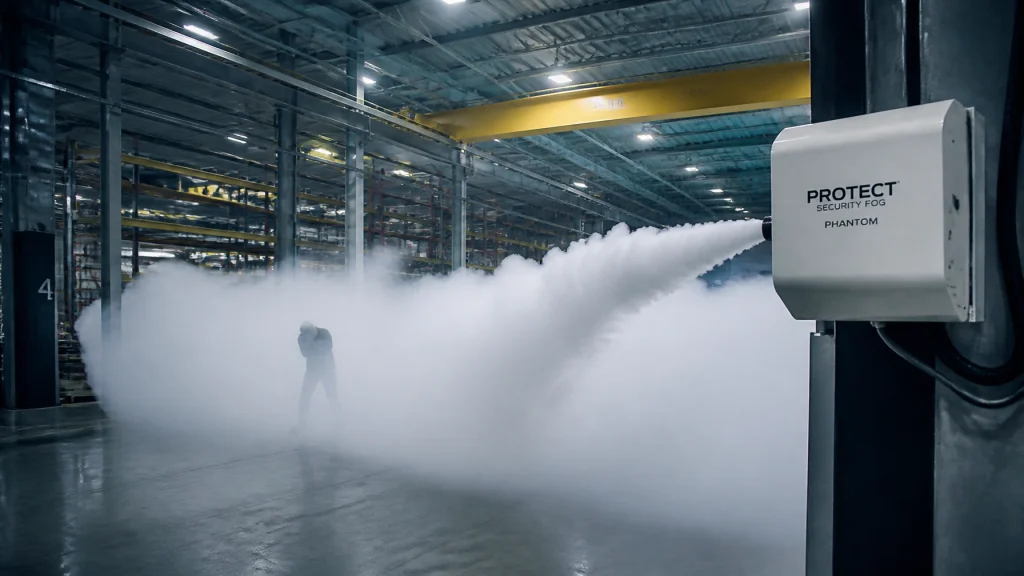
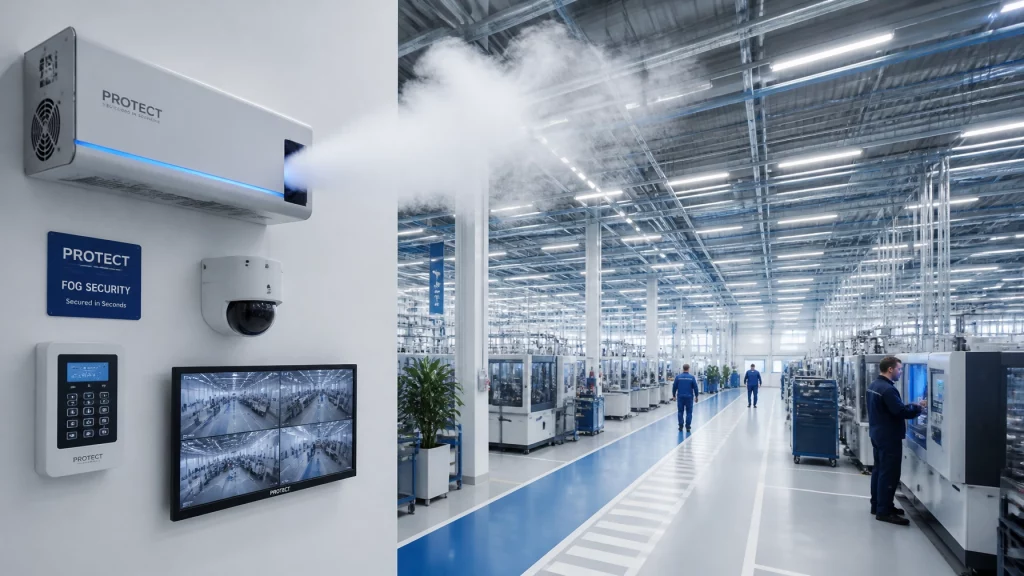
Modern security fog systems: such as the high-speed Density HP6000 and 2400 series: are designed to integrate seamlessly with NSI and SSAIB-approved alarm control panels. When an intruder triggers a verified zone, the fog generator activates instantly, flooding the protected space with dense, impenetrable, non-toxic fog.
Unmatched Engineering Performance
To protect high-value manufacturing assets, speed is everything. Density systems are engineered to perform when seconds count:
- Lightning-Fast Deployment: Our high-speed systems deploy in less than a single second, ensuring no lag between detection and response.
- Massive Volume Output: Capable of creating over 70 cubic metres of fog per second, a single unit can reduce visibility in a large industrial bay or warehouse to near-zero almost instantaneously.
- Total Disorientation: Intruders cannot steal what they cannot see. Deprived of their vision, thieves are forced to flee empty-handed long before plant security or police arrive.
4. Safe for Delicate Manufacturing Environments
Facility managers often ask: "Will security fog damage sensitive machinery, electronics, or food products?"
Unlike crude fire suppression systems or water sprinklers that can ruin expensive machinery and stock, Density security fog is scientifically formulated to be completely clean and safe:
- Residue-Free & Non-Toxic: The fog is harmless to humans, animals, and delicate equipment. It leaves no sticky residue or chemical film, making it entirely safe for electronics manufacturing cleanrooms, packaging lines, and food production facilities.
- Insurer Approved: Because our equipment integrates directly with accredited alarm infrastructure and meets stringent European safety standards, commercial insurers view active fogging as an exemplary risk-mitigation measure. In many cases, installing certified fog systems can help negotiate better premium terms or reduce mandatory excess fees.

5. Checklist: Ensuring Your Factory Meets Insurer Expectations
To keep your commercial underwriters happy and your production lines fully protected, follow this practical compliance checklist:
- Review Your Policy Wording Today: Check your schedule for specific clauses mentioning NSI, SSAIB, alarm grades (Grade 2/3), and mandatory maintenance schedules.
- Audit Your Current Installers: Verify that the company maintaining your intruder alarms, CCTV, and access control holds current NSI Gold/Silver or SSAIB certification. Ask for their certificate numbers.
- Upgrade to Active Deterrence: If your facility holds valuable copper, semiconductors, or specialized tooling, supplement your existing system with NSI compatible manufacturing security fog units.
- Maintain Service Logs: Ensure you have documented proof of bi-annual service visits for monitored systems. Insurers treat missing maintenance logs as a breach of warranty.
- Consult Your Security Partner: Speak with industrial security specialists who understand both the rigorous demands of UK commercial insurers and the practical layout of manufacturing plants.
Secure Your Facility Before the Next Audit
Don't wait for a break-in: or an insurance claim rejection: to test the strength of your factory security. By combining NSI and SSAIB-approved alarm infrastructure with instantaneous industrial security fog, you create an unbreakable shield around your production line, raw materials, and staff.
Ready to upgrade your plant security and satisfy your commercial insurer? Get in touch with the Density team today to discuss a bespoke commercial fogging security solution tailored to your manufacturing facility.