For any operations manager in the UK, the primary objective is straightforward: keep the production line moving safely, efficiently, and on schedule. Yet, plant security is frequently treated as an afterthought: addressed only after a costly break-in, copper theft, or tool crib raid halts operations. When a facility suffers a security breach, the true cost isn't just the missing stock; it is the catastrophic downtime, delayed client deliveries, and expensive equipment repairs that follow.
Investing in robust factory security systems is no longer just about insurance compliance or insurance checkboxes. Modern industrial environments require advanced manufacturing security solutions that actively deter intruders before they can cause thousands of pounds in damages.
In this comprehensive guide, we examine what every operations manager needs to know before investing in new security infrastructure, moving beyond passive surveillance into active, high-speed protection.
1. The Shifting Landscape of Manufacturing Threats
UK manufacturing sites house immense value: raw commodities like copper and aluminum, precision components, high-value semiconductors, and specialized tool cribs. Traditional perimeter fencing and static CCTV cameras are no longer enough to stop organized criminal gangs who know how to bypass delayed police responses.

While passive monitoring systems record crimes in progress, they do nothing to prevent the initial theft or stop intruders from smashing through assembly areas. By the time a security guard or local response unit arrives 15 to 20 minutes later, the criminals have already fled with high-value materials, leaving behind ruined machinery and shuttered production lines.
2. Reactive vs. Active Deterrence: Why Traditional CCTV Falls Short
When evaluating factory security systems, decision-makers often fall into the trap of installing more cameras. However, cameras are inherently reactive. They provide forensic evidence after the fact, but they cannot physically stop a thief from walking out with your company’s critical assets.
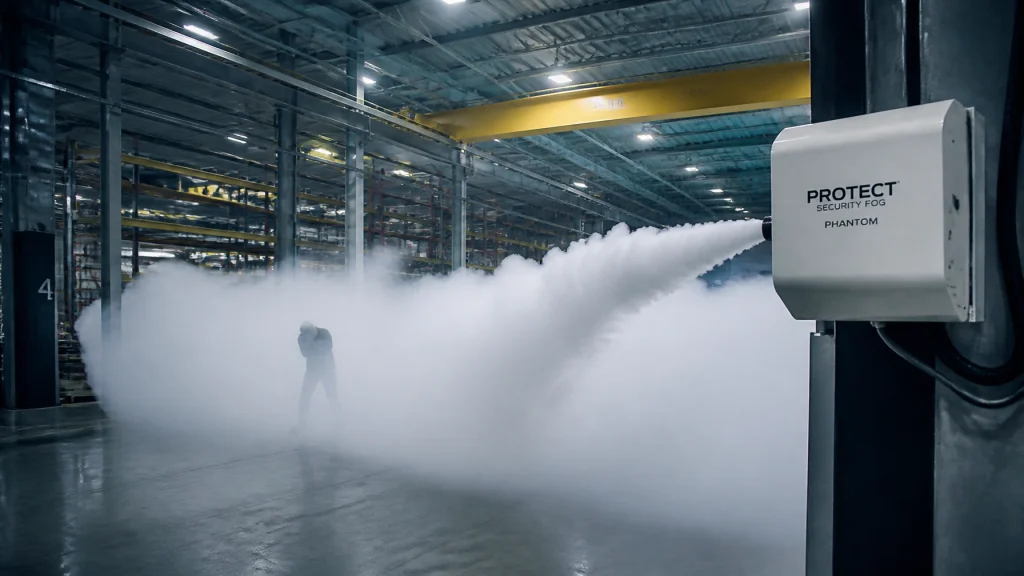
Active deterrence changes the entire dynamic. Instead of waiting for a crime to unfold, active systems neutralize threats within seconds. This is where high-speed security fogging systems: such as the Density HP6000 and 2400 series featured in our manufacturing security solutions: redefine industrial protection.
How High-Speed Security Fog Works
When an intruder triggers a monitored sensor or alarm, high-density security fog generators activate instantly.
- Lightning-Fast Deployment: These advanced systems deploy in less than a single second.
- Massive Coverage: Capable of creating over 70 cubic metres of fog per second, they instantly flood the target zone.
- Complete Disorientation: Visibility is reduced to near-zero, making it impossible for intruders to locate valuable inventory, tools, or exit routes. Forced to flee empty-handed, criminals are neutralized long before they can disrupt your operations.
3. Key Zones Every Operations Manager Must Protect
A secure manufacturing facility requires a layered defense strategy tailored to specific high-risk zones across the plant floor:
Perimeter and Access Points
Your first line of defense is perimeter fencing, automated gates, and intelligent access control. Combining badge readers, biometrics, and thermal or AI-enabled cameras ensures that only authorized personnel enter the site.
Tool Cribs and Maintenance Stores
Maintenance stores are prime targets for night-shift thefts. Specialized tools, replacement motors, and consumable electronics are easily pocketed and resold. Securing these enclosures with rapid-deployment security fog ensures immediate neutralization of internal or external opportunistic theft.

Raw Material and High-Value Component Storage
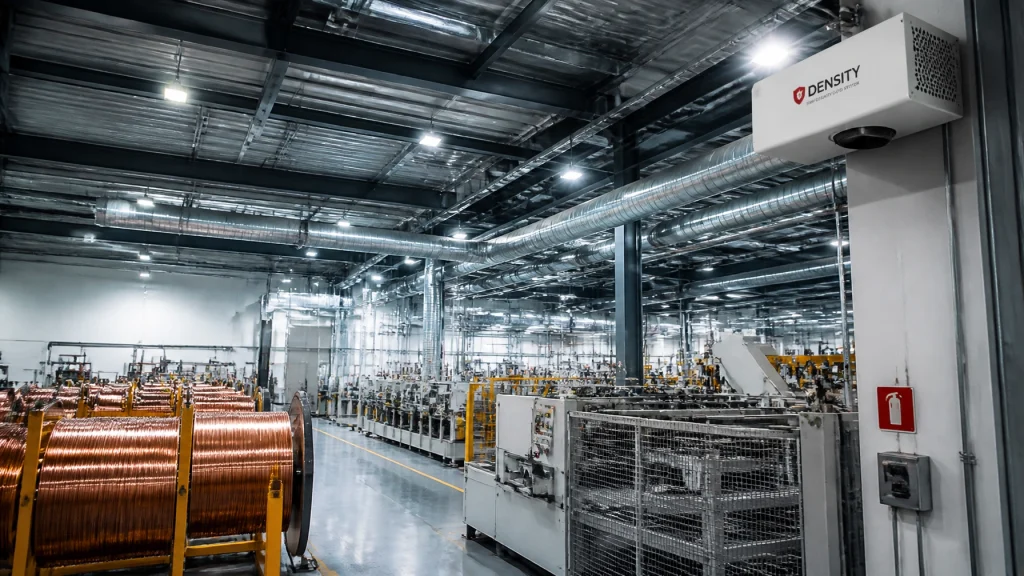
Whether storing copper cabling, rare earth metals, or sensitive semiconductor wafers, high-value storage bays need dedicated over-watch. Integrating rapid fogging units directly into these storage vaults protects your bottom line from skyrocketing commodity theft.
4. Compliance, Safety, and Commercial Insurers
Operations managers must also navigate the complex world of insurance mandates and regulatory approvals. Commercial insurers increasingly penalize facilities with high claims histories or inadequate security measures.
To satisfy underwriters, your security architecture should be fully approved for use with NSI (National Security Inspectorate) and SSAIB (Security Systems and Alarms Inspection Board) accredited alarm systems. Furthermore, in environments like food processing, electronics manufacturing, and pharmaceutical plants, security solutions must be completely safe and non-toxic. Density fogging systems leave zero residue on sensitive electronics, delicate machinery, or food production lines, making them uniquely suited for stringent manufacturing environments.
5. Evaluating the True ROI of Factory Security Systems
When presenting a security upgrade to the board or financial director, framing the investment around return on investment (ROI) is crucial. Calculate the cost not just by the hardware price tag, but by the financial impact of avoiding:
- Production Downtime: A single day of halted manufacturing can cost tens or hundreds of thousands of pounds in lost output.
- Equipment Replacement Costs: Protecting heavy machinery and proprietary tooling from vandalism.
- Insurance Premium Reductions: Many commercial insurers offer lower premiums for facilities equipped with NSI/SSAIB-approved active deterrence systems.

Summary Checklist for Operations Managers
Before purchasing new manufacturing security solutions, ensure your evaluation answers these key questions:
- Does the system actively stop theft, or just record it? Prioritize active deterrence like security fog over passive CCTV alone.
- How quickly does it respond? Systems that deploy in under a second and generate over 70 cubic metres of fog per second stop intruders before they reach inventory.
- Is it certified? Look for NSI and SSAIB compatibility to ensure full insurance backing.
- Is it safe for your specific environment? Ensure non-toxic, residue-free operation suitable for sensitive electronics or food manufacturing zones.
By shifting from a reactive mindset to an active, layered security strategy, you protect your workers, your inventory, and your continuous production schedule.