Prepare public-sector sites before the clocks change
Autumn changes the risk profile for unmanned and lightly staffed public-sector premises. Earlier darkness creates longer periods in which an intruder can approach unseen, test perimeter security and work inside a building before a keyholder or police response arrives. Schools, council depots, NHS pharmacies, civic buildings and police evidence stores can all be exposed during the same out-of-hours window.
The national picture needs careful interpretation. The ONS crime bulletin for the year ending September 2025 recorded 229,223 police-recorded burglary offences across England and Wales, a 12% fall compared with the previous year. That does not mean individual sites can assume their risk has disappeared. The figures include residential and non-residential premises, while the Crime Survey for England and Wales excludes crimes against businesses and public-sector organisations.
The Home Office’s 2025 crime outcomes data shows that 69.6% of non-residential burglary offences were closed with no suspect identified. For facilities managers and procurement teams, that reinforces a practical point: detection and investigation matter, but they do not restore stolen equipment, medicines, vehicles or operational capacity.
Police.uk guidance for business premises recommends robust doors and windows, secure access points, suitable lighting, maintained alarms and effective CCTV. These are essential layers. However, they remain primarily passive or detective controls. Once an intruder has entered, CCTV records the event and an alarm transmits the alert. Neither necessarily stops the person reaching the target during the response window.
That is why autumn security reviews should ask a direct question: what happens in the first few seconds after a confirmed intrusion?
Find out about public-sector security fog systems UK

The strongest autumn plan begins with a site-by-site review rather than a generic checklist. Map doors, shutters, roof access, loading areas, vehicle compounds and internal routes to high-value storage. Check that lighting supports CCTV rather than creating deep shadows. Confirm that alarm zones are correctly set when the last member of staff leaves. Review keyholder arrangements, monitoring procedures and escalation routes.
For school security systems UK, safeguarding and duty of care should remain central. Equipment stores, IT rooms, maintenance areas and outbuildings may be empty for long periods, particularly during evenings, weekends and school holidays. A layered approach to school and academy site protection should help prevent unauthorised access, identify an incident quickly and limit the opportunity to remove assets.
A council depot presents a different exposure. Metals, cables, tools, plant, vehicle components and fuel-related equipment can be attractive to organised offenders. A practical council metals theft deterrent should cover both the perimeter and the secure areas where assets are stored. For larger internal volumes, council depot security fog can add active protection to an existing alarm, while council fleet compound security should also consider gates, lighting, vehicle immobilisation and access control.
NHS sites face a similar challenge, with the added need to protect medicines, medical equipment and continuity of care. Pharmacy security UK is not limited to the dispensary. Estates teams should consider delivery areas, controlled storage, equipment rooms and satellite facilities. An NHS pharmacy security fog installation can be configured to protect a defined internal zone, complementing the existing alarm and staff panic arrangements. Density fog is non-toxic, non-corrosive and leaves no residue, making it suitable for sensitive environments when specified and installed correctly.

The same principle applies to government building security fog, civic site theft prevention and police evidence store security. The objective is not to replace physical security, access control, alarms or CCTV. It is to introduce an active layer that acts while the incident is in progress.
The message spine is straightforward: Alarms detect. CCTV records. Density prevents. Passive security fails.
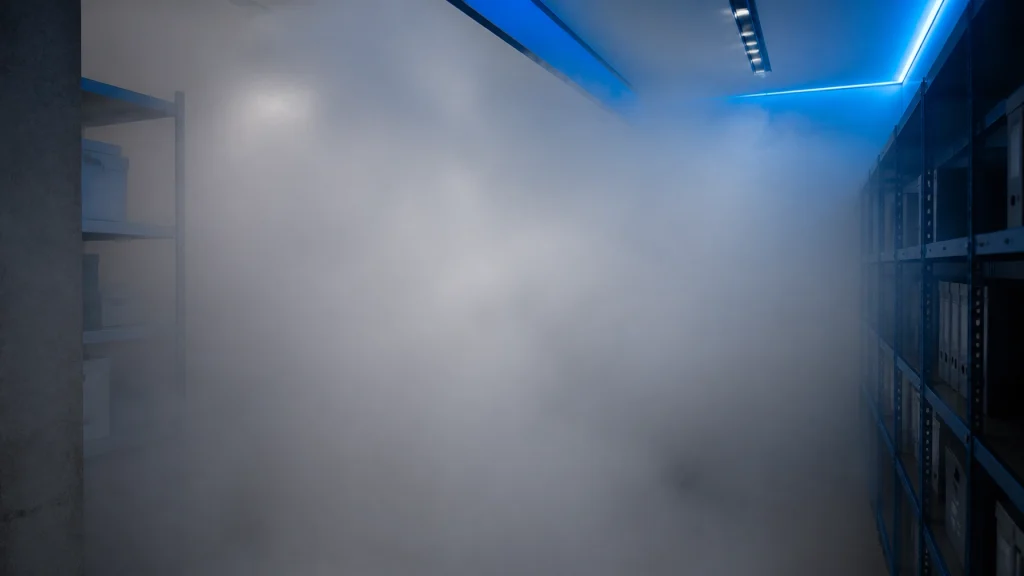
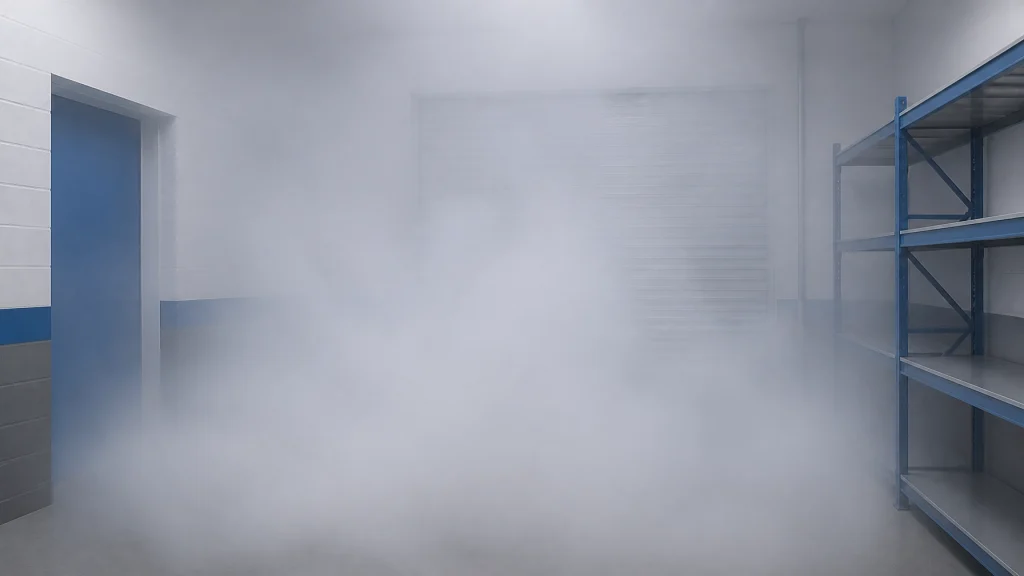
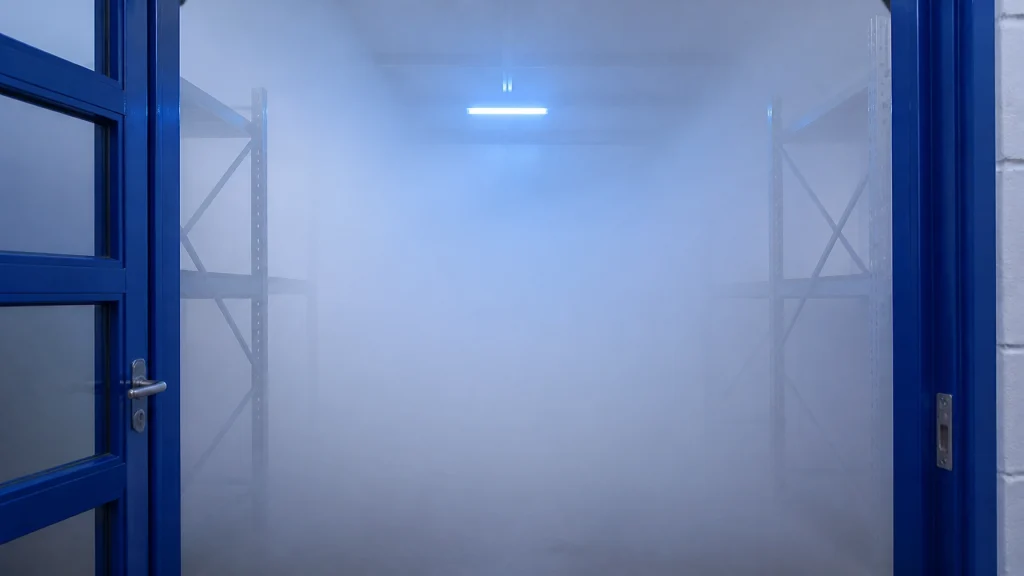
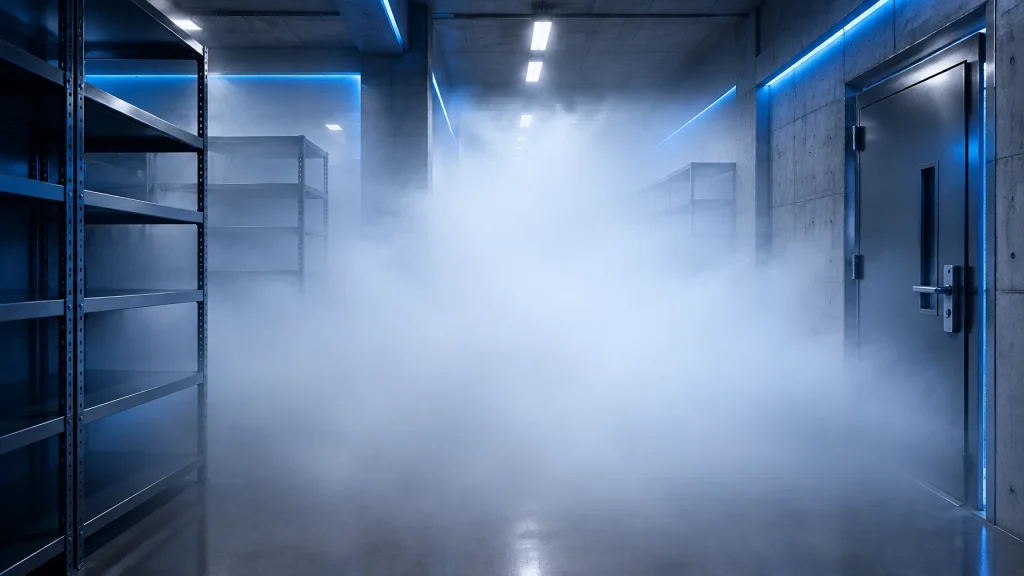
Density security fog deploys in three seconds when triggered by the existing alarm or compatible sensor arrangement. It rapidly removes visibility inside the protected volume, making it difficult for an intruder to locate stock, navigate to an exit or carry equipment away. What you can't see you can't steal.
Performance must be matched to the protected volume, measured in cubic metres. The Density® 2400 Lite is suitable for larger secure areas, covering up to 2,400 m³. Density® Basic covers up to 390 m³ per shot and is suited to smaller stores, plant rooms and defined secure areas. Density® UNIK is a niche, battery-powered option for a single high-value point where mains power is unavailable or impractical.
The range is available to compare here, with further information on Density Basic, Density UNIK and Density Lite fog systems. Site surveys should confirm the volume, zoning, alarm interface, ventilation arrangements and operational requirements before procurement.
Density systems are approved for use with NSI and SSAIB security systems and integrate with existing alarm infrastructure. This supports an NSI compatible public-sector security specification and SSAIB approved fog systems procurement route without requiring an entirely new security platform.
There is also a clear evidence-based distinction between active and passive protection. Density’s stated performance figure is: 97% of thefts avoided with security fog vs 17% with an alarm/CCTV alone. This is not a guarantee and should not replace a full risk assessment. It does, however, illustrate why public-sector active deterrence is increasingly considered where response times create a material vulnerability.
Active security systems such as Density security fog are increasingly mandated as a prerequisite of cover. Procurement teams should therefore review insurer and RPA scheme requirements before autumn renewal, rather than waiting until a condition is raised after an incident. The requirement is not limited to one type of site: it can affect municipal depot break-in prevention, NHS facility security systems, civic buildings and unmanned public assets.
Procurement frameworks also need attention. Scotland, Wales and Northern Ireland have different procurement frameworks, and local authority, NHS, education and police bodies may follow different routes to market. Buyers should confirm the relevant framework, specification requirements, installer competency, maintenance arrangements and acceptance testing for their jurisdiction.
A seasonal review should be completed before the darker evenings become established. Review the site. Confirm the response gap. Then decide whether detection alone is sufficient for the assets and services at risk.
FAQ box
Does autumn always bring more public-sector burglaries?
National burglary levels can rise or fall from year to year, and publicly available statistics do not routinely separate schools, pharmacies and council buildings. However, earlier darkness creates longer out-of-hours periods in which poorly lit or unmanned premises may be approached and entered with less chance of immediate intervention. Autumn is therefore a sensible point for a security review.Can security fog work with an existing alarm?
Yes. Density systems are approved for use with NSI and SSAIB security systems and are designed to connect to existing alarm infrastructure. The final interface and activation sequence should be confirmed by a competent installer and documented during commissioning.Is security fog suitable for an NHS pharmacy or evidence store?
Density fog is non-toxic, non-corrosive and leaves no residue. It can be considered for NHS pharmacy security fog, medical equipment stores, document archives and police evidence store security, subject to a site survey and approval by the relevant estates, facilities and security teams.Which Density system is right for a public-sector site?
The answer depends on protected volume, layout, risk concentration and power availability. Density 2400 Lite is intended for larger areas, Density Basic for smaller secure rooms and Density UNIK for a single high-value point where a battery-powered solution is required. Coverage is assessed in m³, not m².Does fog replace CCTV, alarms or physical security?
No. Effective protection remains layered. Doors, locks, lighting, access control, alarms and CCTV provide important deterrence and evidence. Security fog adds active intervention during the first seconds of an intrusion, before assets can be removed.
The Density case studies archive provides examples of how security fog complements existing systems in real premises. For a council depot, school, NHS facility, police station or civic building, the next step is a site-specific assessment of risk, volume and response time.