In 2026, the stakes for UK manufacturing have never been higher. With copper prices surging past £10,200 per tonne and metal theft costing the UK economy an estimated £500 million annually, your facility is no longer just a place of production: it is a high-value target for organised crime groups (OCGs).
For a facility manager or business owner, the theft of a few hundred meters of cabling or a pallet of raw copper busbars is rarely just an insurance claim. It is a catastrophic event that can halt production lines for days, if not weeks. In fact, unplanned downtime in the UK manufacturing sector is projected to cost up to £736 million per week this year. When the "real cost" of theft includes missed delivery deadlines, contractual penalties, and idle labour, a single raid can be the difference between a profitable quarter and a financial crisis.
Traditional security measures like CCTV and fences are often passive; they record the crime but do nothing to stop it. To protect your site in this climate, you need a proactive, layered strategy. Here are five essential ways to stop factory metal theft before it happens.
1. Perimeter Hardening and Physical Deterrents
The first line of defence is ensuring that your site is a "hard target." Most copper thefts in manufacturing environments are either opportunistic or involve heavy vehicles to move bulk loads of cable and scrap.
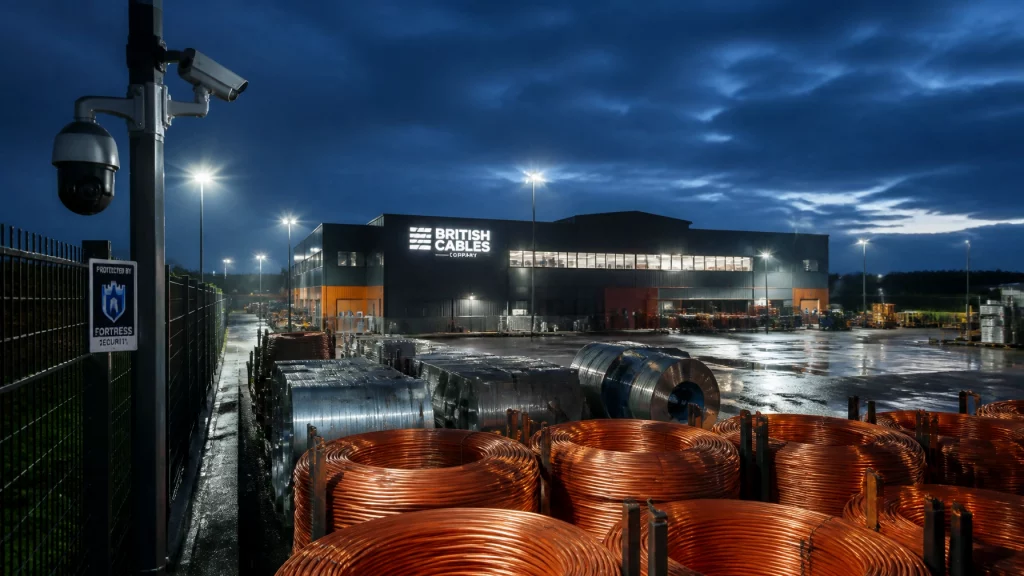
- Reinforce the Perimeter: Standard chain-link fencing is easily bypassed. Upgrade to welded mesh or palisade fencing that is difficult to cut or climb. Ensure all gates are not only locked but reinforced with anti-ram barriers or heavy-duty bollards to prevent vehicle-assisted forced entry.
- Strategic Lighting: Shadows are a thief's best friend. Motion-activated LED floodlights should cover every inch of your external yard, especially near loading bays and utility substations where cabling is exposed.
- Clear the Sightlines: Remove any overgrown vegetation or stacked pallets near the perimeter that could provide cover for intruders. If a thief feels exposed the moment they cross the fence line, they are far more likely to abandon the attempt.

2. Internal Asset Segregation and Secure Storage
If a thief manages to breach your perimeter, your internal layout should act as a secondary series of obstacles. Leaving copper stock or high-value scrap in open racking is an invitation for trouble.
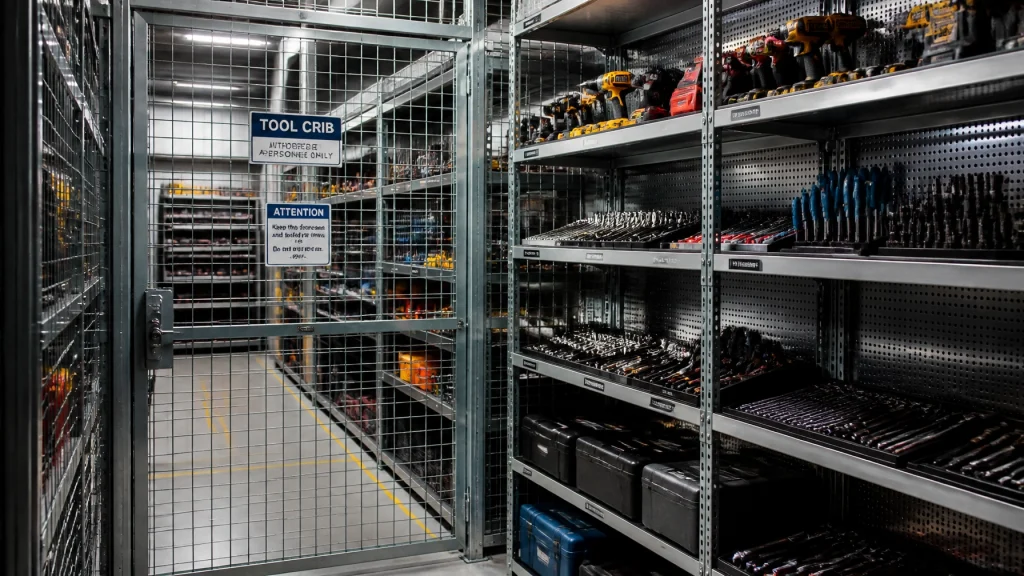
- The "Room within a Room" Concept: Store your raw copper, semiconductors, and high-value tool cribs in reinforced, windowless rooms with independent access control.
- Secure Scrap Management: Under current Environment Agency guidance, manufacturers are required to segregate recyclable metals. This makes copper scrap highly identifiable. Do not store it in open skips. Use lockable, heavy-duty containers that are kept inside a secure warehouse or a gated compound overnight.
- Protect the Infrastructure: It’s not just your stock that’s at risk. Exposed power and control cables leading to machinery are prime targets. Enclose these in hardened conduits or tamper-resistant trunking to make quick "cut-and-run" thefts nearly impossible.
3. Forensic Marking and Warning Signage
Thieves need to sell what they steal. If the copper is "hot" and traceable, its value on the black market plummets, making your site a less attractive target.
- Forensic Liquids: Apply forensic marking solutions like SmartWater to your copper busbars and cabling. These solutions are invisible to the naked eye but glow under UV light and contain a unique chemical code that links the metal directly back to your facility.
- Psychological Deterrence: The most effective part of forensic marking is the signage. Displaying prominent warnings that your assets are forensically tracked sends a clear message to organised crime groups that the risk of being caught: and successfully prosecuted: is too high.
- GPS Tracking: For large cable drums or high-value shipments, consider embedding covert GPS trackers. This allows for real-time recovery and provides the police with the exact location of the thieves’ "stash house."
4. Enhanced Monitoring: Moving Beyond Passive CCTV
Many manufacturers rely on CCTV as their primary security tool. However, in 2026, thieves are well-aware of camera blind spots and often wear masks to render footage useless for identification.
- Remote Monitoring: Instead of just recording to a local DVR, connect your cameras to a 24/7 remote monitoring station. When an alarm is triggered, professional operators can "voice down" to the site via external speakers, informing the intruders that the police are on their way.
- Smart Sensors: Integrate your CCTV with motion and vibration sensors. If someone attempts to cut a fence or open a secure store after hours, the system should trigger an immediate alert before the intruder even reaches the high-value assets.
- Operational Integration: Ensure your security system is compatible with NSI and SSAIB standards. This not only ensures a high level of reliability but is often a requirement for commercial insurers when covering high-value metal stocks.
5. Active Deterrence: The Power of Security Fog
The biggest flaw in most factory security systems is the time gap. It can take 10 to 20 minutes for police or security guards to arrive on-site: plenty of time for an organised gang to load a van with copper and disappear.
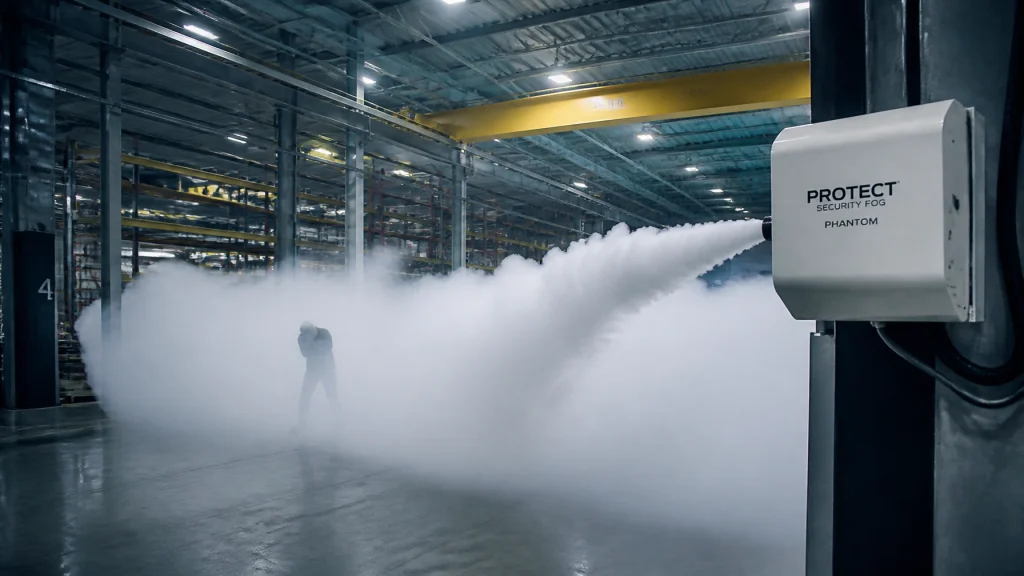
This is where Density Security Fog changes the game. Instead of waiting for a response, our systems provide an active deterrent that deploys in less than a single second and can create over 70 cubic metres of fog per second.

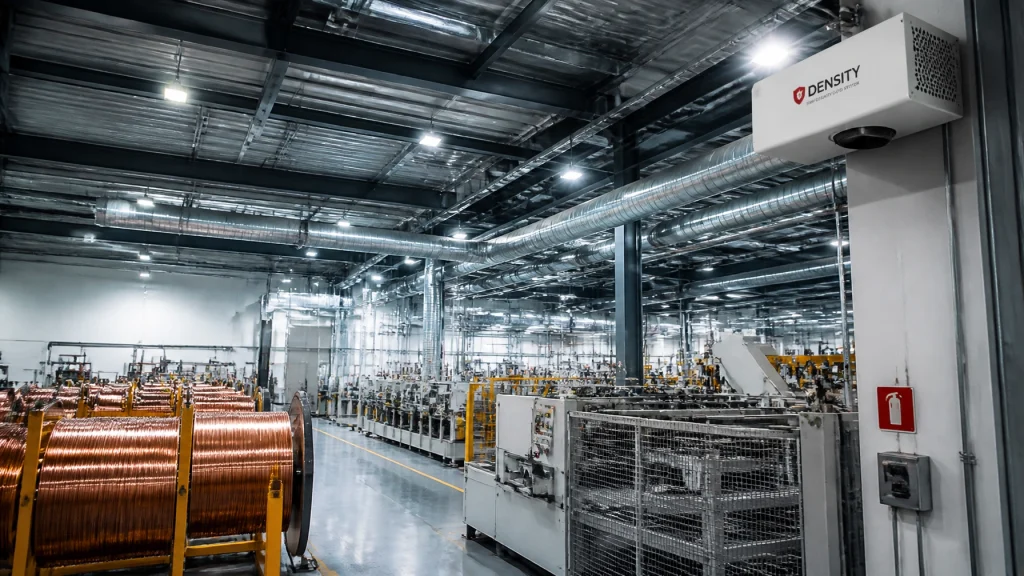
When an intruder is detected in your copper store or production hall, the Density system (such as the HP6000 or 2400 series) fills the space with a dense, non-toxic fog. In seconds, visibility is reduced to near-zero.
"You can't steal what you can't see."
The fog is disorienting and forces the intruders to flee immediately, preventing the theft before it happens. Unlike other security measures, this is designed to protect your "critical path": the machinery and materials you need to keep your production line running.
Why Density is the Choice for UK Manufacturers:
- Speed: Deploys in less than a single second and can generate over 70 cubic metres of fog per second.
- Safety: Our fog is non-toxic and leaves no residue, making it safe for electronics, food production lines, and sensitive raw materials.
- Compatibility: Fully integrates with your existing NSI and SSAIB-approved alarm systems.
- Insurance Approved: Trusted by commercial insurers as a proven method to reduce the "real cost" of theft and downtime.

Conclusion: Protecting Your Production Line
Copper theft is a sophisticated threat that requires a sophisticated response. By hardening your perimeter, securing your internal stores, and deploying forensic markers, you build a strong defence. But to truly guarantee that your production line doesn't stop, you need an active solution that removes the intruder's ability to act.
Don't let your facility become another statistic in the £500 million metal theft crisis. Stop the theft, prevent the downtime, and protect your bottom line.
Ready to secure your facility?
Explore our manufacturing security solutions or contact the Density team today to see how our high-speed fogging systems can integrate with your current setup.