Metal theft is an operational risk
 Copper cable is only one part of the threat facing council estates. Organised offenders also target steel, aluminium, cast iron, plant, tools, vehicle components, stored materials and other assets that can be sold for their metal value. Council depots, fleet compounds, recycling facilities and municipal storage sites are particularly exposed outside working hours, when buildings may be unmanned and response times create an opportunity to remove goods.
The Local Government Association has highlighted how metal theft can affect public infrastructure, including street furniture, communications, transport assets, roofs, drainage systems and other essential items. Its guidance on tackling metal theft also underlines the importance of cooperation between councils, police forces, enforcement teams and legitimate scrap metal dealers.
The risk is not limited to the replacement value of the material. A stolen cable, damaged gate or missing vehicle component can delay refuse collection, highways maintenance, grounds work, repairs and other public services. A break-in at a recycling or storage site can also create secondary risks, including unsafe working conditions, lost equipment and disruption to scheduled operations.
This is why council depot security fog should be considered as part of a wider municipal depot break-in prevention plan. The objective is not simply to record an intrusion. It is to make the protected area unusable to an offender during the theft itself.
public-sector security fog systems UK
A practical security assessment should identify where copper and other metals are stored, how an offender could gain access, which areas are vulnerable to vehicle loading, and how long it could take for a keyholder or police response. It should also consider whether stored materials are close to doors, whether gates and fencing can be bypassed, and whether lighting or CCTV gives sufficient coverage of access routes.
Alarms and CCTV remain important parts of this assessment. However, detection and recording do not create a physical barrier between an intruder and the assets being targeted. Security fog adds an active layer that can operate within the critical seconds after an alarm trigger.
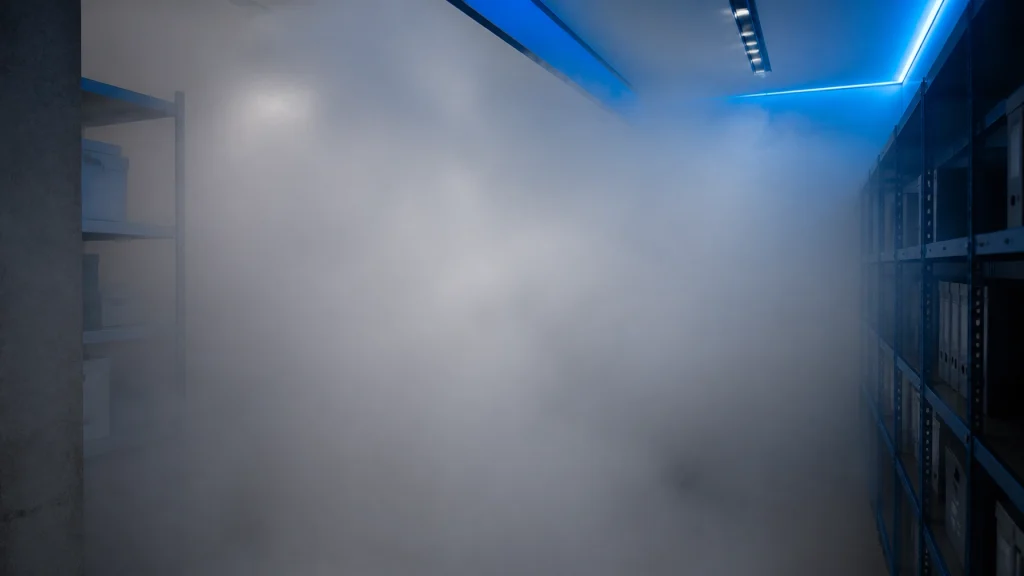
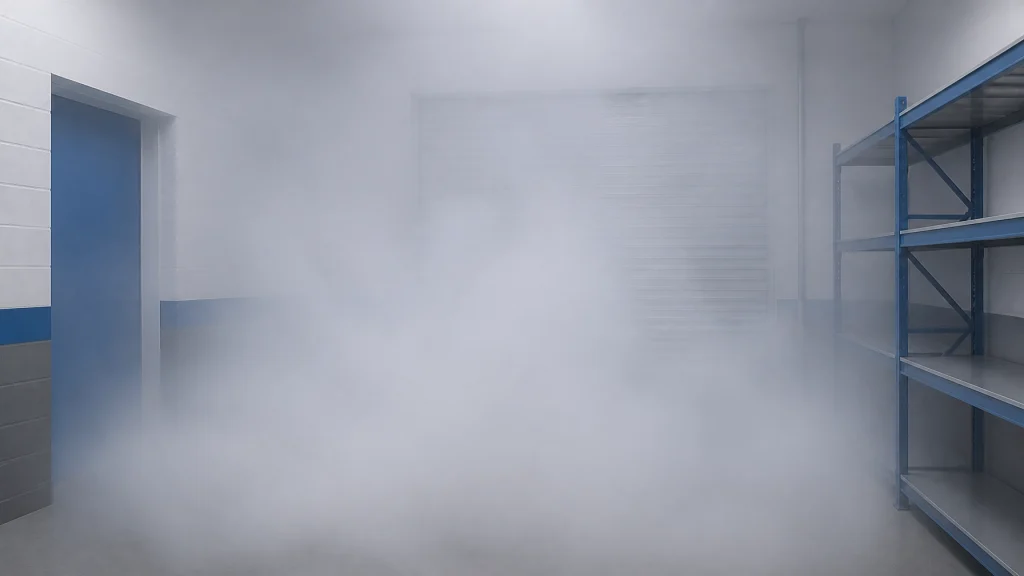
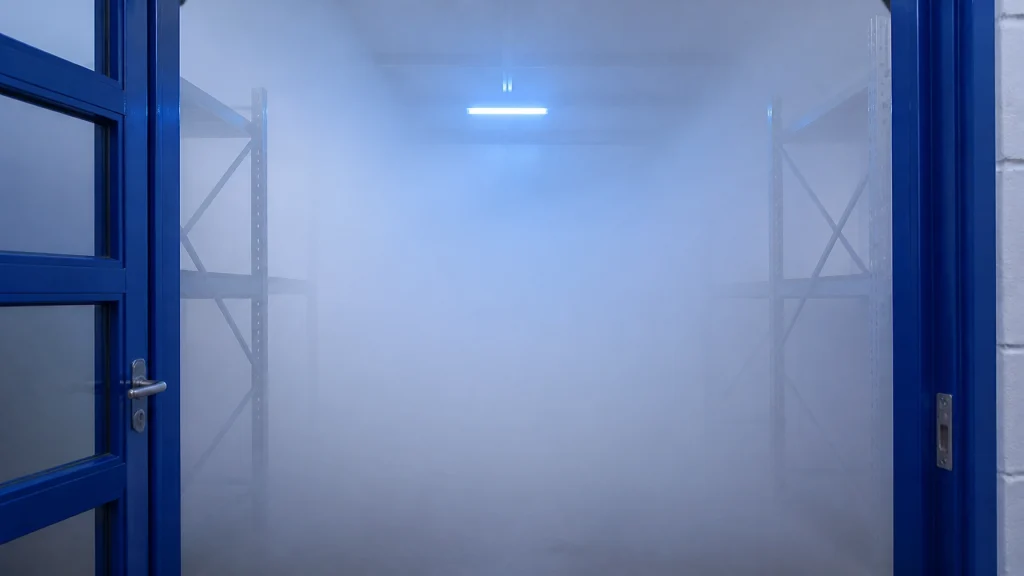
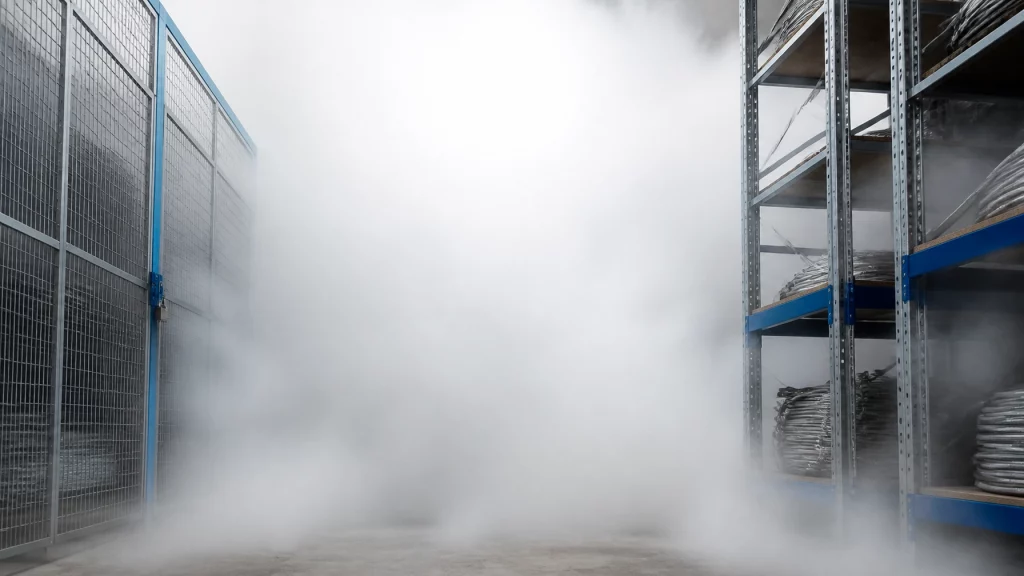
 Security fog deploys in well under a single second to create zero visibility. Connected to an existing alarm or door sensor, it fills the protected volume before an intruder can identify stored metal, reach a vehicle bay or organise a way out. The fog is non-toxic, non-corrosive and leaves no residue, making it suitable for secure storage areas containing equipment, documents and sensitive public-sector assets.
Alarms detect. CCTV records. Density prevents. Passive security fails.
97% of thefts avoided with security fog vs 17% with an alarm/CCTV alone.
For larger council depots and fleet compounds, the Density® 2400 Lite provides up to 2,400 m³ of coverage per shot. The Density® Basic provides up to 390 m³ per shot and may suit a smaller plant room, tool store or enclosed materials area. Product selection must be based on the protected volume, layout, ceiling height, access points and the likely movement of an intruder.
Density systems are approved for use with NSI and SSAIB security systems and can connect with existing alarm infrastructure. This means a council does not necessarily need to replace its current detection arrangements to introduce public-sector active deterrence. The proposed installation should still be reviewed by the council’s security, estates, fire safety and procurement teams before approval.
The system should be positioned as one part of a layered approach. Perimeter controls, secure gates, lighting, access management, asset marking, staff procedures, CCTV and alarm monitoring all have a role. Security fog is the active response that addresses the period between detection and intervention.
For procurement teams, the specification should define the protected volume in m³, the alarm interface, testing and maintenance requirements, installer competence, system approvals, staff training and arrangements after activation. Councils in England may use routes including the Crown Commercial Service, Contracts Finder or ProContract where appropriate. Scotland, Wales and Northern Ireland have different procurement frameworks, so local procurement rules and approved routes must be checked before any tender or purchase.
A suitable specification should also distinguish between a general storage area and a single high-value point. The Density® UNIK is a niche, battery-powered option for one high-value point only, such as a compact secure cabinet or isolated unmanned room. It should not be treated as the primary solution for a large depot, fleet compound or wide storage area.
FAQ Box
What types of metal theft can security fog address?
Security fog can protect enclosed areas containing copper cable, steel components, aluminium, tools, plant, vehicle parts and other stored assets. It is most effective when the protected area is clearly defined and linked to an alarm or door sensor.Does security fog replace fencing, CCTV or an alarm?
No. It complements existing controls. Fencing and access management slow or deter entry, alarms detect an event, and CCTV supports monitoring and investigation. Security fog provides an active response after detection by removing visibility inside the protected area.How quickly does the fog deploy?
Density security fog deploys in well under a single second and rapidly creates zero visibility within the protected area. The precise result depends on the system selected, the protected volume and the configuration confirmed during the site survey.Which Density system is suitable for a council depot?
A larger depot or fleet compound may require a system such as Density® 2400 Lite, which covers up to 2,400 m³ per shot. Density® Basic covers up to 390 m³ per shot and may suit a smaller secure room. Density® UNIK is a niche battery-powered option for a single high-value point only. Final selection should be based on volume in m³ and the site layout.Is security fog safe around council equipment and documents?
Density fog is non-toxic, non-corrosive and leaves no residue. It is designed for use in environments containing equipment, documents and other sensitive assets. The council’s estates and fire safety teams should review the proposed installation and operating procedures for the specific site.Can it work with an existing council alarm system?
Yes. Density works with existing alarm infrastructure and is approved for use with NSI and SSAIB alarm systems. The installer should confirm the available relay output, alarm logic, monitoring arrangements and reset procedure before installation.Can active security affect insurance requirements?
Active security systems such as Density security fog are increasingly mandated as a prerequisite of cover. Councils should confirm the requirements of their insurer or risk protection arrangement before procurement and retain the relevant system documentation.What should a council include in its risk assessment?
The assessment should cover perimeter weaknesses, access routes, stored metals, vehicle loading points, lighting, CCTV coverage, alarm response, protected volume, keyholder arrangements, maintenance and post-activation procedures. It should also record the effect that a successful theft could have on public service continuity.
 The strongest approach is to connect the security decision to operational continuity. A council should map each depot, recycling site, fleet compound and storage room according to the assets held there and the public services that depend on them. A low-value open yard may require improved fencing, lighting and asset marking. An enclosed room containing copper cable, specialist tools or critical vehicle components may require a faster active response.
The assessment should then establish clear zones. Protecting an entire building may be unnecessary if the highest risk is concentrated in a cable store, plant room, workshop or locked cage. Conversely, multiple connected storage areas may require more than one fog generator or a larger-volume system. Coverage must be calculated in m³, not inferred from a general building description.
The Density product range provides options for different protected volumes, while the Density case studies show how security fog can form part of a wider protection strategy. The implementation should include alarm integration, warning signage where appropriate, regular testing, staff instruction and a documented response after activation.
For public-sector security teams, the central question is simple: what happens between the alarm being triggered and help arriving? If an intruder can see, carry and load assets during that window, passive security has not addressed the full risk. Security fog creates an immediate physical deterrent that supports council duty of care, operational resilience and civic site theft prevention.
What you can't see you can't steal.
Discuss council depot security fog and request a site assessment