Goods-in-transit premiums across the UK logistics sector are climbing at an unsustainable rate as underwriters tighten terms on vulnerable freight depots. In this article, I examine how installing approved freight depot security fog systems directly addresses insurer concerns and slashes policy costs.
- Underwriting Pressure: Cargo insurers are imposing steeper deductibles and higher premiums due to surging organised freight crime.
- The Active Defense Difference: Shifting from passive recording (CCTV) to active intervention proves risk mitigation to underwriters.
- Measurable ROI: Installing NSI and SSAIB compatible fog generators unlocks tangible insurance discounts and eliminates theft claims.
Why Cargo-in-Transit Premiums Are Skyrocketing in UK Logistics
If you manage a freight depot or 3PL operation, your annual insurance renewal brings unwelcome surprises. Underwriters across the UK face mounting claims driven by organised criminal gangs targeting high-value goods like electronics, pharmaceuticals, and bonded cargo. Consequently, insurance brokers now demand rigorous proof of risk mitigation before quoting competitive rates.
Traditional security measures no longer satisfy risk engineers. When an insurer reviews a site history featuring multiple overnight break-ins, they respond with restrictive policy exclusions, hiked deductibles, or prohibitive premium hikes. Operations directors find themselves trapped in an insurance squeeze, paying more while receiving narrower coverage. To break this cycle, facilities must present a security infrastructure that stops thieves before they can load stolen pallets onto waiting curtain-siders.

The Flaw in Passive CCTV for Insurance Underwriters
Most standard depot security setups rely on perimeter fencing, exterior lighting, and monitored CCTV cameras. While these components are essential for compliance, they possess a fatal flaw from an underwriting perspective: they are entirely passive. CCTV records a crime in progress or triggers an alarm after intruders have already breached the perimeter, giving thieves a four-minute window to ransack loading bays before police or security guards arrive.
Insurance risk assessors know that response times in industrial estates often exceed the duration of a smash-and-grab raid. A camera recording stolen stock does nothing to protect the cargo or prevent the subsequent claim payout. Underwriters price policies based on loss probability. If your facility only detects intrusions rather than actively halting them, your loss probability remains high, and your premiums reflect that vulnerability.
How Freight Depot Security Fog Systems Change the Risk Profile
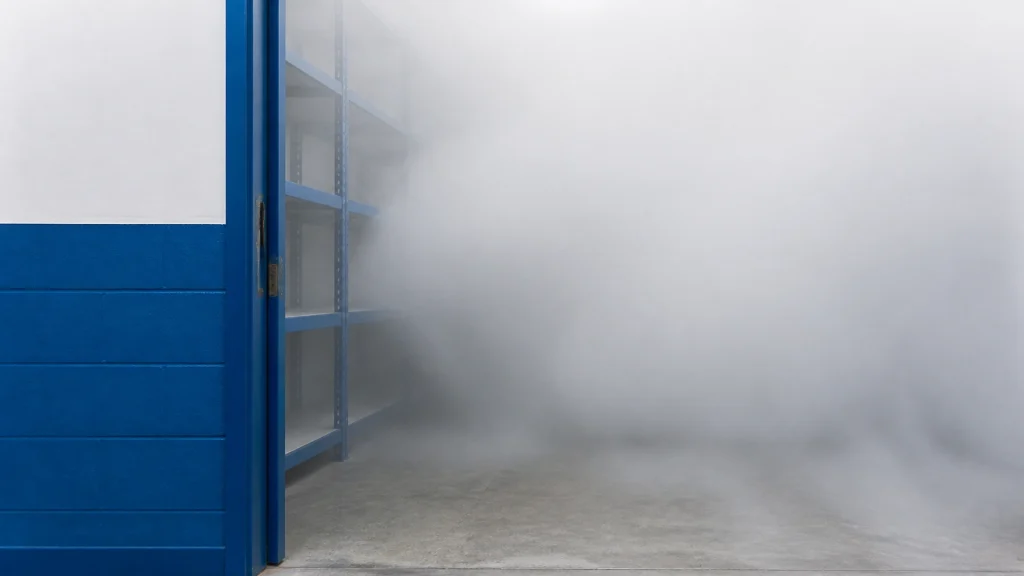
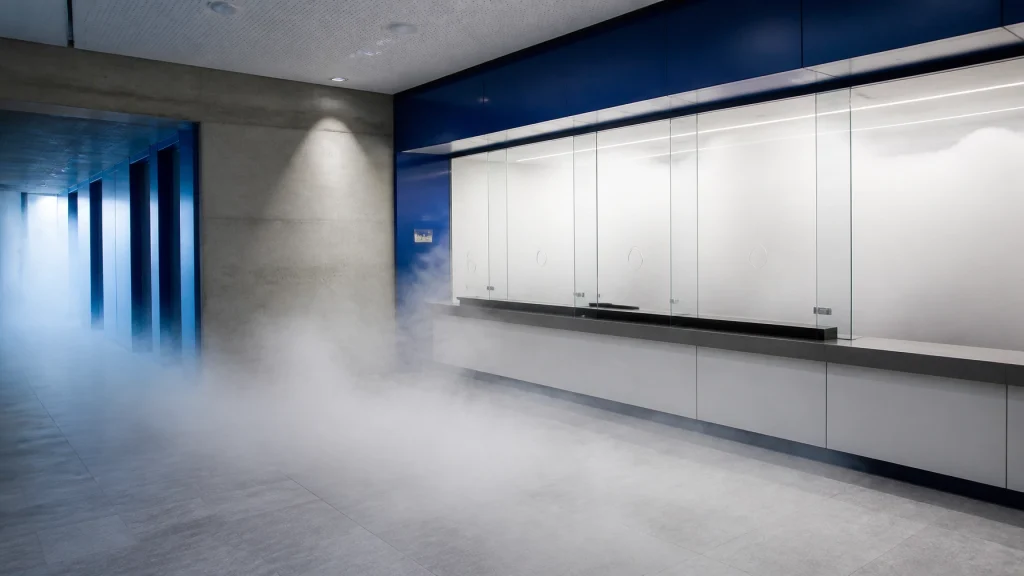
Insurance underwriters reward operations that eliminate risk at the point of contact. This is where modern freight depot security fog systems transform policy negotiations. When an intruder triggers an intrusion detector, our generators fill protected spaces in under 30 seconds with a dense, non-toxic fog that totally eliminates visibility.
[Intrusion Detected] ──► [Fog Deploys in 3s] ──► [Visibility Reduced to 0] ──► [Theft Prevented]
Intruders cannot steal what they cannot see. By denying visibility instantly, security fog neutralises the threat before cargo leaves the racking or loading bay. Insurers recognise this active deterrence as a fundamental reduction in risk exposure. When we present loss prevention data demonstrating that security fog stops criminals cold, underwriters respond with more favorable terms, lower excesses, and reduced premiums.

Protecting High-Value Lanes: From Density UNIK Units to Loading Bay Coverage
Every zone within a distribution hub presents distinct security vulnerabilities. Tailoring your active defense strategy across different operational areas reassures risk surveyors that your entire facility is fortified. For high-value caged stock, bonded cages, and pharmaceutical holding areas, deploying the compact /unik-fog-system/ provides instant local saturation where expensive inventory sits vulnerable.
For broader cross-dock zones where freight moves rapidly between inbound and outbound trailers, installing our /basic-fog-system/ secures mid-sized areas against swift access. Meanwhile, massive distribution hubs and sprawling distribution centres require scalable protection across vast open floors. Implementing /lite-fog-systems/ ensures complete loading bay coverage at scale, leaving no blind spots for opportunistic thieves. For deeper insights into managing sprawling DC environments, review our dedicated /sectors/warehousing/ guide.
Satisfying Insurer Mandates with NSI and SSAIB Approved Hardware
Navigating insurance compliance requires equipment that meets rigorous industry standards. Insurers reject uncertified security gadgets that fail during critical incidents. Our entire hardware lineup is approved for use with NSI and SSAIB security systems, ensuring seamless integration with your existing alarm infrastructure and central monitoring stations.
Furthermore, our remote ARC deployment capability allows approved alarm receiving centres to trigger fog generation instantly during verified intrusions, even when no staff are on site. Because our fog is completely safe and non-corrosive, it leaves zero residue on sensitive electronics, textiles, or food products. Underwriters value this certification and safety profile, making it significantly easier to negotiate premium reductions with major insurers who demand professional-grade loss prevention.

The Decisive Metric: 97% Theft Avoidance
When discussing risk reduction with your insurance broker, hard data outweighs vague security claims. Industry loss statistics provide a compelling argument for switching to active security measures: 97% of thefts avoided with security fog vs 17% with alarm/CCTV alone.
This staggering performance gap explains why forward-thinking transport managers are overhauling their security budgets. Investing in active fog generators pays for itself not only through zero cargo losses, but through the substantial savings realised at annual insurance renewal time. To explore how these systems integrate into your freight operations, visit our main hub for /sectors/logistics/.
Key Takeaways
- Underwriter Scrutiny: Insurers are raising premiums and deductibles for depots relying solely on passive CCTV and standard alarms.
- Active Interception: Security fog deploys in 3 seconds to eliminate visibility, stopping cargo theft before goods are touched.
- Approved Compliance: Systems are approved for use with NSI and SSAIB security systems, satisfying strict insurer mandates.
- Measurable Protection: Backed by the proven statistic that security fog prevents 97% of thefts compared to 17% for alarms alone.
Ready to lower your insurance premiums and secure your supply chain? Explore our sector hub at /sectors/logistics/ or use our interactive Sector Quote Tool to calculate your depot protection requirements today.
Meta Description: Lower your cargo-in-transit premiums with approved freight depot security fog systems. Stop thieves before they steal. Get a quote today.