For UK manufacturing facilities, production halls, and industrial warehouses, 2026 brings a unique set of operational challenges. Rising commodity values: such as copper and semiconductors: combined with relentless supply chain pressures mean that security is no longer just about locking doors after hours. Today, effective warehouse security systems must protect the entire ecosystem: raw materials, high-value components, tool cribs, and, above all, production continuity.
When a breach occurs, the true cost isn't just the stolen stock; it’s the resulting production downtime that halts manufacturing lines and breaches client SLAs. This comprehensive guide explores what modern manufacturing security solutions entail in 2026, why traditional reactive measures fall short, and how advanced active deterrence technologies are redefining industrial protection.
1. The Shifting Landscape of UK Manufacturing Security
Historically, industrial sites relied on perimeter fencing, padlocked storage cages, and basic CCTV systems that simply recorded burglaries for the police to review days later. In 2026, this reactive approach is obsolete.
Modern intruders are increasingly sophisticated, often bypassing standard alarms or executing 'smash-and-grab' raids in minutes: long before local police or mobile security guards can respond. For facility managers and operations directors across the UK, securing a plant requires a multi-layered defense strategy:
- Perimeter & Boundary Detection: High-grade fencing, thermal cameras, and automated gate ANPR.
- Intelligent Building Shell: BS EN 50131-compliant graded intruder alarms and reinforced roller shutters.
- Active Internal Deterrence: Rapid deployment systems that neutralize threats instantly rather than just recording them.
2. Core Components of a 2026-Ready Manufacturing Security Strategy
Designing a robust security architecture for a modern manufacturing plant involves integrating several technologies into a single cohesive network.
AI-Enabled CCTV and Monitoring
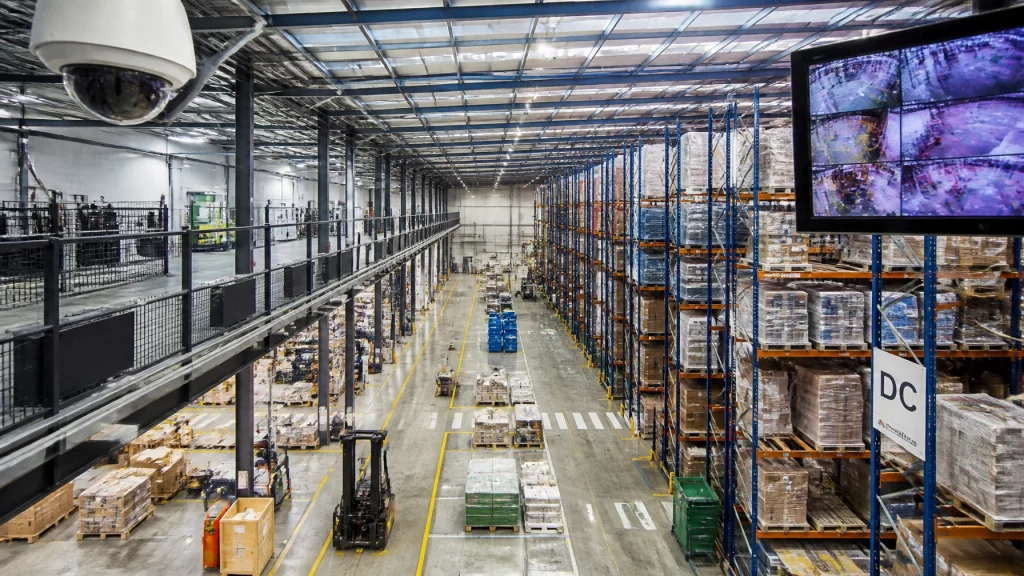
High-definition 4K cameras equipped with artificial intelligence analytics now filter out environmental false alarms (such as wildlife or moving shadows) and instantly flag genuine human intrusion. Strategically positioned across loading bays, high-bay aisles, and despatch zones, these systems provide real-time alerts to 24/7 monitoring stations.
Access Control & Insider Risk Management
With valuable copper wiring, microchips, and specialized tools stored on-site, internal shrinkage and unauthorized access remain major concerns. Biometric readers and smart-card access control restrict entry to sensitive zones like tool cribs and maintenance stores, creating a fully audited access trail.
Closing the Response-Time Gap with Security Fog
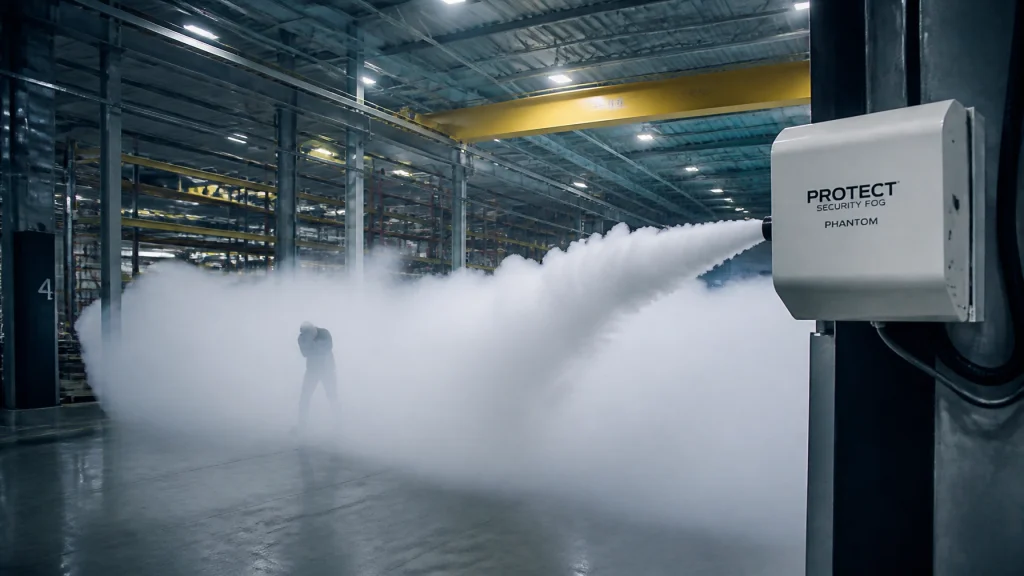
Even the fastest police response times in the UK average between 15 and 30 minutes. Intruders know this window well. That is why leading UK manufacturers are integrating active security fogging solutions alongside their standard intrusion alarms.
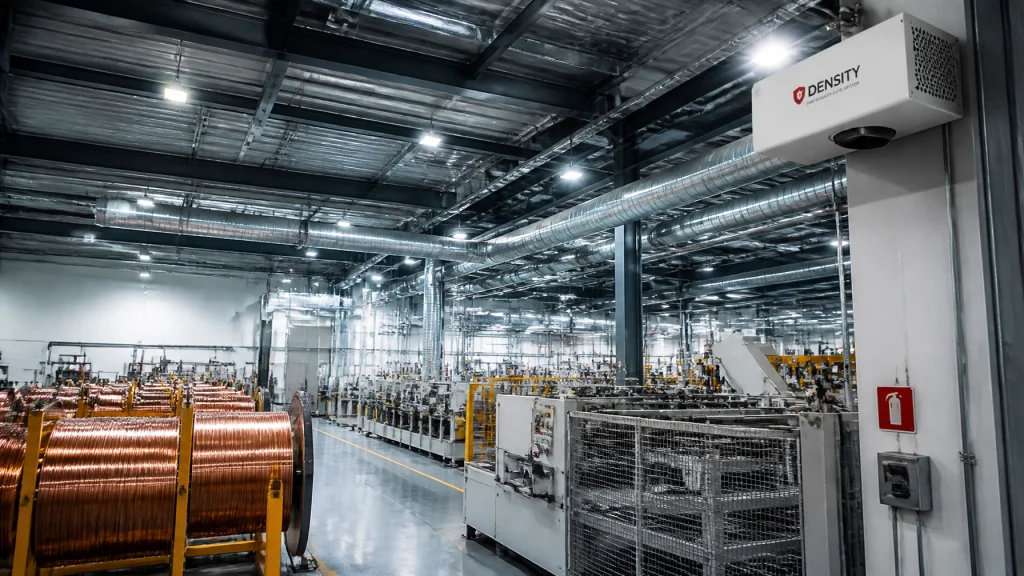
Unlike passive cameras, high-performance units like the Density 2400 and Density HP6000 series actively intervene. These systems deploy in less than a single second and can create over 70 cubic metres of fog per second, instantly reducing visibility to near-zero and disorienting thieves before they can locate or steal valuable inventory.

3. Why Traditional CCTV Is Not Enough
Many facility managers assume that installing more cameras equates to better security. However, cameras only document a crime; they do not stop it.
When organized gangs target a production facility for high-value components like semiconductor chips or copper busbars, every second counts. If a thief can load thousands of pounds worth of materials into a van within two minutes, video evidence is cold comfort when your production line is forced to stop the next morning due to missing parts.
Active manufacturing security solutions bridge this critical gap. By instantly filling the space with dense, non-toxic fog upon alarm activation, the intruder is blinded and forced to flee empty-handed. Because the fog leaves no residue and is completely safe for sensitive electronics and food production environments, it protects your assets without damaging your operations.
4. Control Room Integration and 2026 Best Practices
A 2026-ready security setup centralizes all data streams into a unified management platform. Facility managers can monitor perimeter status, access logs, fire detection systems, and fog deployment readiness from a single interface.

To ensure your facility meets commercial insurance requirements and industry standards, consider the following best practices:
- Work with Accredited Installers: Ensure all alarm and fogging systems are approved by NSI (National Security Inspectorate) and SSAIB (Security Systems and Alarms Inspection Board). Insurers favor systems backed by these bodies.
- Layer Your Defenses: Combine physical barriers, AI video analytics, and active fogging to create a defense-in-depth model.
- Regular Risk Assessments: Periodically review high-risk areas, particularly maintenance stores and tool cribs, where night shift losses often occur.
For more specialized insights into sector-specific requirements, explore our dedicated Density Manufacturing Security Solutions.
5. Calculating the Return on Investment (ROI)
When budgeting for advanced warehouse security systems, decision-makers must weigh initial capital expenditure against the staggering cost of production downtime.
A single major break-in can result in tens of thousands of pounds in stolen raw materials, damaged machinery, structural repairs, and insurance premium hikes. More importantly, delayed customer orders can permanently damage commercial relationships.
Investing in rapid active deterrence systems provides immediate ROI by stopping thefts on their first attempt: preserving both your bottom line and your production schedule.

Conclusion: Securing Your Plant for the Future
As UK manufacturing evolves through 2026 and beyond, security infrastructure must keep pace with increasingly determined criminals. Relying on perimeter fences and delayed police response is no longer viable for facilities storing high-value raw materials and critical tools.
By adopting a comprehensive security framework that integrates AI monitoring, strict access control, and lightning-fast active security fog: deploying in under a second and generating over 70 cubic metres of fog per second: manufacturers can effectively stop theft in its tracks before production lines are ever interrupted.