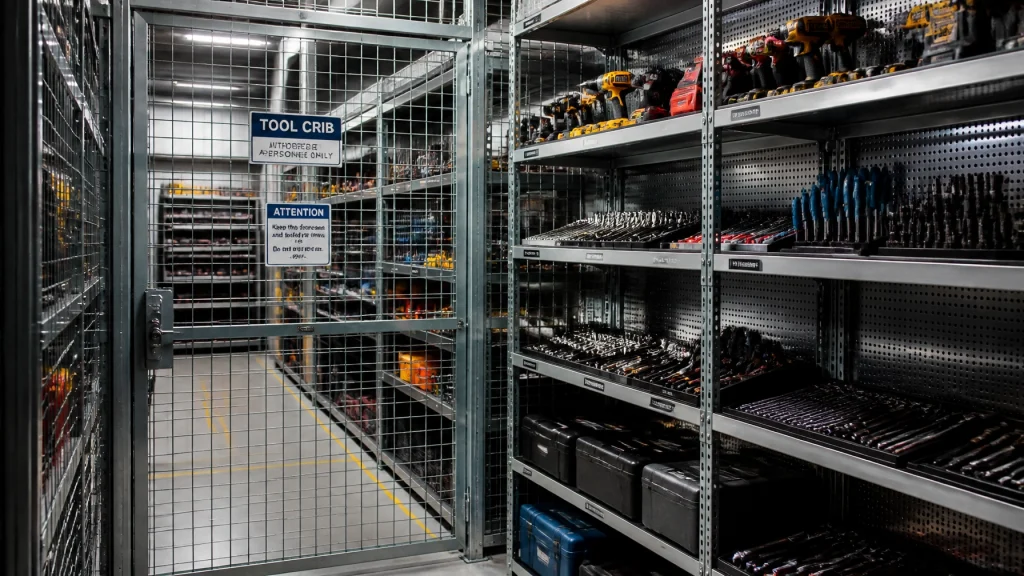
It’s 3:15 AM on a Tuesday. The night shift is running smoothly on the main assembly line, but in the central tool crib, the padlock has just been sheared off in under thirty seconds. By morning, thousands of pounds worth of specialized carbide cutting inserts, pneumatic torque wrenches, and calibrated hand tools have vanished.
For UK manufacturing plant managers and business owners, tool crib break-ins and internal night-shift theft are a persistent, costly drain. While corporate attention is often focused on protecting high-value raw materials like copper or semiconductors, specialized tooling represents a massive, highly liquid vulnerability. When a key pneumatic drill or precision micrometer goes missing, the production line grinds to an immediate halt: costing far more in downtime than the physical value of the stolen tool itself.
In this guide, we examine why night-shift tool crib thefts happen, the limitations of traditional passive security, and how modern active deterrence: specifically high-speed security fog systems: is transforming tool theft prevention across industrial facilities.
The Hidden Vulnerability: Why Night Shifts and Tool Cribs Are Targets
Tool cribs are designed for accessibility during peak operating hours, allowing technicians and operators to quickly check out equipment. However, when the sun goes down and skeleton crews take over, these centralized storage areas often become prime targets for opportunistic thieves, whether external intruders or opportunistic insiders.
High-end manufacturing hand tools are compact, untraceable, easily concealable in a backpack, and command top dollar on secondary online marketplaces. Unlike bulky raw stock, a £1,500 digital torque wrench can be smuggled out of a factory gates in seconds.
Common Failure Points in Traditional Factory Security
- Passive CCTV Limitations: Standard closed-circuit television cameras record crimes as they happen, but they do nothing to stop them in real time. If security monitoring is outsourced or unmonitored during night hours, police may only arrive hours after the intruders have fled.
- Vulnerable Physical Hardware: Standard padlocks, standard wooden or hollow metal doors, and wire mesh cages are easily defeated with basic battery-powered angle grinders or bolt cutters in minutes.
- Inadequate Key and Access Control: Shared keys, unmonitored sign-out sheets, and lack of biometric or electronic audit trails create loopholes that make internal diversion easy to execute.

Upgrading Your Defense: The Shift Toward Active Deterrence
To protect your assets effectively, passive monitoring must be replaced with active intervention. When an intruder breaches your perimeter or forces a tool crib door during the night shift, waiting for police response times: which can average 15 to 30 minutes in industrial estates: is simply too late.
This is where advanced tool crib security systems integrated with active fogging technology change the equation entirely. Rather than recording a break-in, active security stops the perpetrator mid-raid before they can locate or secure valuable inventory.
How High-Speed Security Fog Works
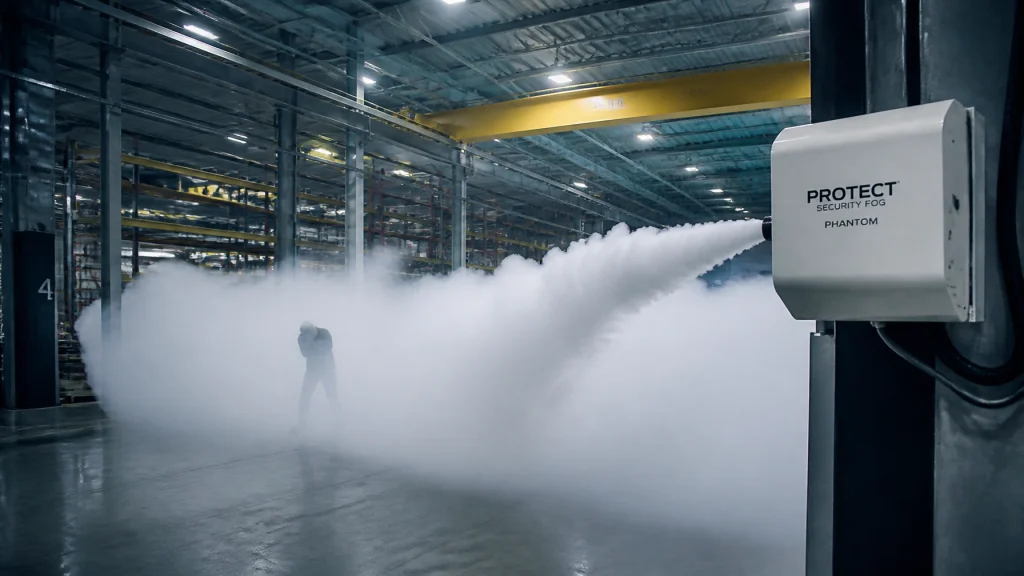
When an unauthorized intrusion is detected by your existing NSI or SSAIB-approved alarm system, high-performance security fog generators: such as the Density HP6000 or 2400 series: activate instantly.
- Sub-Second Deployment: These systems deploy in less than a single second, reacting faster than any human intruder can move.
- Massive Volume Output: They are engineered to create over 70 cubic metres of fog per second, rapidly filling the entire tool crib or production hall.
- Near-Zero Visibility: The dense, non-toxic fog disorients intruders instantly, reducing visibility to zero and forcing them to flee empty-handed rather than searching shelves for high-value gear.

Comprehensive Strategies for Effective Tool Theft Prevention
Combining robust physical barriers with active electronic deterrence provides the ultimate factory break-in deterrent strategy for modern manufacturing plants. Here is a blueprint for hardening your facility:
1. Harden the Physical Enclosure
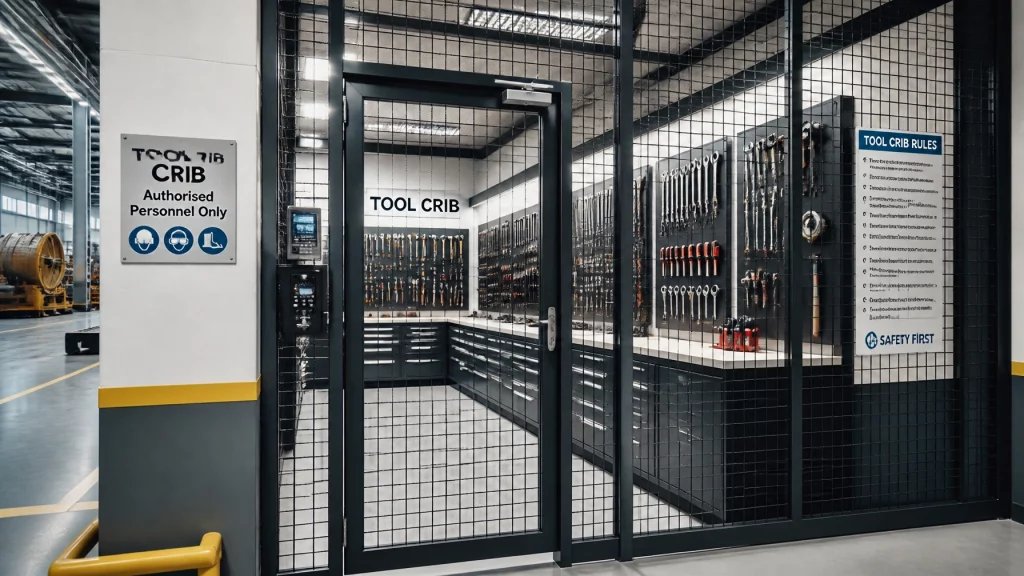
Upgrade your tool crib doors to heavy-duty steel frames with multi-point locking mechanisms. Replace standard padlocks with hardened steel closed-shackle locks or reinforced security caging that resists manual cutting tools.
2. Implement Real-Time Electronic Access Control
Move away from manual paper sign-out logs. Utilize electronic key fobs, biometric scanners, or smart badge readers for tool crib access, ensuring every entry is logged with time and user identification.
3. Deploy Instant Active Fogging
Install dedicated security fog units directly inside or immediately outside high-value tool cribs and maintenance stores. Because the fog is completely safe for sensitive electronics and metal components: leaving zero residue: it can be deployed safely anywhere in your facility. Learn more about how we protect specialized manufacturing environments.
4. Combine with Commercial Insurer Compliance
Many commercial insurers now require robust physical and active security measures before underwriting high-value inventory or manufacturing equipment. NSI and SSAIB-approved fog systems satisfy insurer risk assessments, often leading to reduced premium rates.

Stop Theft Before Your Production Line Stops
Tool crib break-ins are not just minor inventory losses; they are direct threats to your business continuity and customer delivery schedules. Relying on passive cameras and traditional locks leaves your night shift completely exposed.
By integrating state-of-the-art security fog generators that deploy in under a second and flood spaces with over 70 cubic metres of fog per second, you take away the intruder's greatest advantage: sight. Stop thieves in their tracks before downtime stops your factory.
Secure Your Tool Cribs Today
Protect your valuable assets, tools, and production schedules with Density's market-leading security fogging solutions.

Contact our security specialists today to arrange a site survey for your manufacturing facility.