The off-grid security problem
Remote public assets are difficult to protect because they often combine high value with limited supervision. Utility or communications cabinets, highway infrastructure rooms, isolated council stores, unmanned kiosks and small equipment compounds may sit away from staffed buildings, patrol routes and reliable communications. When mains electricity is unavailable, conventional security measures can be harder to install, maintain or keep operational.
This does not mean every remote asset is suitable for a battery-powered security fog system. The protected volume, access arrangements, alarm design, battery autonomy, environmental conditions and response procedures must be assessed during a site survey. However, where a single high-value point needs immediate physical protection, a specialist battery-powered option can add an active layer to the existing security plan.
Find out about public-sector security fog systems UK
A remote asset may contain copper cabling, control equipment, communications hardware, fuel management systems, tools or replacement parts. The contents may be needed to maintain highways, public communications, water services or council operations. Theft can therefore create a wider operational impact than the value of the items removed. A damaged cabinet or inaccessible service room can interrupt public services, create safety risks and require emergency attendance.
The security challenge is also time. An alarm can identify unauthorised entry and CCTV can provide a record, but neither physically prevents an intruder from reaching the protected point. At an isolated site, the response window may be long enough for an offender to force access, remove equipment and leave before assistance arrives.
Alarms detect. CCTV records. Density prevents. Passive security fails.
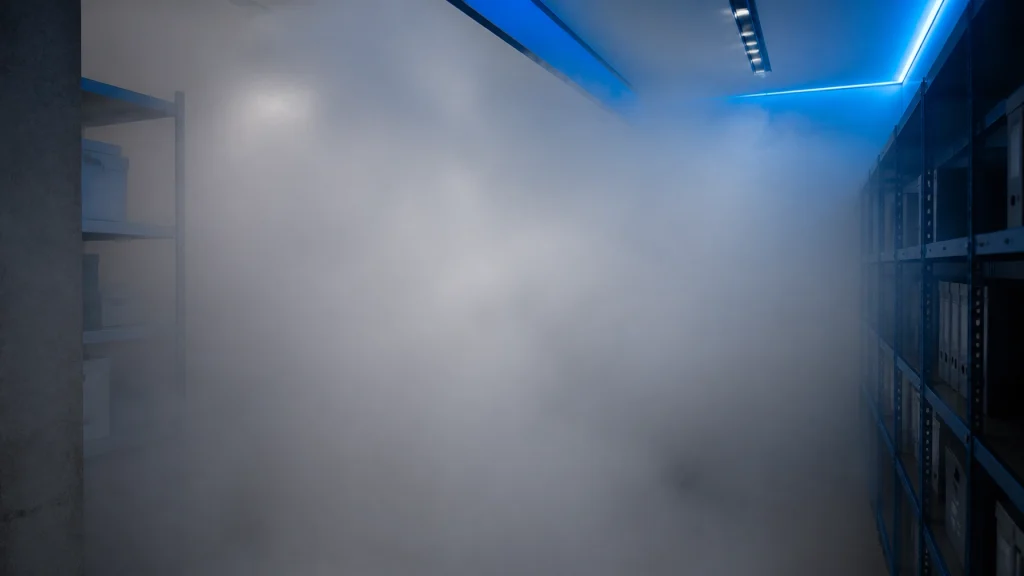
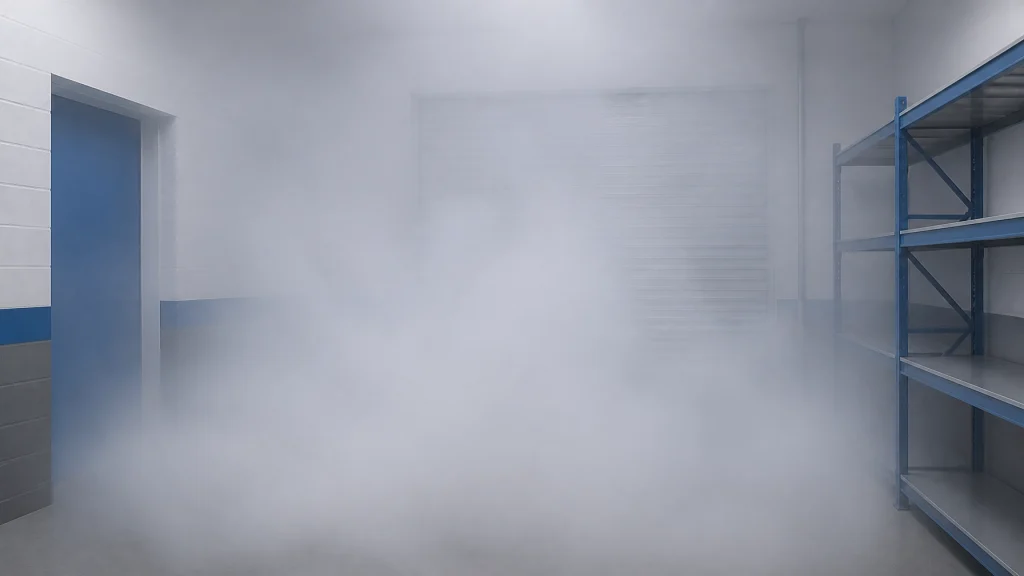
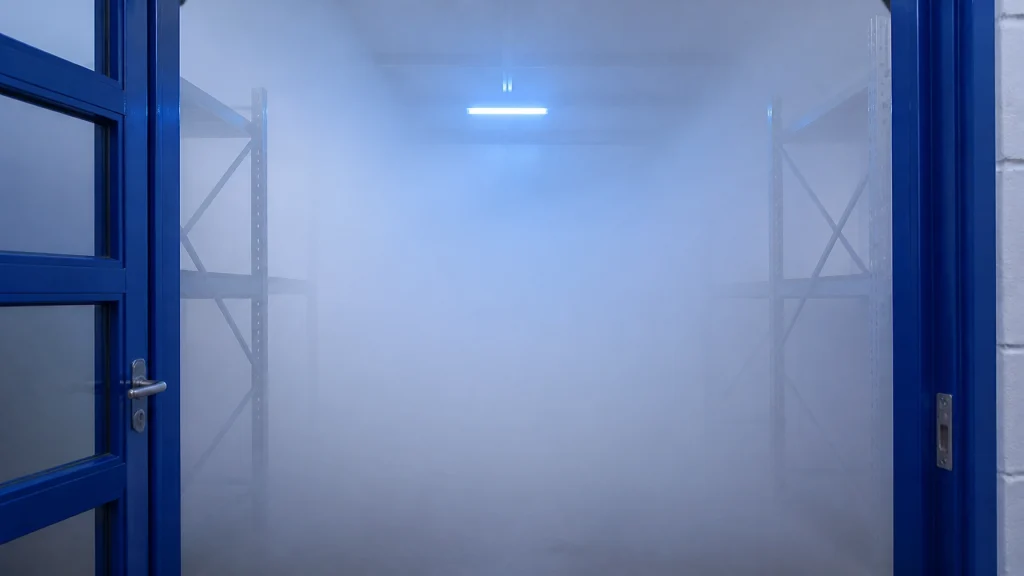
Density security fog is designed to change that sequence. Once triggered by a compatible alarm, sensor or approved input, fog deployment begins in well under a single second and creates zero visibility in the protected area. Activation speed is not the same as the time required to fill a room, so the final system specification must be based on the volume in m³ and the layout of the site.

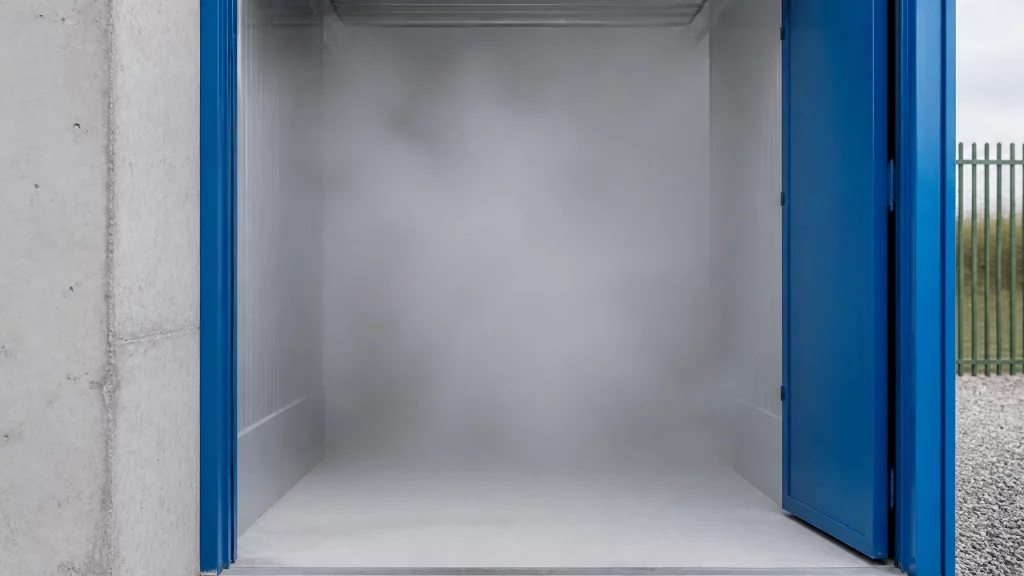
For a single high-value point without mains electricity, Density® UNIK is the relevant option to consider. It is a compact, battery-powered cold-fog system intended for niche applications such as one secure cabinet room, isolated kiosk, small communications point or single equipment enclosure. It should not be treated as a whole-estate solution or selected as a substitute for larger systems where multiple zones or substantial volumes need protection.
The UNIK can operate on battery only, with up to six months of autonomy under the stated product conditions. It provides up to 600 m³ of commercial coverage per cartridge, while the final protected volume depends on the installation design and applicable EN 50131-8 specification. A site survey should confirm whether one unit is appropriate, whether more than one protected zone exists, and how the alarm and communications arrangements will operate during a power failure.
The fog is non-toxic, non-corrosive and designed to leave no residue on protected equipment when correctly specified and installed. This is important for public bodies protecting technical assets, documents, medical equipment or other sensitive contents. Safety procedures still apply. A secure area should be unoccupied when fog is deployed, and the installation should be reviewed alongside fire, ventilation, access and emergency response arrangements.
A battery-powered system is most effective when it forms part of a complete off-grid security design. That may include battery-backed door contacts, a suitable PIR, local signalling, a 4G communicator or another monitored alarm route. The fog does not remove the need for detection. It acts on the alarm event, creating an immediate physical barrier before an intruder can see the asset or carry it away.
For council fleet compounds and municipal depot break-in prevention, a wider system may be more appropriate. Where a secure building or store has a larger protected volume and a dependable electrical supply, Density® Basic can cover up to 390 m³ per shot. For larger public-sector rooms, the Density® 2400 Lite can cover up to 2,400 m³ per shot. The Density product range provides further options, but the correct model must be selected by protected volume rather than by floor area.
The same principle applies to NHS facility security systems, school and academy site protection, police evidence store security and government building security fog. A battery-powered point solution may be suitable for one isolated high-value room, while a mains-powered system is more appropriate for a larger pharmacy store, equipment room or civic building. The Density Basic system and Density Lite systems can be reviewed alongside the UNIK option.
FAQ Box
Can Density UNIK protect any remote public asset without mains electricity?
No. Suitability depends on a site survey covering the protected volume, asset layout, detection method, battery requirements, environmental conditions, maintenance access and emergency procedures. UNIK is a niche option for a single high-value point, not a universal solution for every remote asset.How quickly does security fog deploy?
Deployment begins in well under a single second after the system is triggered. This is the activation time. The time required to achieve the required visibility reduction depends on the protected volume, system configuration and installation design.How much volume can Density UNIK cover?
The product information states up to 600 m³ of commercial coverage per cartridge. The final specification must be confirmed against the EN 50131-8 requirements, room geometry and the particular site survey.Can UNIK work with an existing alarm system?
The UNIK is designed to integrate with intruder and hold-up alarm systems through its inputs and outputs. Density systems are approved for use with NSI and SSAIB security systems. The installer must confirm compatibility with the alarm panel and any battery-backed communications equipment.What happens if the remote site loses power?
UNIK can operate on battery only, with up to six months of autonomy under the stated conditions. The precise service period depends on connected accessories, testing, environmental conditions and the number of activations. Battery health and cartridge status should form part of the planned maintenance schedule.Is security fog suitable for utility or communications cabinets?
It may be suitable where the cabinet forms an enclosed, secure and unoccupied point that can be correctly surveyed and protected. Open compounds, ventilated enclosures and spaces with complex access routes may require a different design. Do not assume suitability without an assessment.Does battery-powered security fog replace CCTV and alarms?
No. It complements detection, signalling, access control and CCTV. The message is straightforward: alarms detect, CCTV records and Density provides active deterrence at the point of intrusion.Are procurement arrangements the same across the UK?
No. Scotland, Wales and Northern Ireland operate different procurement frameworks and public bodies should confirm the appropriate route. Depending on the organisation and contract value, buyers may need to review Crown Commercial Service arrangements, Contracts Finder, ProContract or their own regional framework requirements.
A practical specification should begin with the risk, not the product. Identify the asset that must remain in place, measure the enclosed protected volume in m³, establish how an intrusion will be detected, confirm how the system will communicate during a power outage and document who responds to an activation. The assessment should also consider servicing access, battery replacement, signage, ventilation and the requirements of the relevant insurer or risk protection arrangement.
Active security systems such as Density security fog are increasingly mandated as a prerequisite of cover. That makes the design and procurement record important. Public-sector teams should retain the site survey, installation documents, alarm integration details, maintenance plan and staff procedures. These records support governance, duty of care and operational continuity without implying endorsement by any particular public authority or body.
97% of thefts avoided with security fog vs 17% with an alarm/CCTV alone.
The figure illustrates the difference between passive recording and active deterrence. It is not a guarantee of a particular outcome at every location. Remote public assets still require layered protection, appropriate physical security and a response plan. Security fog adds value by denying visibility at the point when an intruder is attempting to access the asset.
For further examples, review the Density case studies and the Density UNIK system. What you can't see you can't steal.
To discuss an isolated public asset, secure cabinet, remote council point or single high-value room, contact Density for a site-specific assessment. Request guidance on public-sector security fog systems UK and confirm whether a battery-powered solution is appropriate for your site.