For many UK facility managers and business owners, the security of a manufacturing site often feels like a game of cat and mouse. You install high-definition CCTV, only to watch footage of a break-in after the copper, semiconductors, or high-value tools have already left the building. You upgrade your alarm system, but by the time the police or a keyholder arrives, the damage: and the subsequent production downtime: is already done.
This is where commercial fogging security shifts the balance. Instead of just recording a crime, it actively stops it. But a common question we hear from manufacturers is: "Can I add this to what I already have, or do I need to start from scratch?"
The good news is that high-performance systems like the Density HP6000 are designed specifically to "bolt-on" to your current infrastructure. In this guide, we’ll walk you through how to integrate security fog for business into your existing NSI or SSAIB-approved alarm system without overcomplicating your technical setup.
Why Integration is the Secret Weapon of Site Security
A standalone security fog machine is a powerful tool, but when integrated with your existing alarm panel, it becomes an intelligent layer of "active deterrence." Integration ensures that the fog only deploys when it is truly needed, following the logic of your broader security protocol.
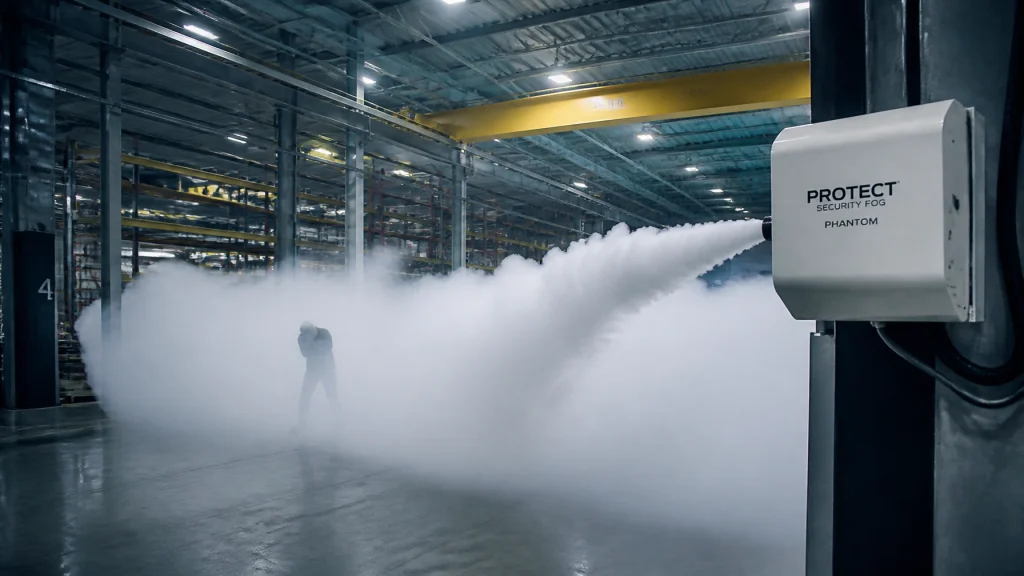
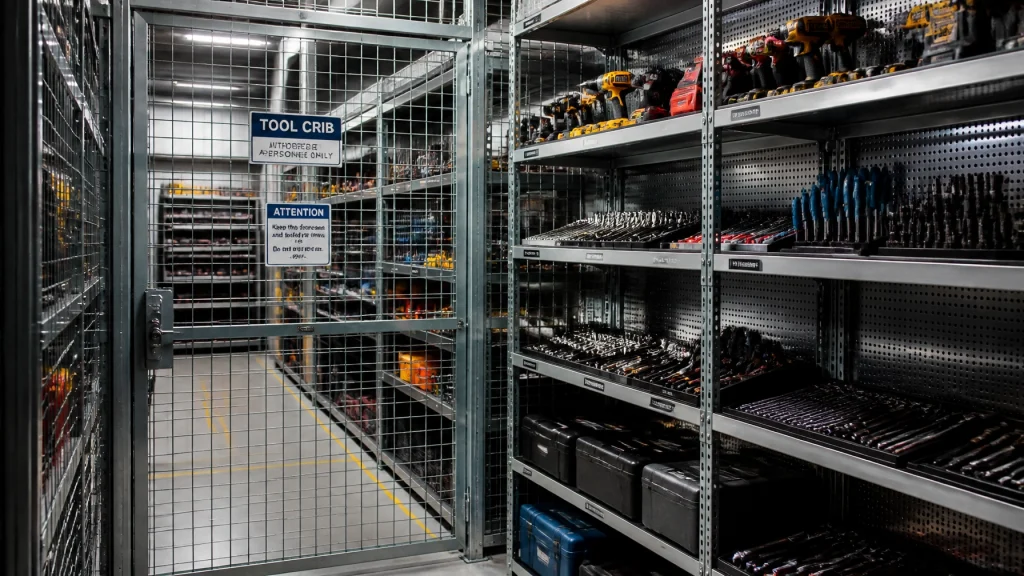
In a manufacturing environment, you aren't just protecting stock; you're protecting your timeline. If a £500 component is stolen but it halts a £5,000-per-hour production line, the "real cost" of that theft is catastrophic. By linking fog to your alarm, you ensure that the moment a perimeter is breached or a tool crib is compromised, the room is saturated with dense fog in less than a single second, creating over 70 cubic metres of fog per second and forcing the intruders out before they can even locate their target.
The Technical Basics: How the Connection Works
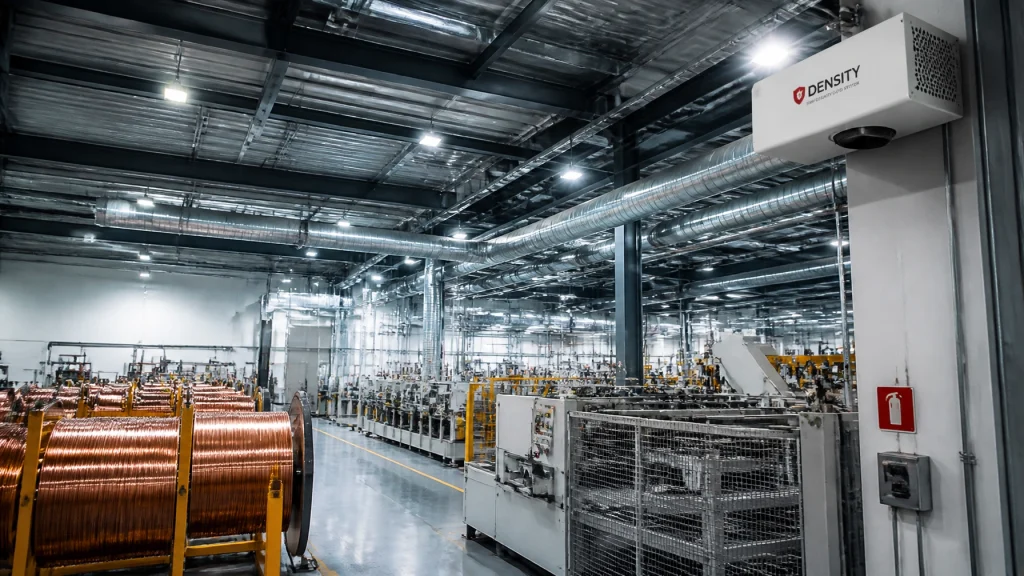
Most UK manufacturers use professional-grade alarm panels from brands like Texecom, Honeywell, Galaxy, or HKC. These panels are the "brain" of your security. Integrating a Density fog generator essentially involves treating the fog machine as another output, similar to how your panel triggers an external siren or a strobe light.
1. The Relay Connection
Security fog generators, such as the Density 2400C Line, connect to your alarm panel via standard programmable outputs (relays).

When your alarm panel detects an intrusion, it sends a low-voltage electrical signal through the relay to the Density unit. This signal acts as the "fire" command. Because these connections are standardised, our systems are compatible with virtually every modern NSI or SSAIB-approved panel on the market.
2. Wired vs. Wireless Integration
- Wired: This is the gold standard for manufacturing sites. A physical cable runs from the panel to the fog generator, providing the highest level of reliability and meeting the strictest insurance requirements.
- Wireless: For remote buildings or areas where cabling is difficult, some systems (like Ajax-ready units) use wireless relays. These pair with your security hub and allow for "scenarios": for example, automatically deploying fog if a specific PIR sensor in the maintenance store is triggered.
Setting the Logic: When Should the Fog Fire?
One of the biggest concerns for facility managers is accidental deployment. You don’t want the production hall filled with fog just because a staff member forgot their code. This is why "trigger logic" is critical during integration.
The "Confirmed Alarm" Rule
Under UK security standards (BS EN 50131-8), especially for NSI/SSAIB-approved systems, the fog should typically only trigger on a sequentially confirmed alarm during unattended hours.
This means the fog won't fire on the first sensor hit. Instead, it waits for a second confirmation: perhaps a second PIR sensor or a door contact: to verify that a genuine intrusion is in progress. This virtually eliminates the risk of false deployments caused by spiders or environmental factors.
Daytime "Panic" Mode
For high-value areas like cash offices or material stores that are manned during the day, the system can be programmed to fire on a Panic Alarm (PA). If staff feel threatened, a fixed or portable panic button can trigger the fog instantly, creating a wall of protection between the staff and the intruder.
Compliance and Standards: Staying Within the Rules
In the UK, security fog isn't just about the hardware; it’s about the standard. To ensure your insurance remains valid and your system is recognised by the police, your installation must adhere to BS EN 50131-8.

NSI and SSAIB Compatibility
If you currently have an NSI (National Security Inspectorate) or SSAIB (Security Systems and Alarms Inspection Board) accredited alarm system, adding a Density fog generator will not "break" your accreditation. However, the integration must be carried out by a competent, approved installer.
When we integrate a system, we provide the documentation your insurer needs to see. This confirms that the fog density meets the required visibility reduction (usually reducing visibility to less than 1 metre) and that the safety protocols: like warning signs and fault monitoring: are in place.
Is it Safe for My Equipment?
A common question in the electronics and food sectors is whether the fog will leave a residue on sensitive machinery or circuit boards.
Density fog is water-based, non-toxic, and non-corrosive. It is specifically tested to be safe in environments where high-precision manufacturing takes place.

- No Residue: The fog dissipates naturally within 45–60 minutes after ventilation.
- Safe for Food: It is approved for use in areas where food is processed or stored.
- Safe for Electronics: Because it is non-conductive and dry, it won't short out your server rooms or PLC controllers.
Step-by-Step Integration Checklist
If you are looking to upgrade your manufacturing facility with commercial fogging security, here is the roadmap:
- Site Survey: Determine the volume of the space. A high-bay production hall might need the HP6000, while a tool crib might only need a Density Lite.
- Panel Check: Ensure your existing alarm panel has available programmable outputs. (Most do, but we can verify this during a survey).
- Fire Alarm Coordination: Since security fog can look like smoke to an optical fire detector, we often integrate a "hold-off" relay or work with your fire alarm provider to ensure the fog doesn't trigger a false fire evacuation.
- Installer Connection: Your Density-approved engineer will wire the unit to the panel and program the trigger logic (e.g., "Fire only on Confirmed Alarm").
- Soak Test: We recommend a "soak test" period where the alarm is active but the fog fluid is not, just to verify that the signals are triggering correctly in the software.
- Handover & Training: Once live, your team is trained on how to vent the building if the system is ever deployed and how to perform basic maintenance checks.
Summary: From Passive to Active
Integration is the bridge between knowing you've been robbed and preventing the robbery. By linking a Density system to your existing alarm, you transform your security from a passive recording device into an active deterrent that protects your production line 24/7.
Ready to see how a Density system would fit into your current setup? Compare our best security fog systems for 2026 or get a free manufacturing-specific quote today.