Active Defence vs Passive Systems: Why Alarms Fail Vulnerable Charities
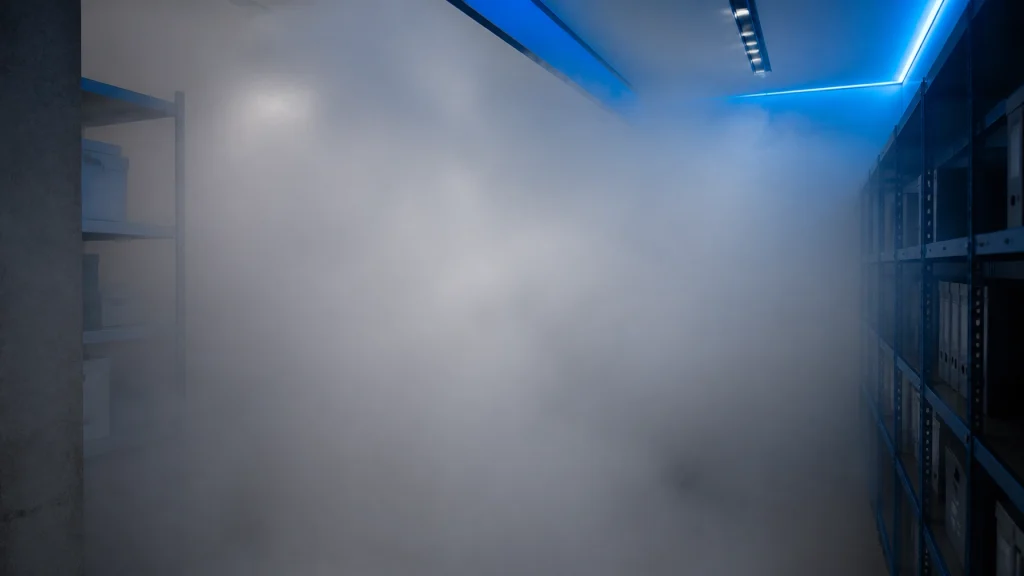
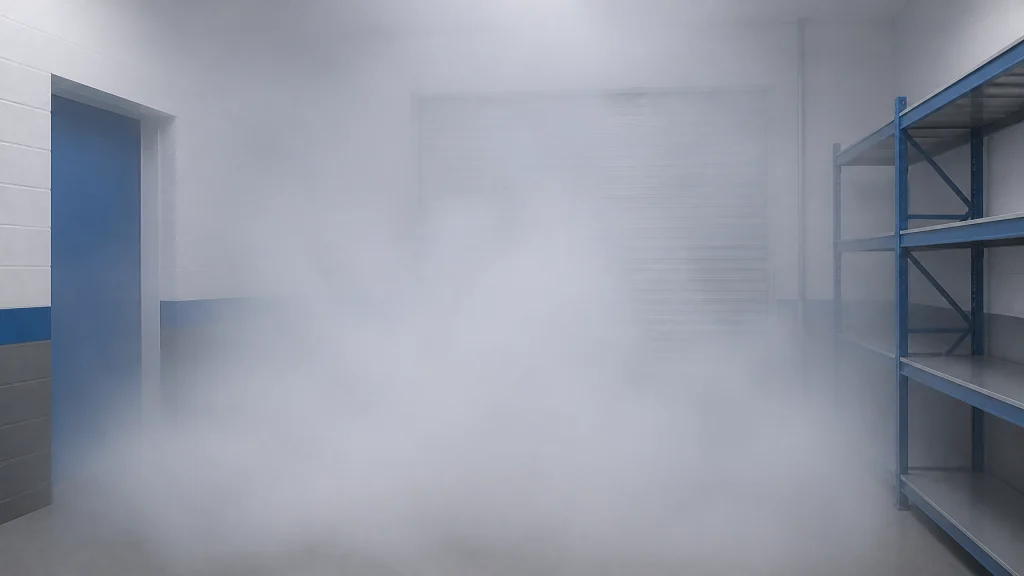
For non-profit organisations and charity retailers, the distinction between "detection" and "prevention" is often the difference between continued operation and financial crisis. Standard intruder alarm systems and CCTV provide a passive record of a crime but fail to stop the physical act of theft. Passive measures are easily bypassed; in recent weeks, the Rotherham Hospice Donation Centre at Amber Court fell victim to a smash-and-grab where a brick was used to breach a window at 01:00 BST. Despite existing security, the intruder stole a donation tin and electrical goods, leaving the charity "flabbergasted" and the volunteers, many of whom have special needs, deeply shaken. This emotional toll is compounded by the financial burden: money intended for patient care must now be diverted to repair substantial building damage. In such scenarios, an alarm merely sounds while the crime is committed. Anti-theft fogging, however, changes the environment entirely, rendering the premises impenetrable by reducing visibility to zero in seconds. By deploying an active defence, charities ensure that 97% of thefts are avoided, compared to just 17% with a standalone alarm.
Contact our security experts today to secure your non-profit with active fog technology.
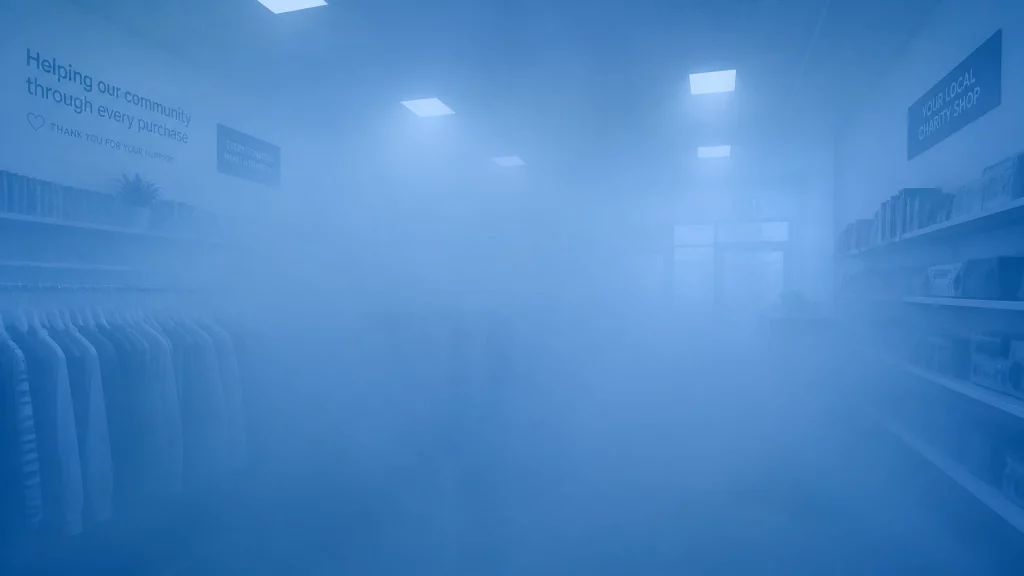
Charities often operate out of high-street locations or converted units that are viewed as "soft targets" by opportunistic thieves. The Windmill Hill City Farm in Bristol has suffered three break-ins already in 2026, including a recent incident where a rock was thrown through a glass door to steal a sheep-shaped donation box. Similarly, the YMCA charity shop in Haverhill, Suffolk, was breached via a rear entrance, with thieves taking trainers and electronics. To protect these vulnerable sites without exhausting limited budgets, Dnet UK provides entry-level solutions like the Density Air and Density Basic systems. These units are designed for retail security solutions in spaces up to 45 m2 and 150 m2 respectively. For larger donation hubs, the Density Lite line offers robust protection for environments up to 270 m2. Crucially for food banks and charity shops stocking clothing or toys, Density fog is certified Food Grade, meaning it will not alter the composition or properties of donated food items or leave any residue on textiles. This makes it the most viable technical solution for burglary prevention for business environments that handle sensitive or diverse inventory.
| Frequently Asked Questions: Security Fog for Non-Profits |
|---|
| Is the fog safe for volunteers and staff? Yes. Density fog is non-toxic and Food Grade certified. It is safe for humans, animals, and delicate donated goods. |
| How much power do these systems consume? Systems like the Density Basic are engineered for low energy use, making them sustainable for non-profits with strict utility budgets. |
| Do we need to replace our existing alarm? No. Our fogging systems integrate seamlessly with your current business security systems to provide an active layer of protection. |
| Does the fog leave any residue on clothes or electronics? No. The dry fog leaves no residue, ensuring that items stolen during the "smash" phase of a raid remain sellable after the incident is thwarted. |
The technical superiority of fogging lies in its ability to intervene in the first 60 seconds of a burglary. The "smash-and-grab" relies on speed; by filling a room with high-density fog, the intruder loses all spatial orientation, forcing an immediate exit. This is vital for organisations like the Rotherham Hospice, where the loss of even a single donation tin represents a significant blow to community trust and volunteer morale. Our systems, including the battery-powered Density UNIK for remote sheds or temporary storage areas, provide over 6 months of charge, ensuring protection even in areas without stable mains power. When evaluating retail security solutions, the cost of the hardware is secondary to the cost of business interruption and building repairs. By implementing a Density system, non-profits move from being a reactive victim to a proactive defender of their community assets.
Book a free security consultation for your charity shop or donation centre.