Traditional security systems are no longer enough to stop organised cargo criminals who can clear a loading bay in under four minutes. This post explores why active deterrence through security fog is the only way to bridge the gap between an alarm trigger and a police response that often arrives too late.
TL;DR
- Passive vs. Active: Alarms and CCTV only record and alert; security fog physically stops intruders by removing the ability to see.
- The 2026 Threat: UK freight crime resulted in £65 million in losses in 2025, with organised groups targeting "safe" yards.
- Insurance Ready: Modern fog systems are approved for use with NSI and SSAIB systems to meet strict cargo insurance mandates.
The 4-Minute Window: Why Traditional Alarms Are Failing
In the world of professional cargo theft, time is the only currency that matters. NaVCIS data from 2025 revealed that the UK experienced over 3,400 freight crime notifications, with losses reaching an estimated £65 million. These are not opportunistic amateurs; they are organised groups capable of performing "trailer hook-up" thefts and curtain-slashing with military precision.
The fundamental flaw in traditional freight depot security fog systems isn't the technology itself, but the philosophy. A standard alarm system is passive. It detects an intrusion and sends a signal. Even with a Priority 1 police response, the delay between the siren sounding and an officer arriving on-site is often 10 to 20 minutes: especially for out-of-town industrial estates. For a gang that only needs 240 seconds to strip a high-value pallet of electronics or pharmaceuticals, the alarm is merely a background noise while they work.
Passive Surveillance vs. Active Deterrence: Shifting the Paradigm
We have all seen the graining CCTV footage of a break-in after the fact. While cameras are essential for evidence and "identifying" suspects, they do nothing to prevent the loss of goods in the moment. In fact, many professional thieves now wear masks and use stolen vehicles, making post-incident footage practically useless for recovery.
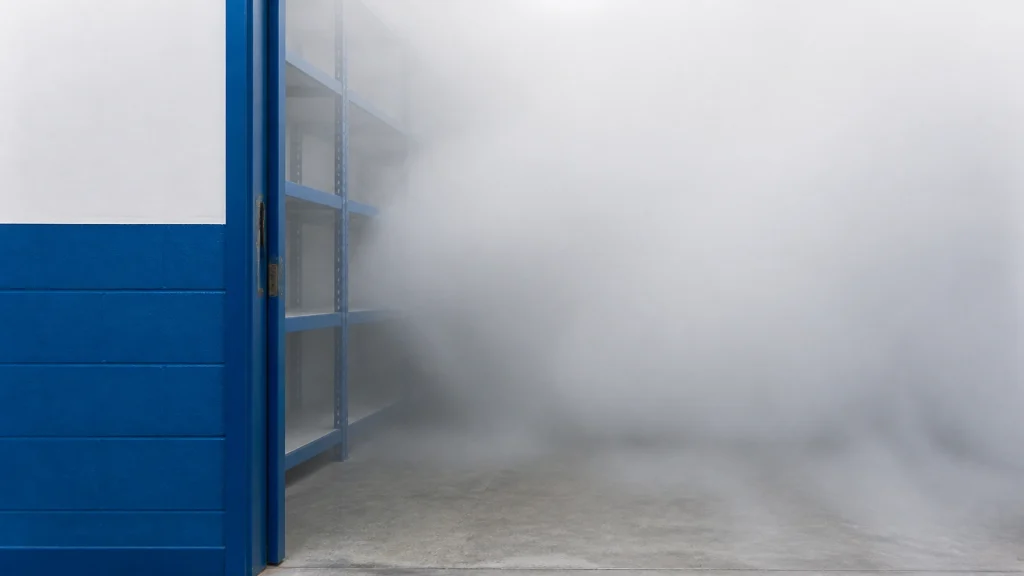
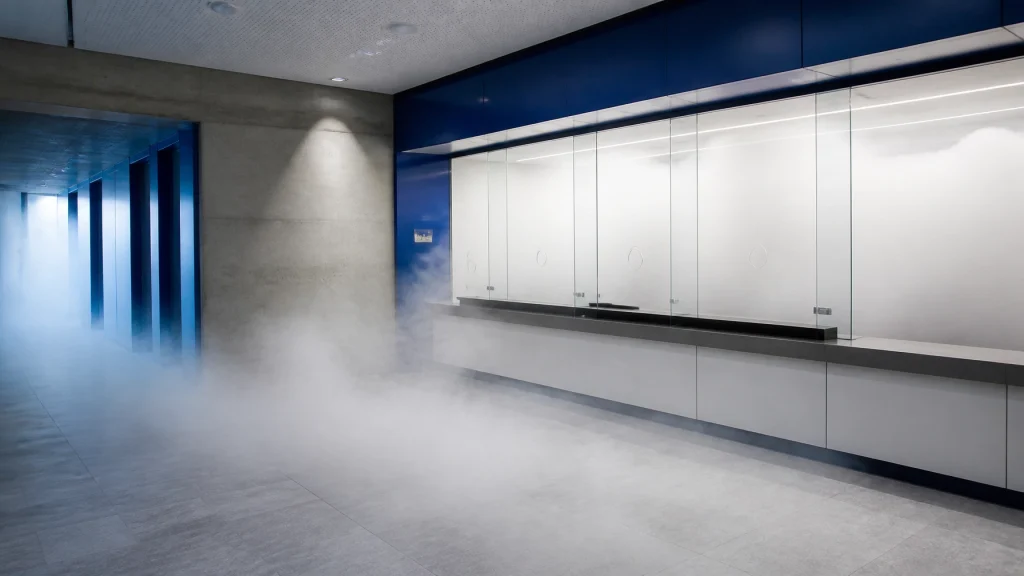
Active deterrence shifts the focus from recording the crime to interrupting it. When an intruder breaches a perimeter or loading bay, a security fog system deploys in as little as 3 seconds. Within 30 seconds, the protected area is filled with a dense, non-toxic fog that reduces visibility to near zero. If a thief cannot see their hand in front of their face, they cannot find the goods, they cannot find the exit, and they certainly cannot operate heavy machinery or loading equipment. This physical intervention turns a high-value target into an impenetrable white-out.

How Freight Depot Security Fog Systems Neutralize the ‘Hook-Up’ Threat
A worrying trend identified by Maple Fleet Services and NaVCIS is the 50% increase in trailer hook-up thefts from supposedly "safe" yards and distribution centres. Criminals are no longer just cutting curtains; they are taking the entire asset.
By integrating Lite fog systems into the loading bay and trailer yard interface, depots can create an "instant wall" of fog the moment an unauthorised movement is detected after hours. For large-scale operations, the HP range provides the massive volume output required to fill expansive depot floors, ensuring that even if a gate is breached, the cargo remains invisible and unreachable. This isn't just about protecting the building; it's about protecting the specific high-risk transition zones where goods are most vulnerable.
Insurance and Compliance: Meeting NSI and SSAIB Requirements
For 3PL operators and freight forwarders, security isn't just about theft prevention: it’s about contract compliance. Many high-value cargo insurance policies now include strict clauses regarding "active" measures.
It is important to clarify that Density systems are approved for use with NSI and SSAIB systems. While many passive alarms struggle to satisfy the "Level 3" security requirements for bonded goods or high-end electronics, an integrated fog solution often becomes the deciding factor for insurers like TT Club or Allianz. Our UK-wide network of approved installers ensures that your system isn't just a standalone gadget, but a certified component of a professional security infrastructure that works in tandem with your existing alarm panels.

Remote ARC Deployment: Taking Humans Out of the Danger Zone
One of the greatest risks in modern logistics security is the safety of on-site staff or lone workers. Expecting a security guard to confront an organised gang is neither safe nor practical.
Modern fog technology allows for remote deployment via an Alarm Receiving Centre (ARC). When a monitoring station sees a verified intrusion on live video, they can remotely trigger the fog generators. This provides an immediate response without putting staff in harm's way. Whether you are protecting a small pharma lane with a UNIK unit or a multi-zone sortation centre with Basic units, the ability to take control from a distance is a game-changer for facility managers who need to balance asset protection with health and safety obligations.
From Pharma Lanes to Loading Bays: Scalable Fog Solutions
The threat profile of a logistics hub changes from zone to zone. A "one-size-fits-all" approach to security usually leaves gaps.
- Bonded Cages and Pharma: These areas require the UNIK unit. It is battery-operated and compact, making it ideal for caged environments where mains power might be tampered with.
- Standard Cross-Dock Zones: The Basic fog system provides reliable protection for mid-sized areas where quick turnarounds happen daily.
- Large Depot Floors: The Lite range is designed for scale, allowing multiple units to link together and blanket thousands of square feet in seconds.
By layering these technologies, logistics operators move from a "reactive" posture (waiting for the police) to a "proactive" posture (denying the intruder access to the goods immediately).
Key Takeaways
- Visibility is Vulnerability: If they can't see it, they can't steal it. Fog removes the criminal's primary tool: their eyes.
- Response Time Gap: Traditional alarms leave a 10-20 minute window for theft; fog closes that window to 3 seconds.
- Verified Protection: Systems are approved for use with NSI and SSAIB alarm systems, making them an asset for insurance negotiations.
- Safety First: Remote ARC deployment protects staff by using technology to repel intruders instead of physical confrontation.
Ready to upgrade your depot security from passive to active?
Explore our Logistics Sector Solutions or Get a custom quote for your facility.