In the world of UK manufacturing, security isn't just about protecting "stuff." It’s about protecting the heartbeat of your business: production. When a thief targets your factory: whether they're after high-value copper cabling, semiconductors, or specialized tooling: the physical loss of the asset is often the smallest part of the bill.
The real cost is downtime. Every hour your production line sits idle while you wait for replacements or repairs is an hour of lost revenue, missed deadlines, and damaged reputation.
Despite this, many facility managers are still operating with outdated security mindsets. We’ve audited hundreds of industrial sites and found the same errors repeating themselves. Here are the 7 most common mistakes you’re making with your factory security system: and exactly how to fix them.
1. Relying on "Passive" CCTV (The "Watch It Happen" Problem)
The biggest mistake we see is the assumption that a high-definition CCTV system equals security. It doesn’t. CCTV is a passive tool; it records the crime but does nothing to stop it.
Most thieves are well-aware of camera locations. They wear masks, use stolen plates, and are in and out of your facility in under four minutes. By the time you watch the footage the next morning, your raw materials are gone, and your production line is down.
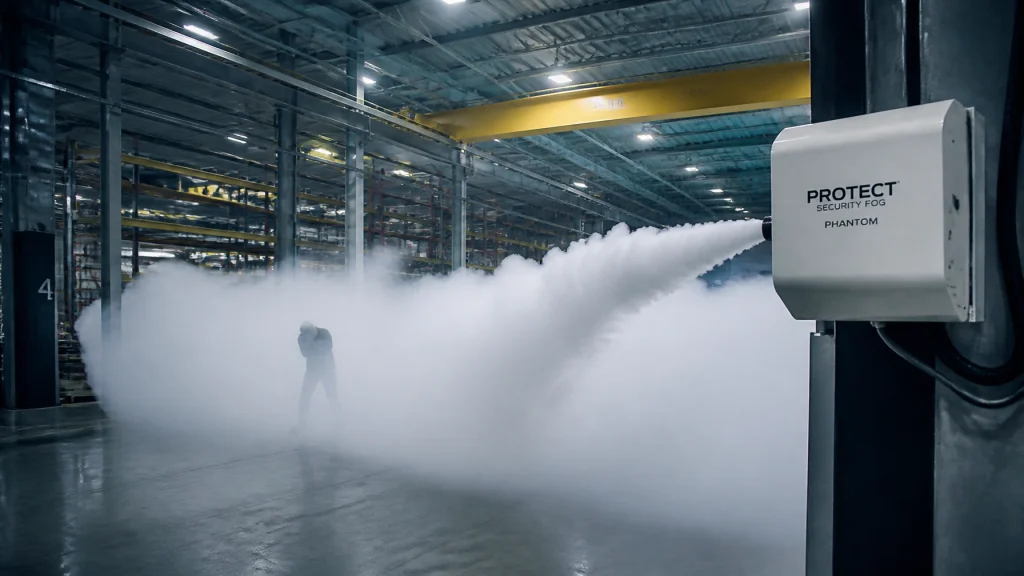
The Fix: Transition from passive recording to active deterrence. You need a system that physically prevents the theft as it happens. Density security fogging solutions like the HP6000 deploy in less than a single second and can create over 70 cubic metres of dense, non-toxic fog per second. If they can’t see, they can’t steal.

2. Ignoring the "Response Time Gap"
In the UK, the average response time for police or private security to arrive at an industrial site can be anywhere from 8 to 20 minutes. However, most professional "smash and grab" raids on tool cribs or maintenance stores take less than 120 seconds.
If your security strategy relies on someone "driving to the site" after an alarm is triggered, you have already lost.
The Fix: You must win the first 60 seconds of the raid. Our systems are designed to close the response time gap by creating an immediate physical barrier. In less than a single second from activation, the intruder is disoriented and forced to retreat, while the system can generate over 70 cubic metres of fog per second long before a security guard has even put their boots on.
3. The "Copper Blind Spot" in External Yards
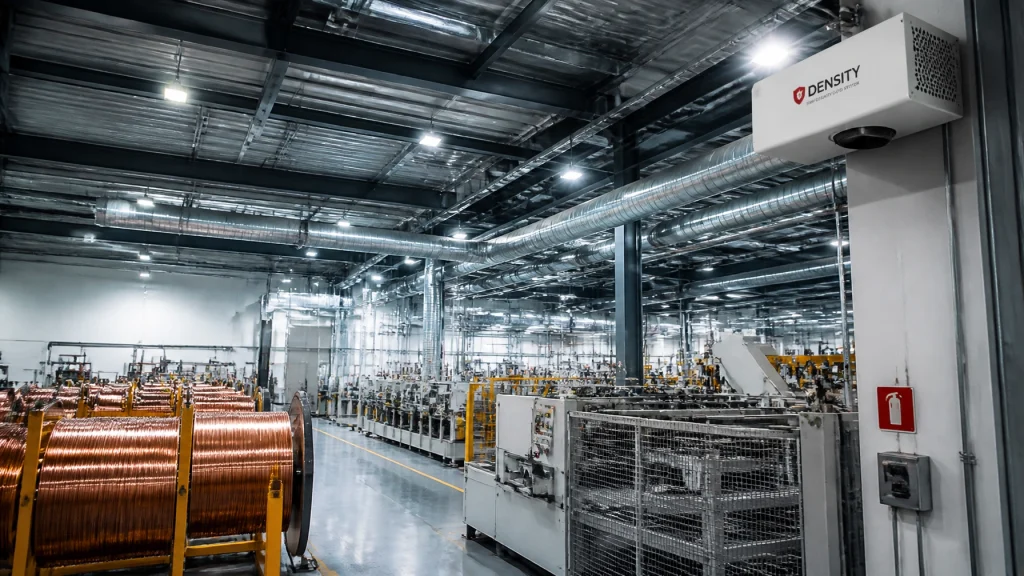
Copper theft is surging across the UK. Often, manufacturers focus heavily on securing the main office or the warehouse floor but leave external cable runs, scrap skips, and substation rooms vulnerable.
Thieves will often target these "peripheral" areas because they offer an easy getaway. However, cutting the main power cables to a factory can result in a total plant shutdown that lasts for days.
The Fix: Extend your active defense to critical infrastructure areas. Use zoned protection to cover not just the inventory, but the utilities that keep your factory running. Even in large, open-plan spaces, high-performance fog generators can be used to protect specific "hotspots" like cable trays and electrical switchrooms.
4. "Permission Drift" and Shared Fobs
Access control is only effective if it's strictly managed. In a busy manufacturing environment, it’s common to see "permission drift": where a former contractor still has an active fob, or a supervisor shares their code with three other people to "save time" during a shift change.
This creates a massive internal risk. If a theft occurs, you have no clear audit trail of who was in the building or the tool crib.
The Fix: Implement a strict "one person, one credential" policy and conduct monthly access audits. Furthermore, integrate your access control with your alarm system. If an unauthorized fob is used during "out of hours," the system should be able to trigger an immediate alert or even a localized fog discharge in sensitive areas like the server room or tool stores.
5. Treating Security as "Fit and Forget"
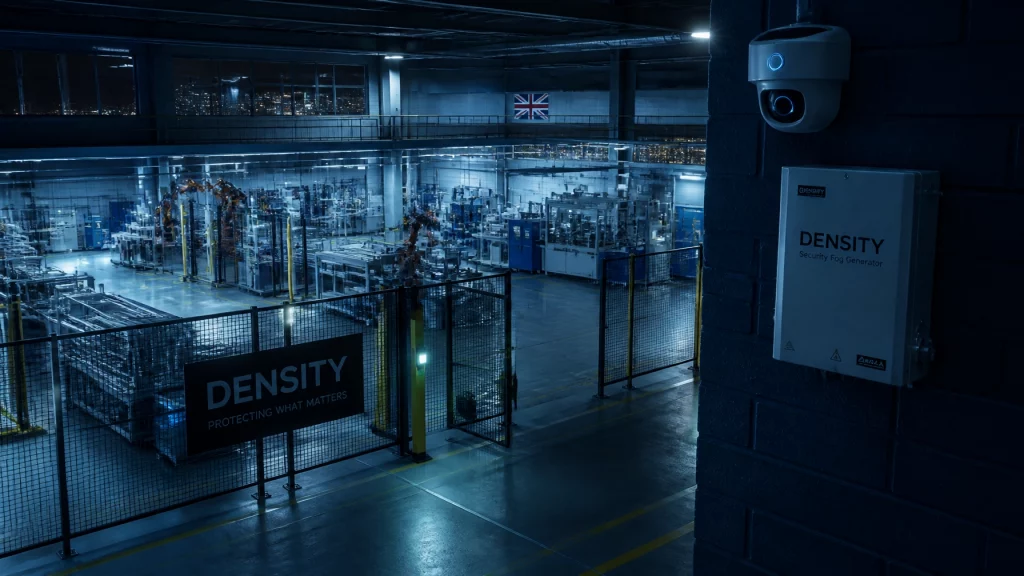
Many factories are operating on alarm systems installed ten years ago. A "set it and forget it" mentality is dangerous because manufacturing layouts change. You might have added new mezzanine levels, moved your racking, or installed a new production line that creates blind spots for your old sensors.
If your security system hasn't evolved with your floor plan, you have gaps.
The Fix: Treat security as a live part of your facility management. Work with NSI or SSAIB-approved installers who understand the specific needs of industrial sites. Regular testing: including "dry runs" of your fog system: ensures that if a raid happens on a Sunday night, the system will perform exactly as expected.

6. Underestimating the "Clean-Up" Fear
We often speak to factory managers who are hesitant to install security fog because they fear it will damage their machinery or contaminate their products: especially in electronics, food, or pharmaceutical manufacturing. This fear leads them to stick with ineffective "dry" alarms.
The Fix: Choose the right technology. Density security fog is food-safe, non-toxic, and leaves zero residue. It is effectively a dry vapor that disappears without a trace once the area is ventilated. It won't harm sensitive PCBs, it won't settle on stainless steel surfaces, and it won't ruin your raw materials. It is far less damaging than the soot and water damage from a fire, or the physical destruction caused by a thief with a crowbar.
7. Failing to Protect the "Critical Organs" (The Tool Crib)
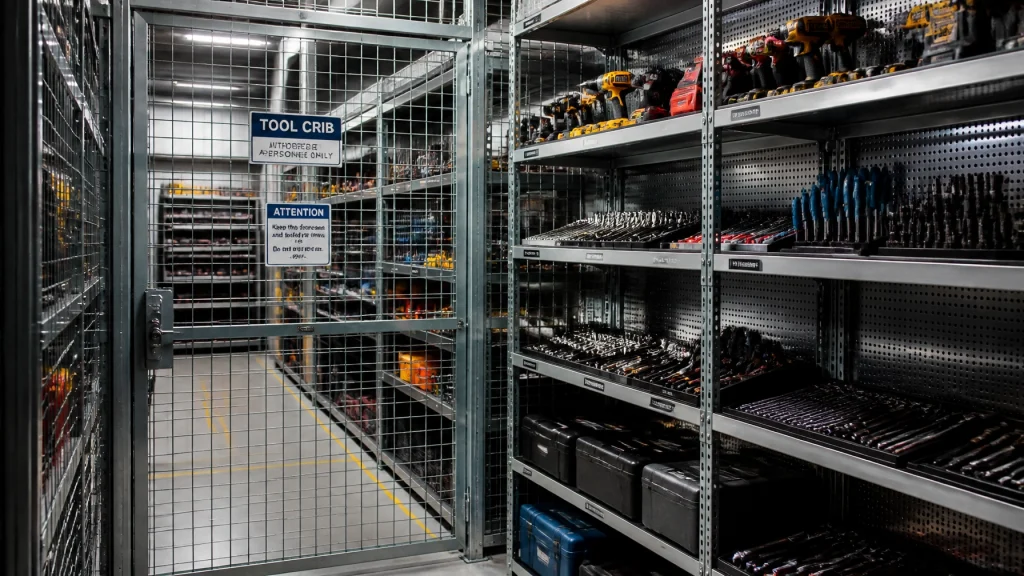
The biggest mistake is a "perimeter-only" mindset. If a thief gets through your fence and your back door, they have free rein of the building. In many factories, the tool crib or maintenance store contains hundreds of thousands of pounds worth of specialized gear that is impossible to replace overnight.
The Fix: Implement "In-Room" defense. Even if a thief breaches the perimeter, they should find the most valuable areas of your factory impenetrable. By installing a dedicated unit like the Density HP6000 in your tool crib, you ensure that the most critical part of your operation is shrouded in zero-visibility fog the second the door is forced.

Conclusion: Stop the Theft, Save the Shift
In UK manufacturing, a successful theft is a business-critical event. You cannot afford to wait for the police, and you cannot afford to rely on grainy CCTV footage.
By fixing these seven mistakes and moving toward an active, fog-based defense, you take control of the situation. You aren't just recording a crime; you are stopping it in its tracks and ensuring that your team can get back to work the next morning without the crushing cost of downtime.
Ready to secure your facility? Contact Density today for a site survey and see how our UK-compliant fogging solutions can protect your production line.