Supermarket shrinkage costs UK retailers close to £400 million annually. Most loss occurs in two zones: the stockroom and high-value aisles. Thieves target these areas relentlessly. Traditional CCTV and alarms alone fail to stop most incidents. A stockroom breach can mean thousands lost in minutes.
Security fog stops theft in real time. Unlike CCTV, which records theft after it happens, fog obscures sight lines and triggers immediate alarm response. This guide outlines the threats, the security gaps, and how to deploy fog strategically.
The Stockroom as a Theft Hotspot
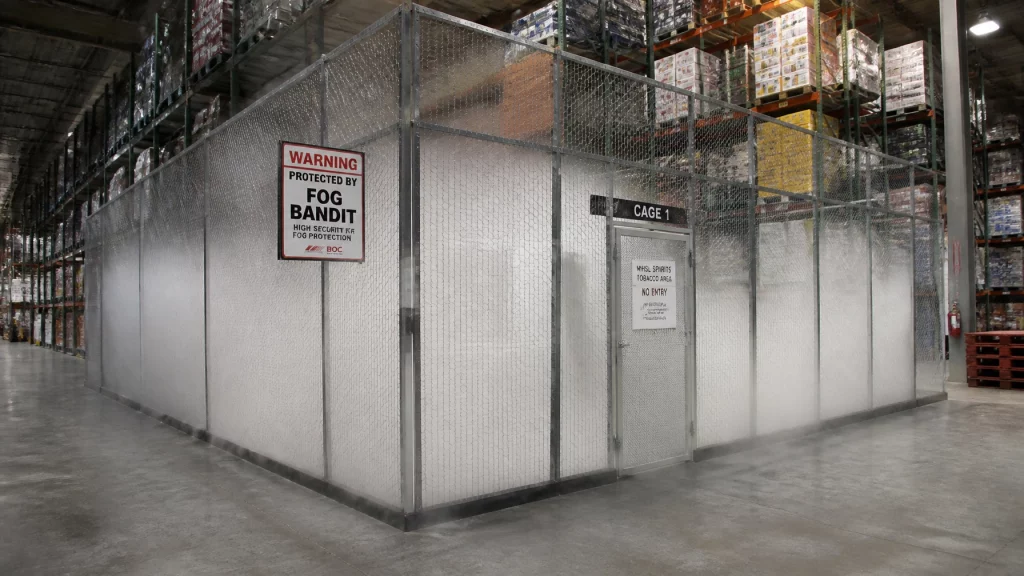
Stockrooms hold concentrated, vulnerable inventory. There is no customer surveillance. Staff presence is limited. Access to goods awaiting shelf placement is direct. This makes stockrooms ideal targets for internal and external theft.
Crime gangs study patterns. They watch for shift changes, busy restocking times, and open doors. Short staffing means one person covers huge areas. Once inside—through a loading dock, emergency exit, or with help from staff—thieves have just minutes to grab stock and go.
97% of thefts are avoided with a fogging system and an alarm combined, compared with 17% with an alarm only (Density® manufacturer figure). It shows the power of immediate deterrence paired with rapid response.
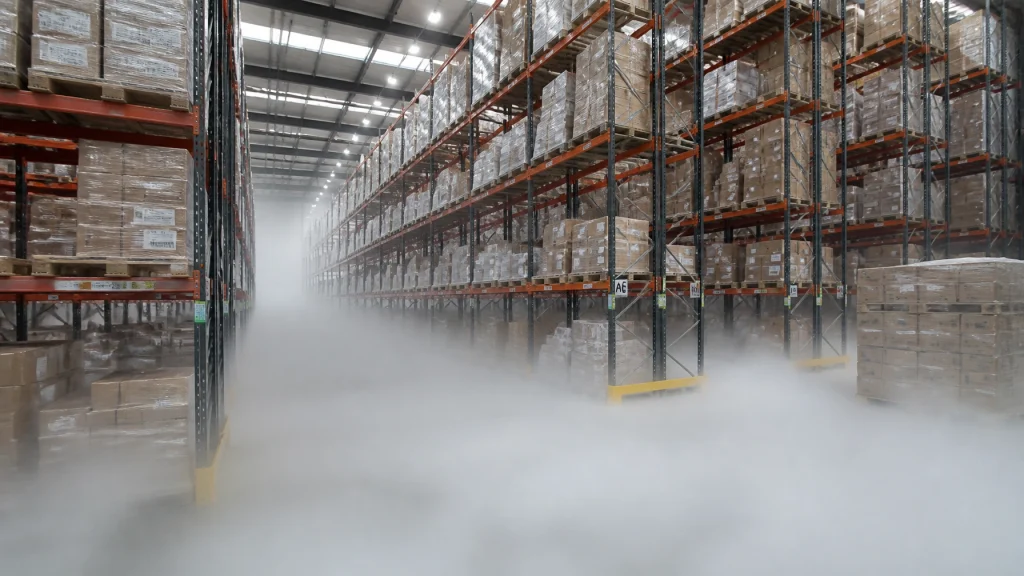
CCTV records what happened. It does not prevent theft. Alarms alert staff but depend on active monitoring and fast response. Fog works differently. It activates instantly. The moment an intruder crosses a sensor, visibility drops to zero. They cannot find stock or navigate. Most abandon the attempt within seconds.
High-Value Aisles: A Prime Target
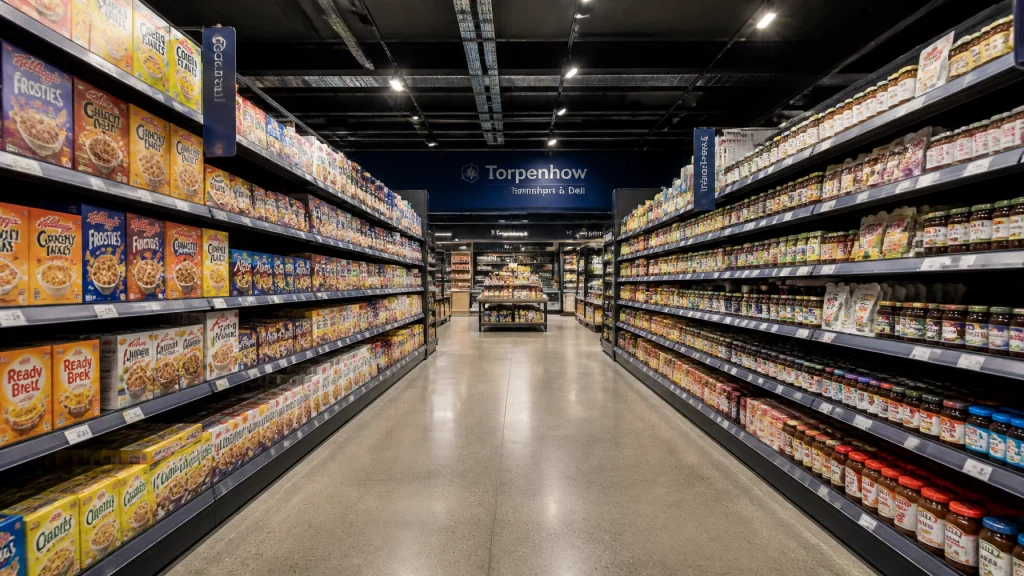
High-value aisles—spirits, cosmetics, confectionery, premium groceries—attract systematic theft. A single coordinated raid can result in thousands of pounds lost in under five minutes.
The threat comes in multiple forms. Solo shoplifters test boundaries. Organised teams execute planned sweeps. Self-checkout bypass and price tampering add to losses. CCTV presence alone does not deter skilled operators who calculate low prosecution risk.
Store layout invites vulnerability. High-value aisles are positioned to maximise foot traffic, which means distance from staff, blind spots, and multiple exit routes. Perimeter alarms on items create friction for honest customers but fail against determined thieves with removal tools.
Why Conventional Security Fails
Alarms alone are insufficient. Police data shows only 8% of shoplifting incidents are reported to authorities. Actual retail-detected incidents are far higher. Staff responding to alarms often arrive to find aisles already cleared.
CCTV is a post-incident tool. It builds prosecution evidence but does nothing to halt theft as it happens. Staff cannot be everywhere at once. Busy periods are precisely when theft clusters—staff are stretched and response time lengthens.
Fog closes this gap. It doesn’t replace alarms or cameras; it multiplies their power. The moment a sensor triggers, visibility vanishes. Most thieves abandon their attempt within seconds.
Deploying Fog Strategically
Use a layered fog approach to create defendable zones. Place sensors at stockroom entry points. This means loading dock doors, emergency exits, and corridors. High-value aisles get sensors at entry and exit points, or at aisle heads.
Fog deploys fast: 2–3 seconds from trigger. Coverage scales to your space. The Density HP6000 works up to 6,000 m³. The HP14000 covers up to 14,000 m³. Both suit warehouses or multi-zone rollout. For smaller areas, use the Density 900 (900 m³) or 600 Lite (600 m³).
The fog is safe for food areas. It meets food-contact rules under Reg. (CE) No. 1935/2004. It clears in 10–15 minutes and leaves no mess or damage.
How Fog Connects to Your Alarm
Fog systems work with existing alarm panels. They fit all major systems, including Ajax. ActiveCloud sends live alerts and logs to your phone or computer. You can check incidents anytime and spot patterns over time.
Maintenance is simple. Check fluid levels now and then. Unlike CCTV, there is no footage to sort through or cloud space to pay for. The system is ready to go at any alarm.
Some models, like the UNIK, have battery power. They run for up to 6 months without mains electricity. This keeps you safe even if power fails or the store closes.
Fog Works Best With Other Security
Fog does not replace CCTV, staff, or alarms. It works alongside them.
CCTV builds a record for police. Alarms tell staff something is wrong. Fog stops theft as it happens. Together, all three reduce losses and scare off repeat thieves far more than any single tool alone.
Staff training is key. Train teams to know when to trigger fog, how to lock down the area after, and how to log what happened. Thieves talk to each other. Stores that use fog get a reputation, and gangs skip them.
How It Works in Practice
Picture a loading dock breach at 4 a.m. during a quiet shift. A thief slips past the door. Motion sensors detect entry. Fog deploys instantly. Visibility drops to near zero. The intruder cannot navigate, cannot locate stock, and cannot exit without triggering more sensors. They flee within seconds, empty-handed.
Now imagine a coordinated gang targeting the cosmetics aisle during evening peak. Two operatives enter the aisle head with removal tools. A sensor trip deploys fog. Customers recover visibility within 15 minutes. Staff are alerted. The thieves, caught in zero visibility, abandon tools and flee.
Both scenarios become high-risk, low-reward the moment fog deploys. Networks actively avoid retailers using active deterrence.
Frequently asked questions
Does fog harm products or leave residue?
No. The fog is non-toxic, food-safe, and certified to EU food-contact rules. It clears naturally within 10–15 minutes and leaves no residue or damage.
How fast does fog deploy?
Fog deploys in 2–3 seconds from sensor trigger. This rapid response is critical; the thief loses orientation almost immediately.
Will fog work with my existing alarm?
Yes. Fog systems integrate with all major alarm panels, including Ajax. Remote monitoring via ActiveCloud sends real-time alerts and logs.
What coverage area do I need?
Coverage is measured in cubic metres (m³). A typical stockroom or aisle section ranges from 390 m³ to 6,000 m³. Your security provider will conduct a site survey to recommend the right generator.
How much maintenance is required?
Minimal. Periodic fluid checks and occasional filter replacement. Unlike CCTV, there is no footage to manage. The system is ready to deploy at any trigger.
Related Supermarkets security guides
- Securing the Supermarket Stockroom — Deep dive into internal theft prevention, staff protocols, and sensor placement in warehouse areas.
- Protecting High-Value Supermarket Aisles — Tactical defence of spirits, cosmetics, and premium grocery zones against organised shoplifting.
- Reducing Back-of-Store Shrinkage — Operational strategies and security fog deployment to minimise unaccounted loss in loading and storage areas.
- Protecting the Supermarket Cash Office — Securing your highest-value asset—the cash office—against raid and collusion.
- How Security Fog Protects a Supermarket Stockroom — Case-study perspective on fog deployment, response outcomes, and integration with alarm systems in live supermarket operations.
Protect Your Stockroom and High-Value Zones
Shrinkage in supermarkets is predictable and largely preventable. Combining CCTV, alarms, staff training, and security fog creates a layered deterrent that stops theft in progress.
Start with a professional site survey. Our team will map your stockroom and high-value aisles, identify vulnerability points, and recommend generator placement, sensor strategy, and alarm integration. We also provide staff training on deployment and incident review.
Browse the Supermarkets sector page for additional resources, or learn more about the Density HP range, engineered for large-scale commercial protection. Get in touch for a no-obligation consultation and quote.