Achieving TAPA Facility Security Requirements (FSR) certification is essential for logistics operators handling high-value cargo, yet passive cameras and standard intruder alarms often leave critical security gaps during the decisive minutes of an overnight break-in. In this post, I break down how facilities integrate active security fog systems to meet rigorous FSR standards and stop cargo theft before losses occur.
TL;DR
- TAPA FSR Framework: Tiers A, B, and C mandate robust perimeter, building fabric, and intrusion alarm controls for high-value freight.
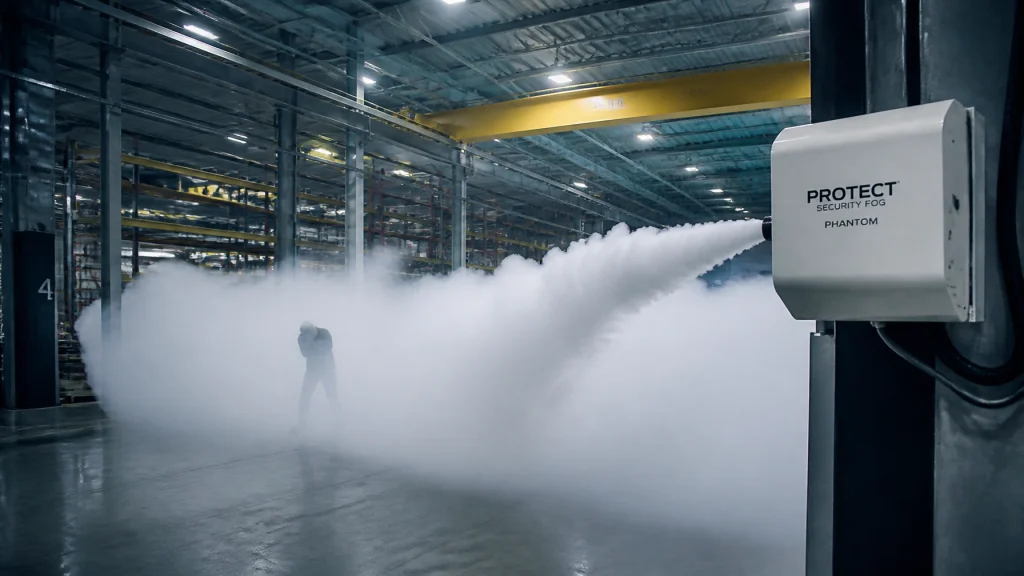
- Active Deterrence: Integrating security fog transforms passive alarms into an active denial layer that eliminates visibility in under 30 seconds.
- Proven Protection: Deploying security fog achieves a 97% theft avoidance rate compared to just 17% for alarm and CCTV systems alone.
Navigating TAPA EMEA FSR Tiers and Passive Security Limits
When logistics directors pursue TAPA EMEA FSR certification across UK distribution centres, the focus invariably lands on physical barriers, access control, and electronic intrusion detection. Whether aiming for Level A (elevated security), Level B (moderate protection), or Level C (standard baseline), operators must demonstrate that their facilities can resist forced entry and protect high-value electronic, pharmaceutical, and consumer goods.
However, standard FSR compliance audits often reveal a persistent vulnerability: response time. Even when perimeter fences meet the 1.8-metre minimum and exterior doors are fully monitored, police and security guard response windows on industrial estates routinely exceed four minutes. During that window, coordinated criminal gangs can force a loading bay door, identify high-value pallets, and load a curtain-sider truck before authorities arrive. Relying solely on recorded CCTV footage and passive alarms means you are documenting a crime rather than stopping it.
Integrating Active Security Fog Into FSR Alarm and Intrusion Mandates
To truly secure a facility against organised cargo crime, security teams must move beyond passive detection and adopt active denial strategies. Under current compliance frameworks, security fogging generators integrate seamlessly with existing alarm panels and monitoring stations. When an intruder breaches a monitored zone, the system triggers automatically, filling the space with a dense, non-toxic security fog that strips away visibility in seconds.
Because our equipment is approved for use with NSI and SSAIB security systems, facility managers can tie fog deployment directly into their existing certified alarm relay loops without disrupting existing monitoring contracts. This integration satisfies the stringent monitoring and rapid-response intent of TAPA standards by neutralizing the intruder's greatest asset: sight. If an intruder cannot see the palletised cargo, they cannot steal it.
Protecting Loading Bays and High-Scale Docks with Lite and Basic Systems
Loading bays represent the highest-risk access point in any freight depot. They combine large vehicle openings with heavy traffic flow, making them prime targets for overnight break-ins. Maintaining FSR compliance across large, open-plan transshipment areas requires scalable solutions that can saturate volumetric spaces instantly.
For mid-size cross-dock zones, our basic-fog-system/ provides rapid volumetric coverage that floods individual dock doors and staging lanes the moment an unauthorised door contact trips. For larger, multi-zone distribution spaces and depot floors, implementing our lite-fog-systems/ range ensures that vast cubic capacities are secured uniformly. These units deploy in under 30 seconds, creating an impenetrable barrier across loading bays that halts loading operations dead in their tracks.

Securing Bonded Cages, Pharma Lanes, and High-Value Stock with UNIK
While perimeter and loading bay security protect the building shell, high-value cargo: such as consumer electronics, bonded tobacco, and pharmaceuticals: often requires segmented internal protection. TAPA FSR guidelines demand strict internal controls around high-theft storage cages and short-dwell cross-dock pharma lanes.
To protect these sensitive internal zones without over-engineering the entire warehouse, operators rely on the compact, high-precision unik-fog-system/. Operating independently or integrated directly into localized security loops, these units deliver targeted fog saturation inside caged enclosures or secure holding rooms. The water-based, non-corrosive fog formula leaves zero residue on sensitive packaging or electronics, ensuring full regulatory compliance and product integrity while completely denying access to intruders.
The Decisive Difference: Why 97% Theft Avoidance Beats Cameras Alone
When presenting security upgrades to executive boards or insurance underwriters, the conversation ultimately turns to risk reduction data. Traditional security measures: CCTV cameras and audible sounders: act as deterrents after the fact, achieving a modest 17% theft avoidance rate because determined thieves know they can execute a smash-and-grab before police arrive.
In contrast, operations utilising active security fog achieve a 97% theft avoidance rate. By completely removing visibility inside the protected zone within seconds of a breach, thieves are forced to flee empty-handed. For logistics operators aiming to satisfy TAPA FSR standards and protect their operating margins, active security fog transforms a vulnerable depot into an impenetrable fortress. To explore how these systems integrate into your wider network, visit our dedicated freight depot security fog systems hub.

Key Takeaways
- TAPA Alignment: FSR standards mandate rigorous perimeter, door, and alarm controls, but active fog closes the critical response-time gap.
- Rapid Saturation: Density units fill protected loading bays and depot floors in under 30 seconds, eliminating visual orientation.
- NSI & SSAIB Compatibility: Systems integrate smoothly with existing approved security architecture via standard alarm relays.
- Uncompromised Safety: Water-based, non-toxic fog leaves zero residue on electronics, pharmaceuticals, or palletised cargo.
Secure Your Depot Today
Ready to elevate your facility security to meet the highest industry standards? Discover our full range of solutions on our freight depot security fog systems hub or use our interactive sector quote tool to configure a bespoke active security system for your operation.