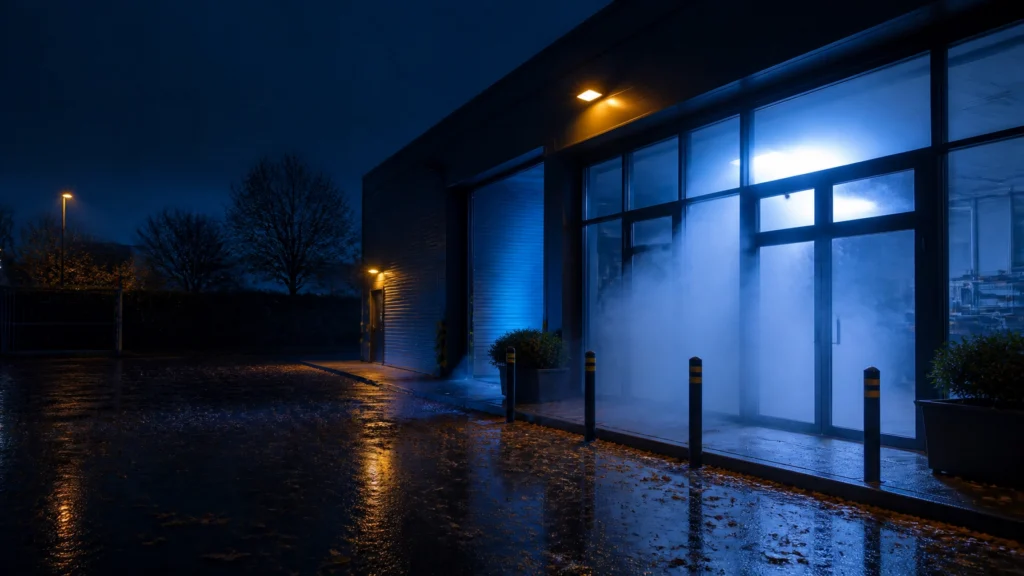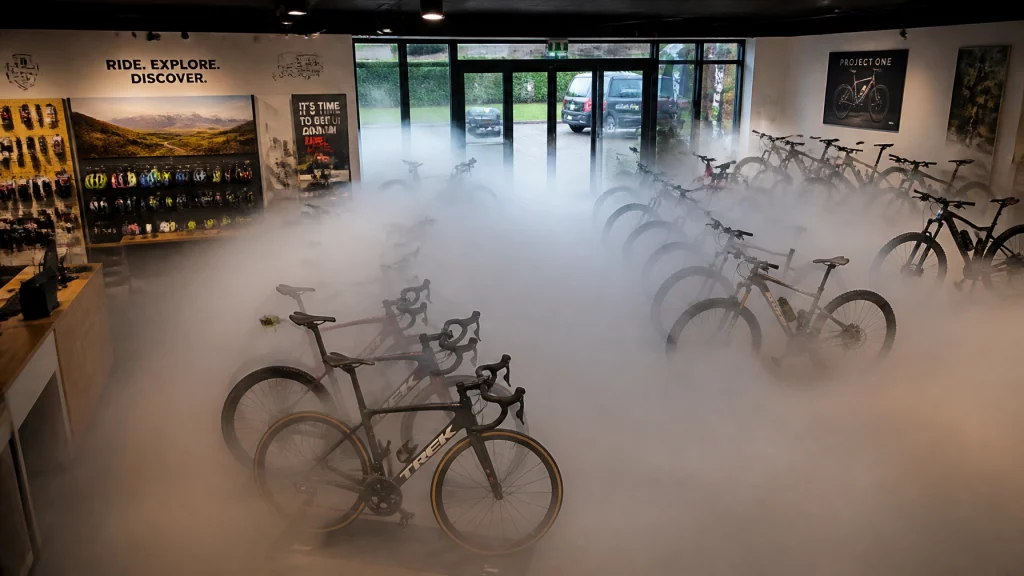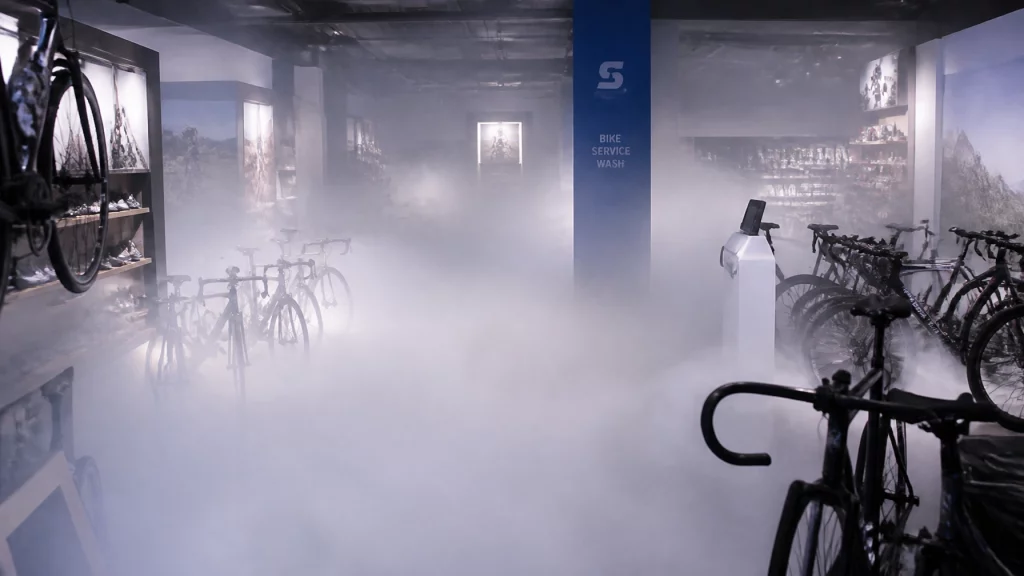
CCTV helps you review what happened after a break-in, but it does not stop thieves lifting stock in the moment. This post explains where cameras fall short and how bike shop security fog systems add active protection when speed matters most.
Why CCTV alone leaves a gap
Cameras still matter. They support staff safety, provide evidence and help with post-incident reporting. But for a cycle retailer facing a fast entry, they are still a reactive measure.
The wider picture is not encouraging. Home Office data shows a high proportion of shoplifting investigations end with no suspect identified, underlining the limits of evidence-only security in live incidents (Home Office). Bike theft patterns tracked by BikeRegister also show how quickly stolen cycles move on, which is why delay-based security often fails once intruders are inside. In a bike shop, where display models and premium e-bikes can be removed in seconds, that matters.
This is where bike shop security fog systems change the outcome. Instead of recording the loss, they flood the space with dense fog and remove visibility so intruders cannot identify, locate or carry out valuable stock. As we say: What you can't see you can't steal.
Need a practical next step? Explore our bike shop security fog systems or get a quote.
A camera can show you who entered. It cannot stop a team already wearing face coverings and moving to a plan. Active deterrence is what closes that gap.
The real problem is the response gap
Most bike shop raids are over before anyone reaches the premises. Thieves do not need long. They only need a clear route to high-value stock and enough visibility to grab it.
That is the core weakness in a CCTV-and-alarm-only setup. Your alarm may signal immediately, but the physical loss can still happen before any response arrives. Police.uk local crime data continues to show retail and theft offences remain a live issue across many UK towns and cities, especially where valuable goods are easy to move. For bike retailers, that means a smashed frontage, a rushed sweep of the display area and heavy losses in under a minute.
Bike shop security fog systems are built for that exact window. When connected to an alarm trigger, the system fills the protected area with dense fog in under 30 seconds, making it far harder for intruders to continue. The objective is simple: stop theft in progress, not just document it.
See which system suits your layout: Basic fog system for the main shop floor or Lite fog systems for larger or multi-zone spaces.
That shift from passive monitoring to active denial is what makes security fog so effective in high-value retail.
Where bike shops are most exposed
If you walk your own premises as a thief would, the vulnerable zones are usually obvious. Front-of-house displays, workshop access points and back-room stock areas all present different risks.
The display area is often the first target because the stock is visible, valuable and close to the entrance. Workshops are different. They may hold customer bikes, tools, parts and boxed stock, often with fewer eyes on them out of hours. Back rooms can also contain the easiest-to-move items, including accessories and premium components.
That is why bike shop security fog systems are usually strongest when matched to the risk by zone. A compact UNIK fog system can protect a workshop, stock room or cash area. A Basic fog system suits the main shop floor. Lite fog systems are designed for larger volumes, with scalable coverage measured in m³ rather than floor area alone.
FAQ
What makes security fog different from CCTV?
CCTV records events. Security fog actively disrupts theft by removing visibility inside the protected area.
Is the fog safe around bikes, parts and electronics?
Density systems use non-toxic, non-corrosive fog fluid designed for indoor commercial use around stock and equipment.
Will it work with my current alarm?
Yes. Density systems are NSI & SSAIB compatible and connect to existing alarm panels through standard relay outputs.
Can one system protect the whole shop?
That depends on the volume and layout of the premises. Smaller rooms may need one unit, while larger stores or split layouts may need zoned protection.
Do insurers recognise this type of protection?
Many brokers and commercial insurers understand the value of active deterrence because it helps reduce the chance of a successful theft, though requirements vary by policy.
The best layouts use fog to protect the spaces intruders are most likely to hit first, not just the spaces that are easiest to monitor.
Why fog works better in the moment
Security fog works because it attacks the one thing a thief needs most once inside: sight. If they cannot see the bikes, exits, staff routes or stock positions clearly, their plan breaks down fast.
That matters in a retail environment where organised groups are often targeting known high-value items. Trade reporting from BikeBiz and Cycling Industry News has repeatedly highlighted pressure on cycle retailers from theft, stock loss and organised criminal activity across the sector. For many shops, the challenge is not proving a theft happened. It is preventing it from succeeding at all.
With bike shop security fog systems, the response is immediate and practical. The fog creates a dense visual barrier, forcing intruders to retreat or abandon the raid before they can select and remove stock. It also works alongside the security you already have, rather than replacing it. CCTV still records. Alarms still trigger. Fog adds the layer that interrupts the theft.

If your current setup would still allow thieves to see and lift bikes after entry, then it is not yet doing enough. That is the test worth applying.
Upgrade without replacing everything
Adding security fog does not mean starting again. Density systems are designed to work with existing intruder alarms, giving bike shops a faster route to active protection.
Because they are NSI & SSAIB compatible, they fit neatly into established security setups without requiring a full rebuild. That makes them practical for independents, growing retailers and multi-site operators alike. The aim is straightforward: use the alarm you already trust, then add the layer that denies visibility when an intrusion is confirmed.
For a bike shop, that can mean protecting the showroom, the workshop, the back room or a mix of all three. The right system depends on the volume of each protected area, the stock profile and how the building is used after hours. But the principle is consistent across every layout: What you can't see you can't steal.

If you are reviewing risk after a recent incident, or simply want to close the gap between alarm activation and actual prevention, security fog is the step that turns passive security into active deterrence.
Ready to plan the right setup? Visit our bike shop security fog systems page or request a quote.