Back-of-store shrinkage is one of the biggest hidden costs in UK supermarkets. Unlike shoplifting on the shop floor—which visible staff and cameras can deter—stockroom losses happen out of sight. Staff theft, organised gangs, and weak entry points create perfect conditions for theft. The gap between when items go missing and when staff find out can be weeks or months. By then, the goods are gone.
Recent data from the BRC Crime Survey is clear: employee theft accounts for 40% of all retail theft in the UK. Stockroom and distribution centre theft has jumped 40% in recent years. For supermarket chains, back-of-store shrinkage is a serious financial problem that needs fixing.
The True Cost of Invisible Losses
Back-of-store shrinkage includes staff taking goods, gangs targeting delivery bays, stock going missing during transfers, and damage during handling. The cost is high because:
- Detection happens weeks after the theft, making prevention nearly impossible.
- The loss adds up across hundreds of deliveries and thousands of items.
- Each single theft seems small, but the total drain on profit is huge.
Supermarket managers say stockroom losses are harder to track than till problems. The loss is spread across many small incidents rather than one obvious gap. Yet the total cost often rivals what shoplifters steal from the shop floor.
97% of thefts are prevented with a fogging system AND an alarm, compared with 17% with an alarm only. This Density® manufacturer figure shows why two layers of defence work so much better than one.
Why CCTV Alone Cannot Stop Theft
Many store managers think CCTV solves stockroom security. It doesn’t. Cameras record what happens and deter some basic theft, but they can’t stop a gang entering through a known weak spot. They can’t prevent staff taking goods in real time. By the time you review footage, the goods are gone.
Back-of-store areas are uniquely hard to secure. There is high staff activity, legitimate access by many people, delivery partner movement, and often poor visibility during shift changes. A camera can’t stop a phone being slipped into a bag or a case marked as damaged when it’s really being stolen.
Active Defence: Fog Plus Alarm Stops Theft Now
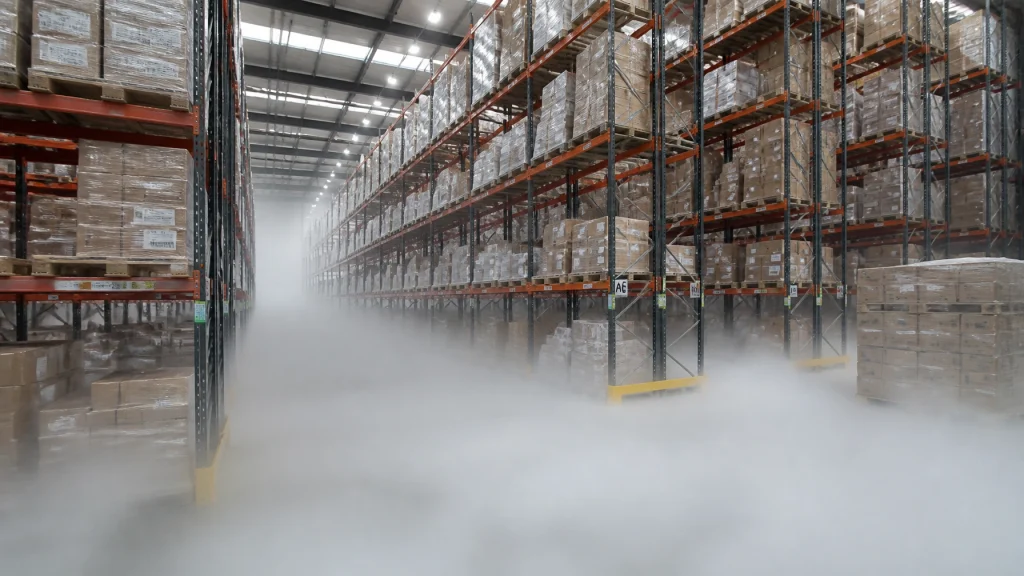
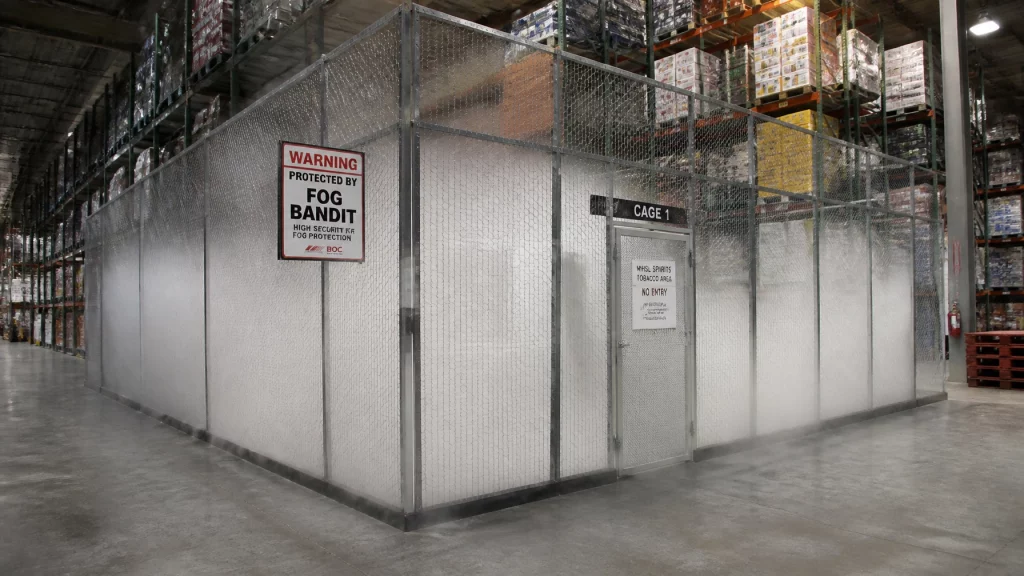
Active security deters crime by making theft too risky. A fogging system releases dense fog within seconds of an unauthorised entry. The thief is forced to stop immediately. Combined with an alarm, it removes cover and creates a strong deterrent even when staff are elsewhere.
In stockrooms and loading areas, fog acts as an invisible guard. Anyone entering an area they shouldn’t be in, or trying to take goods, meets instant fog that blocks their view. The psychological effect is powerful: most thieves simply abandon the attempt and leave.
Choosing the Right System for Your Space
Supermarkets differ greatly in back-of-store layout. A small convenience store stockroom might be 50 m³; a large supermarket’s stockroom and loading area might be 3,000 m³ or more. System coverage must be specified by usable volume, not floor area. Fog dispersal depends on air flow, ceiling height, and room shape.
For large supermarkets and warehouses, the HP Line systems cover up to 14,000 m³ in one go. They are ideal for big back-of-store zones or multiple high-risk areas. Installation at entry points—delivery gates, staff-only doors, emergency exits—maximises the deterrent effect. Thieves see the system and decide it’s too risky.
Fits Your Existing Security Systems
A common worry is whether a fog system will clash with existing security. It won’t. Density systems work with all standard alarm panels and integrate with existing CCTV, access control, and monitoring systems. Many supermarkets use Ajax systems. Fog integration is simple—usually just a relay connection. Free remote monitoring via ActiveCloud means security teams respond to alerts in real time.
API links allow integration with Video Management System (VMS) for a single dashboard. There is no costly rewiring, no extended downtime, and no need to replace existing equipment. A fog system simply adds to your security and makes it stronger.
Food-Safe and Meets All Standards
Supermarkets must follow strict rules on food safety and stockroom conditions. Density systems use non-toxic fog certified by Eurofins and tested to EN ISO 16000-1:2006—safe for people and animals. The fog is certified to Food Contact Regulation (CE) No. 1935/2004. It leaves no residue and does not contaminate food storage areas. Systems comply with EN 50131-8:2019, the standard for active security systems.
You are not choosing between security and compliance. You get both.
The Business Case: Prevention Beats Loss
Back-of-store shrinkage eats into profit in ways that stay hidden until the yearly stock count. A 1% shrinkage rate on a £10 million inventory equals £100,000 lost per year. For a chain with 50 stores, that is £5 million. A fog system typically pays for itself within 18 months through shrinkage reduction, with ongoing benefit after that.
Beyond the numbers, there are other benefits. Staff morale improves when theft is clearly deterred. Audits become cleaner. Loss-prevention teams focus on process instead of crisis management.
Frequently asked questions
Will fog damage stock or packaging?
No. Density fog is water-based, non-toxic, and leaves no residue. Stock and packaging are not harmed. The system only activates during an intrusion, so normal stockroom work is not affected.
Can staff accidentally trigger the system?
Yes, if they breach a protected perimeter without disarming it first. In practice, systems are set up so legitimate staff movement is not restricted. Disarm codes or RFID badges allow staff to move freely while maintaining perimeter protection.
How fast does the fog deploy?
Modern systems activate within seconds of a sensor trigger. The fog fills the protected area rapidly, ensuring the thief meets an immediate barrier to visibility and escape.
Do I need a monitoring contract?
Monitoring is optional but recommended. Remote monitoring enables rapid response to alerts. Integration with your alarm panel means security teams are notified instantly of any intrusion.
How long does a system last?
Density systems last 5+ years with proper maintenance. Fluid replacement and periodic checks are straightforward and low-cost. Long-term ownership is affordable.
Take Action on Stockroom Shrinkage Today
Back-of-store losses are not inevitable. Retailers across the UK are using active deterrent systems to protect stockrooms and loading areas. They are cutting shrinkage by 70–80% in the first year. Security strategies that combine fog, alarm, and access control work well at scale.
For supermarkets serious about tackling shrinkage, start with a site survey. Identify weak areas and specify coverage needs. Density systems work in over 80 countries and are tailored to local layouts. Whether you are securing one store or a multi-site operation, a properly designed fog system delivers clear cost savings and margin recovery.
To see how fog can cut shrinkage at your supermarket, explore the HP Line for large-scale coverage, browse security solutions for supermarkets, or contact us for a free survey. We will help you measure your risk and design a system that fits your stockroom and your needs. Back-of-store shrinkage can be controlled—and it starts with the right security choice.