Vape stock is a high-value target. It is portable, easy to resell, and concentrated in small space. Criminals know this. After closing, your shop becomes vulnerable—exactly when thieves strike.
The risk is real. In February 2025, a gang broke into a warehouse in Washington, Tyne and Wear. They stole £46,000 worth of vape stock and caused £3,600 in damage. This is not isolated. Business break-ins across the UK have risen 14% year-on-year. Shops are targeted because they hold valuable stock and have weak entry points.
This guide covers after-hours theft. We explain practical security measures that stop thieves—or, if they break in, protect your stock and help police.
Why After-Hours Break-Ins Target Vape Shops
Criminal gangs operate strategically. Vape retail is an ideal target. Products are high-margin, easy to resell, and fit in a van. A small shop can hold tens of thousands of pounds’ worth of stock.
Gangs plan their hits. They look for weak entry points, poor lighting, and no active monitoring. After closing, when staff have left and only CCTV watches, thieves have hours to work undisturbed.
97% of thefts are avoided with a fogging system AND an alarm, compared with 17% with an alarm only. This manufacturer figure, from Density, reflects the power of combined deterrence and active response.
Building a Closed-Premises Defence
Good after-hours protection has three parts: physical barriers, active monitoring, and fast response.
Physical Perimeter Hardening
Start at your boundary. Use roll-down gates, deadbolts, and reinforced entry points. Thieves must spend time and make noise. Both slow them down and increase their risk. Windows should be covered or grille-protected so criminals cannot see your stock from outside.
Lighting is essential. A well-lit building and grounds reduce temptation. Motion-activated lights leave thieves exposed and force them to work in the open.
Electronic Alarm Coverage
An intrusion alarm is your first warning. Door and window sensors detect entry instantly. When a break-in happens, the alarm company alerts police. They usually arrive within minutes.
Alarms work with all existing panels. They integrate with modern systems like Ajax without replacing anything. Central station monitoring means a human is watching 24/7. No break-in goes unnoticed.
Active Fog Deployment
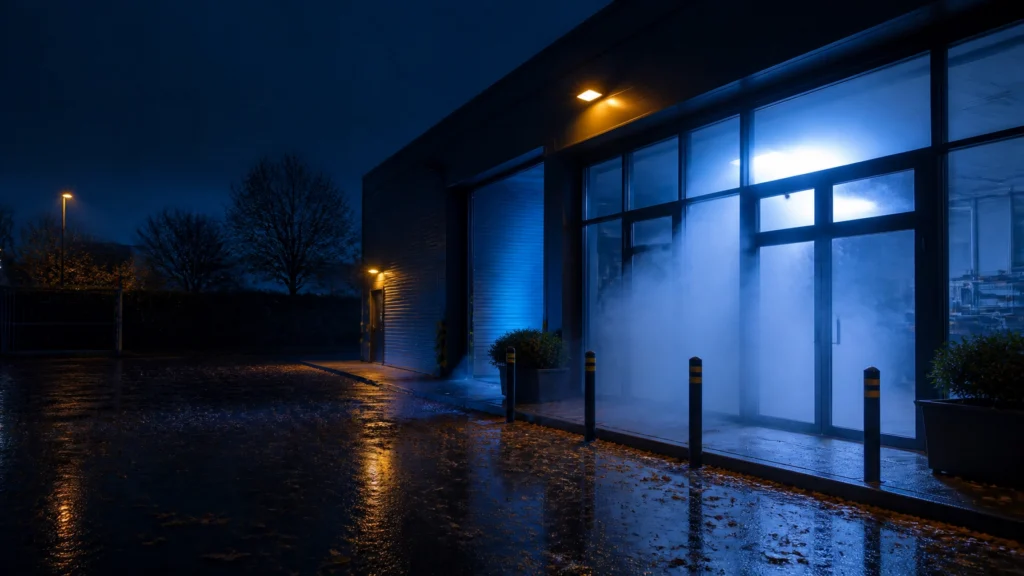
If a thief breaks in past your alarm, fog deploys as a final defence. In seconds, the space fills with thick, non-toxic fog certified by Eurofins. Thieves cannot see. CCTV fails. They cannot locate high-value items or move efficiently.
Fog causes panic. Thieves cannot find exits or merchandise. They know they are trapped and recorded. Most flee. Fog systems meet EN 50131-8:2019 and work reliably in any space.
Fog systems are small, produce no heat, and run on battery for up to six months. The UNIK is Density’s most compact system, designed for tight spaces and instant activation.
Integration and After-Hours Automation
Modern security systems work together. Your alarm, CCTV, and fog system can connect to one control centre. Fog deploys automatically the moment the alarm triggers after closing.
Remote monitoring via ActiveCloud lets you watch your premises from anywhere. You get alerts on your phone instantly and can confirm police are coming. This cuts the delay between break-in and response.
If you run multiple shops, a Video Management System (VMS) brings all CCTV and alerts into one place, making oversight simple.
After-Hours Risk Pathways
Threats come in different forms. Here are common break-in scenarios:
- Front or back door forced: Alarms and reinforced frames slow entry long enough for police to arrive.
- Window breach: Grilles or alarm-armed windows force thieves into noise (alerts neighbours) or slow, quiet methods.
- Roof or service entry: Map all access points in a professional survey. Some need extra sensors or motion detectors.
- Thief gets inside: Fog deploys and stops the theft, even if entry is breached. Evidence is logged for police.
The Business Case for Multi-Layer After-Hours Security
Good security lowers insurance costs, avoids stock replacement bills, and prevents the chaos of a break-in. Police respond faster when alarms are monitored. Stolen goods are recovered more often when CCTV is clear and fog evidence tracks crime scenes.
Staff feel safer too. When the premises is protected after closing, people have peace of mind.
For a full look at vape shop security, read our Complete Guide to Vape Shop Security. It covers counter protection and overnight systems.
Getting a Professional Assessment
Every shop is different. Your stockroom size, entry points, alarm system, and cash handling all affect security design. A professional survey finds your exact vulnerabilities and builds a defence matched to your needs. Surveyors assess perimeter strength, alarm placement, and fog system positioning for your most valuable items.
Learn more about vape shop security and how UNIK fog systems protect closed premises across the UK.
Frequently asked questions
Does a fogging system activate automatically after closing, or do we have to trigger it manually?
Both are possible. Most systems use automatic activation: when the alarm is triggered after closing, fog deploys instantly. No one needs to push a button. You can also set manual activation if needed—for example, if staff are still present during certain evening hours.
Will fog damage stock or leave a permanent residue?
No. Density fog is non-toxic and certified by Eurofins. It clears within minutes to hours depending on air flow. It does not stain merchandise, corrode fixtures, or need cleanup. The fog is tested to EN ISO 16000-1:2006 and is safe for food areas (Regulation (CE) No. 1935/2004).
What happens to CCTV when fog is deployed?
Visible CCTV cannot see through fog—which is the point. Thieves cannot find stock. Infrared cameras (used on high-risk sites) can see past fog. After fog clears, standard CCTV works again. The fog deployment is logged by time, creating a permanent record of the breach and response.
Can we integrate a fogging system with our existing alarm and CCTV?
Yes. Fog systems work with all alarm panels and modern systems like Ajax and VMS. Your installer will connect them so that a breach triggers fog instantly and sends alerts to your central station and phone.
How often does a fogging system need servicing?
Density systems need annual service and fluid refill. A professional installer will outline your specific maintenance schedule. This keeps the system ready to deploy instantly if needed.
If overnight break-ins worry you, closed-premises security is essential. Book a security survey to find your vulnerabilities and build a defence for your stock and staff. Contact Density for a professional assessment and a quote tailored to your shop.