Cambridgeshire logistics operators have a very expensive problem. As of March 25, 2026, reported thefts of tools and equipment have passed £3.5 million across warehouses, transit points, and construction sites in the county. This is not random nicking. It is organized, fast, and designed to clear out valuable stock before anyone can do much more than watch it happen.
If you run a warehouse, trade depot, or distribution site, the takeaway is simple: passive security is not enough. An alarm can scream. CCTV can film. A reinforced door can slow people down for a bit. But if thieves still have time and visibility, they can still empty the place. That is the gap active fog security is built to close. It interrupts the burglary in progress by taking away the one thing intruders need to work quickly: sight.
The Scale of the Cambridgeshire Tool Sweep
Recent reporting by the Cambridge Independent points to a clear hotspot pattern. These are not one-off break-ins. They are planned raids aimed at assets that can be moved quickly and sold quickly. Power tools, trade equipment, logistics stock, and site-critical kit are all obvious targets because they create instant resale value and instant disruption.
The damage lands in two places at once:
- Immediate Asset Loss: Stolen equipment has to be replaced, often at significant cost.
- Operational Damage: Work slows down, contracts slip, insurance pressure rises, and teams lose access to the tools they need to operate.
For many SMEs, that second hit is where things get ugly. The theft is bad enough. The downtime is worse.
Why Passive Security Systems Fail in 2026
The £3.5 million figure is what passive security looks like when criminals have a plan. Many sites already have standard protection in place. The problem is that most of it only records, reports, or delays.
- CCTV and alarms: Useful after the fact. Not much use while thieves are still loading the van.
- Physical barriers: Fences, shutters, and doors matter, but they are still passive. Once breached, the site is open.
- Safes and lockups: Good for storage. Not enough when intruders have time, tools, and a target list.
- Fire extinguisher tactic: Thieves already use extinguishers and other obscurants to block cameras and confuse responders. In short, they know visibility wins jobs.
That is the core issue. If intruders can still see, navigate, select, and carry, they can still steal. Passive measures do not change that in real time.

The Active Answer: Security Fog
If you want to protect a warehouse or logistics site properly, you need to interrupt the burglary within seconds of detection. That is what active fog security does.
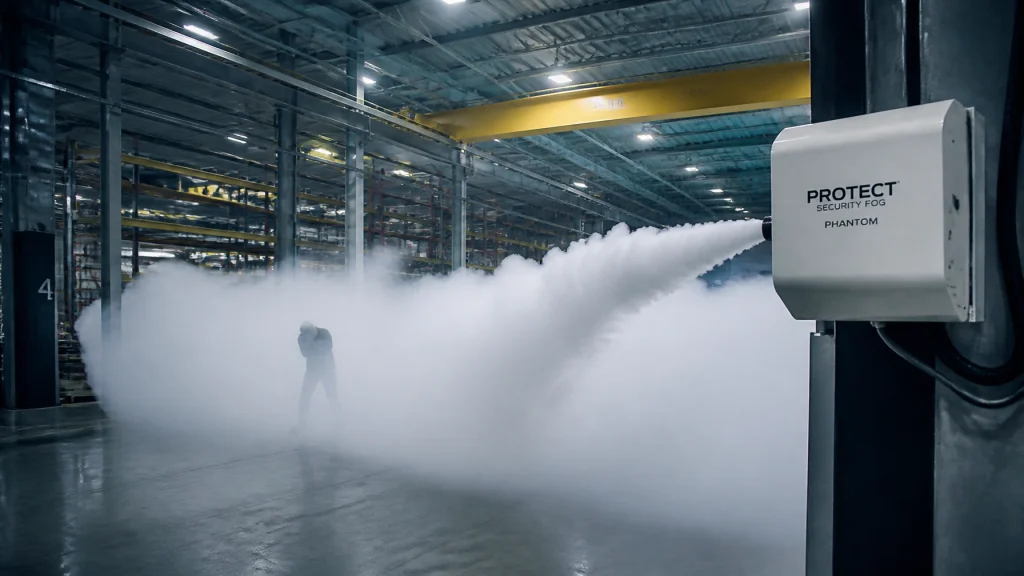
When the alarm condition is confirmed, the protected area is filled with dense security fog. Visibility drops hard and fast. The intruder loses orientation, loses speed, and loses the ability to identify stock or move through the site efficiently. That is the point. A burglary without visibility tends to fall apart very quickly.
Technical Function
For large logistics environments, fogging performance matters.
- Fast discharge: Large cubic areas can be protected in seconds.
- High density: The fog is designed to reduce visibility to near zero.
- Operational safety: The fog is non-toxic, leaves no residue, and is suitable for use around stock and electronic equipment.
- Alarm integration: The system works with existing intrusion detection infrastructure and can be managed through Density Cloud.
This is the shift from passive to active security. Instead of documenting the theft, you make the theft difficult to complete. Funny how burglars hate that.
Categorizing the Risk: Industry-Specific Vulnerabilities
The Cambridgeshire pattern is not limited to one type of site. Different sectors get hit in different ways, but the weakness is usually the same: passive security lets thieves keep working once they get inside.
Logistics and Distribution
These sites are attractive because of stock turnover, loading access, and predictable movement of goods. If thieves can see labels, bays, pallets, and routes, they can work fast. Fog removes that advantage.
Construction and Trade Depots
These locations hold tools that are compact, expensive, and easy to resell. One raid can wipe out the next week of work. Fences and locks help, but if the interior stays visible, the job is still on.
Industrial and Copper Storage
Heavy materials are slower to steal, but not impossible. If intruders can identify, access, and move stock, they will. Fog creates immediate disruption and makes handling bulky materials far harder.

Economic Protection Through Asset Security
The £3.5 million loss is not just an insurance headline. It translates directly into broken schedules, delayed orders, replacement cost, and higher operating pressure.
When a warehouse gets cleaned out:
- Supply chains stall.
- Contractors miss work.
- Replacement purchasing starts immediately.
- Insurance conversations get awkward very quickly.
By installing active burglary prevention for business, you reduce the risk of a full clear-out. That matters operationally, commercially, and to insurers. A site with active fog is a much less attractive target because the intruder cannot complete the job at normal speed.
Managing Your Defense with Density Cloud
Warehouse security also needs control and visibility at management level. The Density Cloud platform allows you to monitor installed systems in real time.
- Remote management: Control multiple sites from one interface.
- System checks: Verify operational status, including readiness for out-of-hours events.
- Audit trail: Maintain records for incident review, insurance, and reporting.
You can access technical documentation and management tools through the Density Download Area.
Immediate Action for Cambridgeshire Business Owners
The March 24/25 reporting confirms the threat is active and organized. If your current strategy is to let the alarm ring and hope the response arrives before the stock disappears, that is not really a strategy.
Steps to secure your warehouse:
- Evaluate the volume: Measure the cubic capacity of your storage and loading zones.
- Plan active coverage: Protect entry routes and high-value areas with fog coverage designed for the actual site layout.
- Connect the system: Register and manage your installation through the Density platform.
The £3.5 million tool crisis is a warning. Move from passive security to active interruption before your warehouse becomes someone else’s overnight shopping trip.

Technical Support and Resources
For detailed technical specifications, installation guides, and certifications, visit:
Protect your assets. Protect your operation. Stop the sweep with active fog security.