UK cargo crime is no longer just a "roadside issue"; it has moved inside the wire, with 2026 data showing that nearly 50% of incidents now occur at fixed facilities. If you are still relying on a basic alarm and passive CCTV, you aren't preventing theft: you are simply recording it for the insurance claim.
TL;DR: The Essentials
- Stop the "Watch it Happen" Trap: Switch from passive recording to active warehouse security fog systems that physically stop intruders.
- NSI Accreditation is Non-Negotiable: Without it, your insurance premiums will climb, and your police response is not guaranteed.
- Secure the "Two-Hour Window": Most thefts happen during the chaos of goods-in/out transitions; targeted fog protection here is vital.
1. The "Watch it Happen" CCTV Trap
The most common mistake warehouse managers make is over-investing in high-definition CCTV without any active deterrence. While 4K footage looks great in a boardroom, it does nothing to stop a masked intruder from clearing a pallet of electronics in under three minutes.
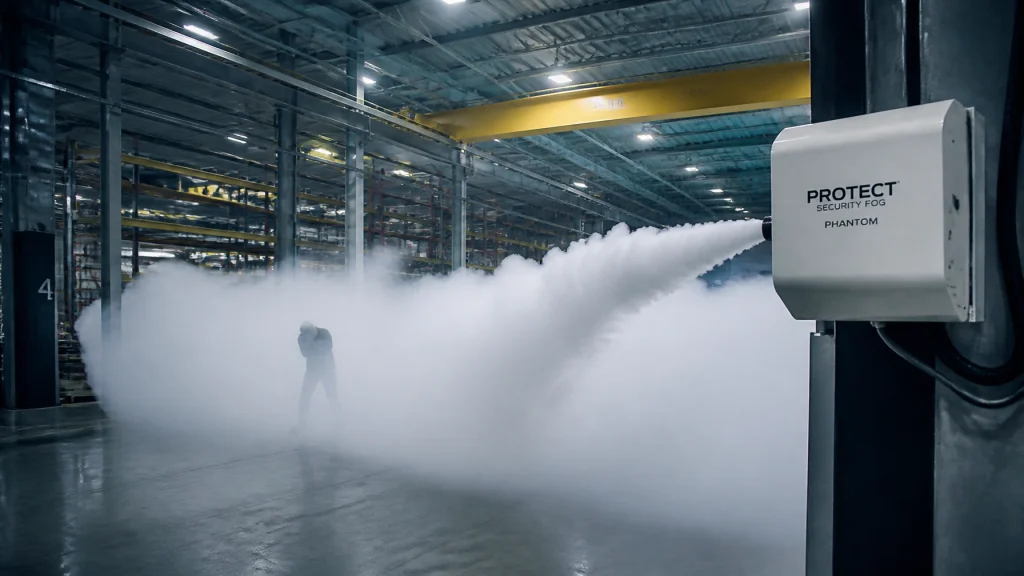
By the time your remote monitoring station calls the police and they arrive, the van is already on the M1. To fix this, you need a system that intervenes. Integrating a Lite Fog System with your existing sensors ensures that the moment a perimeter is breached, the warehouse is filled with a dense, non-toxic fog. If they can’t see it, they can’t steal it.
2. Neglecting the "Two-Hour Window" at Goods-In
Logistics UK and NaVCIS have highlighted a recurring vulnerability: the "Two-Hour Window." This is the period during goods-in and goods-out when high-value inventory sits on the bay floor, often with external doors open or unsecured.
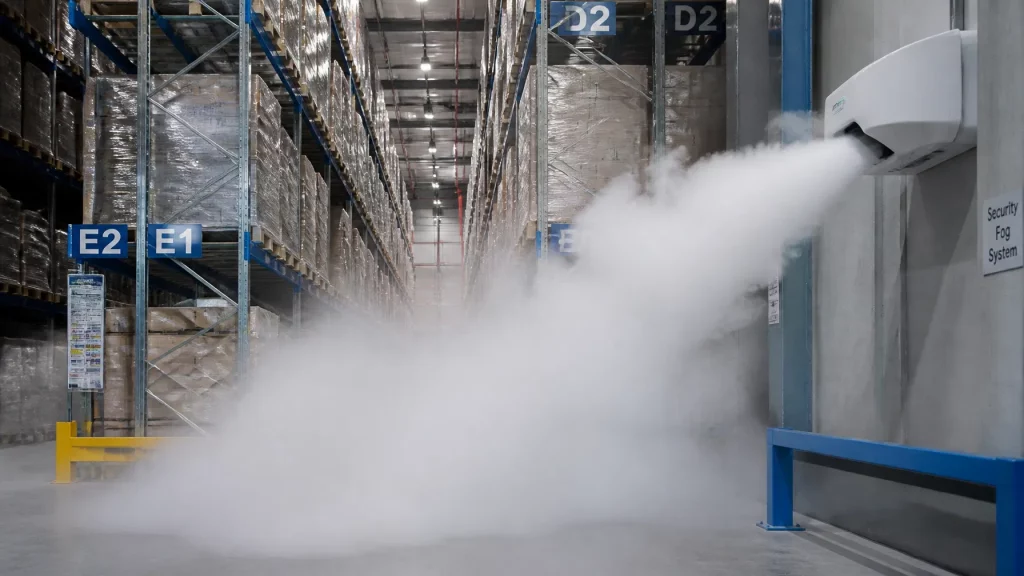
Criminals frequently scout these routines. A Basic Fog System specifically positioned to cover loading bays and mid-size staging areas provides a secondary layer of defence during these high-risk periods. It allows your staff to work efficiently while ensuring that any unauthorised "grab and run" attempt is met with an immediate, vision-obscuring barrier.
3. Using Non-NSI Accredited Systems
In 2026, UK insurers like Allianz and Aviva are tightening the screws. If your security provider isn’t NSI (National Security Inspectorate) accredited, you are likely overpaying for your premiums.
NSI accreditation proves your system meets BS EN 50131 standards. Without it, you may find your "confirmed alarm" status revoked, meaning the police won't prioritise your call-out. Ensure your warehouse security fog systems UK are installed by an accredited partner to maintain insurance compliance and guaranteed response times.

4. Leaving High-Value Zones Unprotected
Many facilities treat the entire warehouse as one security zone. However, bonded cages, cash offices, and server rooms require a "system within a system" approach.
Relying on a standard padlock or a simple cage is a mistake. High-value zones should be equipped with a UNIK Fog System. These units are designed for rapid deployment in confined, high-value areas, creating an impenetrable wall of fog in seconds. It’s the difference between losing a few boxes and losing your most profitable inventory.

5. Ignoring Alarm Response Time Gaps
The "15-minute gap" is the time between an alarm triggering and the first boots hitting the ground. In the world of cargo crime UK 2026, 15 minutes is an eternity. Organised gangs can strip a distribution centre floor in a fraction of that time.
You must close this gap with active deterrence. An insurance approved fog cannon acts as your "first responder." It buys the 15 minutes your security team needs to arrive, effectively freezing the crime in its tracks.
6. Failing to Scale Security with Seasonal Inventory
Warehouse managers often set their security at a baseline level and forget it. When Black Friday or Christmas stock arrives, the value of the inventory on your floor can triple, but your security remains the same.
A modern distribution centre security fog setup should be scalable. Our systems, such as the Density HP14000, can be managed via the cloud, allowing you to adjust sensitivity and deployment zones as your floor layout and inventory levels change.
7. Weak Key and Access Control
Physical keys are a liability. They can be copied, lost, or "borrowed." Similarly, shared fobs make it impossible to track who was in the building during a stock discrepancy.
Switch to a centralised access control system. By integrating your access logs with your security hub, you can create a "sterile environment" where only vetted staff can enter high-value areas. If an unauthorised door is forced, the fog system should trigger automatically as part of a pre-set warehouse theft deterrent strategy.

Key Takeaways
- Proactive over Passive: CCTV records; security fog stops. Make the switch.
- Zone your Risk: Don't treat a bonded cage the same as a pallet of empty packaging.
- Check the Accreditation: Ensure your installer is NSI-approved to keep your insurance valid.
- Protect the Bays: The loading bay is your most vulnerable entry point; secure it with a Basic Fog System.
Future-Proof Your Facility
Is your current security setup actually stopping theft, or just watching it happen? Don't wait for a cargo crime UK 2026 statistic to land on your desk before you take action.
Explore our Warehouse Security Fog Systems
Get an Instant Quote for Your Facility